
Ash whitefly
Siphoninus
Description
How to identify
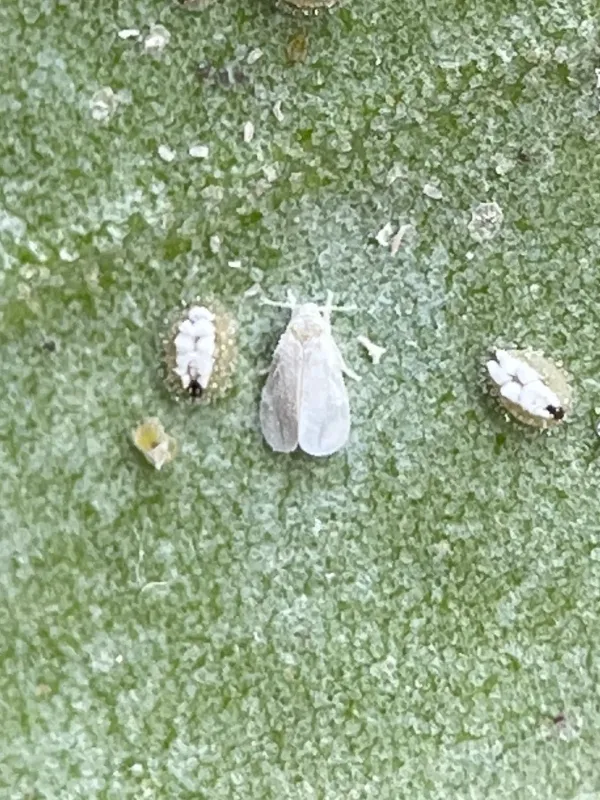
The Ash whitefly (Siphoninus phillyreae) is a small insect belonging to the family Aleyrodidae, order Hemiptera. Adult specimens are approximately 1-1.5 mm long, with white wings covered in a waxy, powdery substance.
The lifecycle consists of egg, larval, pupal, and adult stages. The larval stages are sedentary and are typically found on the underside of leaves, where they feed on plant sap.
A distinctive feature of the larvae is the presence of specialized dorsal tubes that secrete waxy filaments, providing protection against predators and harsh environmental conditions.
Adult whiteflies are highly mobile and are most active during warm, sunny days, which allows them to migrate easily between host plants and establish new colonies.
Accurate identification often requires the use of a magnifying glass to distinguish the specific wax patterns of the nymphs from other whitefly species found in similar habitats.
What it damages
While the ash tree (Fraxinus) is the primary host, this pest is highly polyphagous and infests various fruit trees, including apples, pears, pomegranates, and certain citrus species.
Direct damage is caused by both larvae and adults extracting nutrients from leaf tissues, which results in metabolic stress, stunted growth, and premature leaf drop.
Infestations often lead to the production of honeydew, which serves as a growth medium for sooty mold, a dark, fungus-like coating that blocks sunlight and interferes with photosynthesis.
Heavy infestations can significantly weaken trees, making them more susceptible to other secondary pests and environmental stressors like drought or winter cold.
In nursery settings, the presence of ash whitefly can render young trees unmarketable due to the unsightly appearance of the foliage and overall stunted development.
When it appears
The development of the ash whitefly is heavily dependent on ambient temperature, with multiple generations occurring throughout the growing season in favorable climates.
The first generation typically emerges in late spring as temperatures rise, signaling the start of the reproductive phase for the overwintering population.
Peak population density is usually observed in mid-to-late summer, when prolonged heat creates optimal conditions for rapid larval maturation and the colonization of new foliage.
Overwintering occurs primarily in the nymphal or pupal stages on evergreen hosts or within protected areas of bark and debris, allowing the species to survive winter conditions.
The number of generations per year is directly correlated with the accumulation of degree-days, making it a particularly persistent pest in warmer geographic regions.
Signs of infestation
The most prominent sign of an ash whitefly infestation is the presence of white, tufted, or waxy structures on the undersides of leaves.
- Yellowing, curling, and distortion of young leaves at the ends of shoots.
- Sticky deposits of honeydew on the foliage and surrounding branches.
- Development of unsightly black sooty mold on leaves and twigs.
- Clouds of small white flies visible when branches are disturbed or shaken.
- Premature yellowing and shedding of leaves during the peak of the summer season.
Affected plants often display reduced vigor, poor shoot elongation, and a generally sickly appearance compared to healthy, uninfested counterparts.
Control measures
Effective management of ash whitefly requires an integrated pest management (IPM) approach that focuses on long-term prevention and targeted intervention.
Cultural controls, such as pruning away heavily infested branches and maintaining tree health through proper irrigation and fertilization, are critical first steps.
Biological control methods, including the release of parasitic wasps or encouraging natural predators like ladybugs, can be highly effective in maintaining population stability.
Chemical control involving systemic insecticides is most effective when applied during the early larval stages, as the waxy covering of adults reduces the efficacy of topical sprays.
Monitoring using yellow sticky traps is a recommended practice to detect the arrival of the pest and to time applications accurately for maximum control impact.
Taxonomy
- Latin name
- Siphoninus
- Order
- Hemiptera (bugs, aphids, leafhoppers)
- Family
- Aleyrodidae
- EPPO code
- SIPOSP
Discussion
No discussions yet — be the first.