
Siphlonurus lacustris
Siphlonurus lacustris
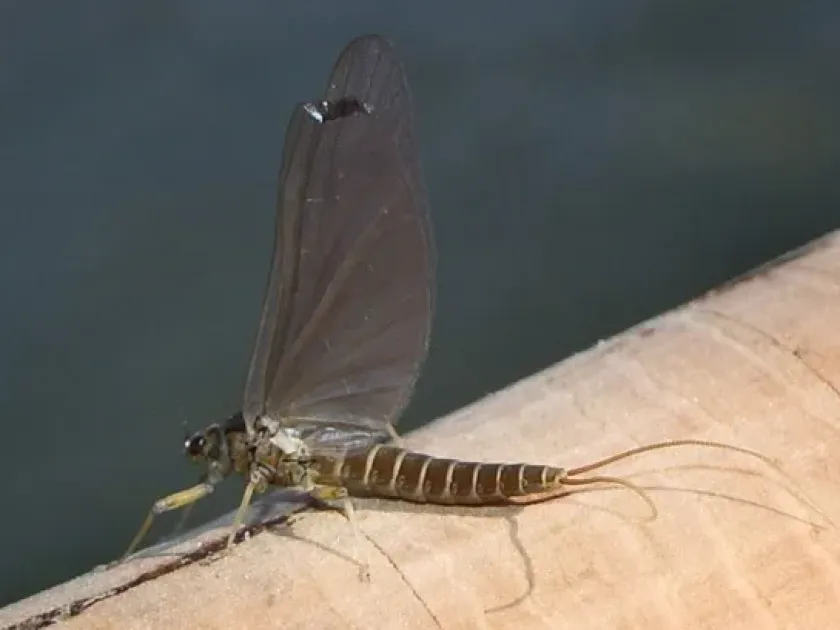
Description
How to identify
Siphlonurus lacustris is a species of mayfly belonging to the order Ephemeroptera and the family Siphlonuridae, common in freshwater habitats.
Adult insects are characterized by a slender body, two long tails (cerci), and transparent, delicate wings held upright at rest.
The larvae are entirely aquatic, featuring well-developed gills along the abdomen and strong swimming legs adapted for active life in the water.
They are generally found in cold, well-oxygenated streams, lakes, and ponds, where they serve as a critical component of the food web.
Identification at the species level requires a detailed examination of the abdominal gills and the venation patterns found on the wings of the adults.
What it damages
This species is not classified as a major agricultural pest, as it does not infest traditional terrestrial crops or commercial orchards.
Potential damage is restricted to specialized aquatic environments, such as ornamental ponds or hydroponic systems containing sensitive plant life.
Larvae may graze on the epidermis of aquatic plants or young shoots, which can lead to minor physical degradation of the foliage in controlled settings.
In aquaculture, high populations of these larvae can compete with young fish for natural food resources like phytoplankton or detritus.
While they are usually considered harmless or even beneficial in natural ecosystems, their presence in high density can be problematic for specific human-managed waters.
When it appears
The life cycle of Siphlonurus lacustris is strongly dictated by water temperature and the specific ecological conditions of the habitat.
Larval development typically occurs throughout the spring and early summer, as rising temperatures stimulate growth and metabolic activity.
Adult emergence generally peaks from late spring to mid-summer, depending on regional climate and specific water body characteristics.
The adult stage is very short-lived, with the primary focus being reproduction rather than feeding, often concluding within a single day.
Eggs are deposited into the water column or on submerged vegetation, where they remain until they hatch to begin the long larval development phase.
Signs of infestation
The presence of larvae can be noted by observing swift, undulating swimming patterns within the water column or near the bottom sediments.
Evidence of feeding damage on aquatic plants includes small surface scratches or irregular holes, though this is rarely a significant problem.
Discarded larval skins (exuviae) floating on the water surface or clinging to plant stems are a reliable indicator of recent adult emergence.
Large swarms of flying adults gathering over the water surface during warm, calm evenings are the most visible sign of their breeding season.
In managed ponds, cloudy water or high sediment disturbance can sometimes indicate a high concentration of active bottom-dwelling larvae.
Control measures
Physical exclusion methods, such as fine-mesh screening on water intakes, are the most effective way to prevent larval entry into artificial systems.
Maintaining high water quality and removing excessive organic debris can help limit the food source available to the developing larvae.
Introducing predatory fish species into the pond serves as an excellent biological control measure, keeping the insect population in check.
Chemical control should be strictly avoided in aquatic settings to prevent harm to water quality, fish, and other non-target beneficial organisms.
Routine monitoring using simple light traps can help track adult population trends, allowing for timely adjustments to management practices if necessary.
Taxonomy
- Latin name
- Siphlonurus lacustris
- Family
- Siphlonuridae
- EPPO code
- SPHULA
Discussion
No discussions yet — be the first.