
Siphlonurus
Siphlonurus
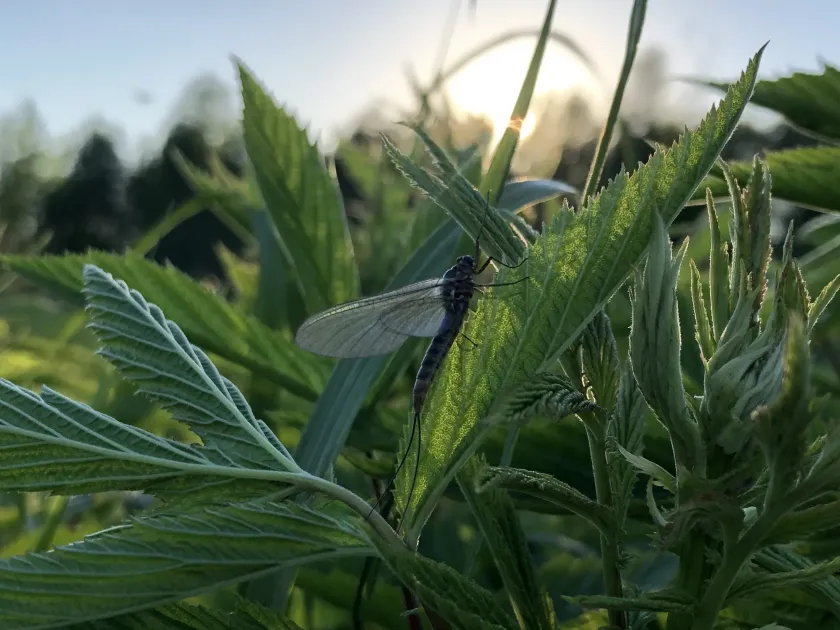
Description
How to identify
Siphlonurus is a genus of mayflies belonging to the family Siphlonuridae within the order Ephemeroptera. These insects spend the majority of their lifecycle in the larval stage.
The adults are characterized by their fragile appearance, two pairs of translucent wings, and long caudal filaments, which are typical for this insect order.
Larvae are agile swimmers, featuring a streamlined, torpedo-shaped body that allows them to navigate through flowing water in streams and rivers.
Identification is primarily based on the morphology of the gills and the structure of the legs, which are adapted for life in well-oxygenated aquatic environments.
While they are not considered agricultural pests, they are highly significant in environmental monitoring as indicators of water quality.
What it damages
Siphlonurus does not cause direct damage to agricultural crops. Adults are short-lived and do not feed, as their mouthparts are non-functional.
The larvae feed on detritus, algae, and organic particles found in aquatic ecosystems, posing no threat to plant tissues or cultivated crops.
The only indirect impact occurs in commercial agriculture when mass emergence leads to the clogging of irrigation filters and intake pipes.
In aquaculture, high population densities of larvae may compete with fish fry for natural food resources within the reservoir.
Overall, the negative economic impact of this species on agriculture is negligible, and it is usually treated as a harmless part of the local ecosystem.
When it appears
The adult emergence typically occurs during the warmer months, spanning from late spring to mid-summer, depending on the local climate.
The larval stage is prolonged, often lasting several months, as the insects undergo multiple molts before reaching the subimago stage.
The timing of emergence is highly sensitive to water temperature and environmental cues that trigger the transition from larva to adult.
Mass swarms of adults are often observed in the evenings near water bodies, representing the final phase of their lifecycle.
Monitoring the flight season is useful for maintaining irrigation systems and ensuring that water intake processes remain uninterrupted.
Signs of infestation
The primary sign of their presence is the appearance of large numbers of winged adults near water sources during the evening hours.
Larval presence can be confirmed by using aquatic dip nets to sample the benthic layer of streams or irrigation canals near farms.
Since the species does not damage crops, there are no visible symptoms of infection on leaves, fruits, or stems of any agricultural plants.
An accumulation of insect exuviae (cast-off skins) near intake pumps is an indication of active development in the nearby water system.
Visibility of the larvae is restricted to their aquatic habitat, where they are seen swimming actively around debris and stones.
Control measures
There is no need for chemical control measures, as Siphlonurus does not represent a threat to crop production or plant health.
If blockage of irrigation systems becomes an issue, the most effective solution is the installation of mesh screens or fine filtration systems.
Maintaining the cleanliness of canals and irrigation reservoirs helps manage their population levels and prevents potential technical complications.
Chemical intervention is strongly discouraged as these insects are sensitive to water pollution and play a role in maintaining ecosystem health.
Integrated water management practices that promote natural predators are sufficient to keep populations at balanced, non-problematic levels.
Taxonomy
- Latin name
- Siphlonurus
- Family
- Siphlonuridae
- EPPO code
- SPHUSP
Discussion
No discussions yet — be the first.