
Cereal aphid
Sipha glyceriae
Description
How to identify
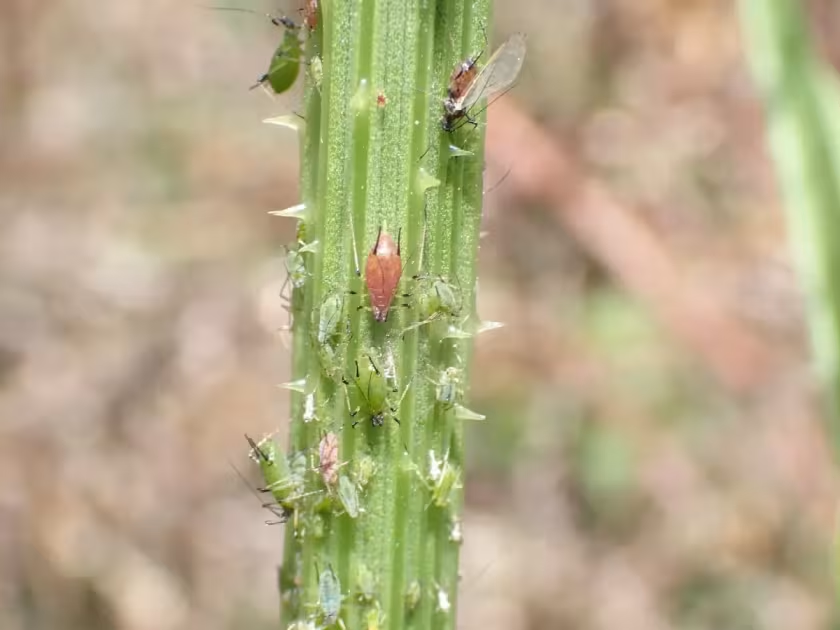
The cereal aphid (Latin: Sipha glyceriae) is a small insect belonging to the order Hemiptera and the family Aphididae. Adult specimens typically possess an elongated body measuring between 1.5 and 2.2 mm, with a coloration range from pale yellow to greenish-brown, often featuring darker stripes on the back.
A distinctive morphological feature of this species is the dense covering of hairs on the body and relatively short, inconspicuous siphunculi. The species exhibits both winged and wingless forms, facilitating efficient dispersal throughout agricultural fields.
This aphid species reproduces parthenogenetically, which allows for extremely rapid population growth under favorable environmental conditions. They are commonly found in colonies on the underside of leaves or within leaf sheaths of host grasses.
Identification is best conducted using a magnifying glass, focusing on the lower foliage and stems of the plants. Due to their coloration, they can be easily mistaken for other aphid species without closer inspection of their hairiness and siphon structure.
These insects prefer humid environments and are frequently observed congregating near irrigation sources or in lush, dense grassy areas where they can maintain constant feeding.
What it damages
The primary hosts for the cereal aphid include various cereal crops such as wheat, barley, rye, and oats, as well as common wild grasses like meadow grass (Poa) and couch grass.
By using their piercing-sucking mouthparts, these aphids extract cellular sap, which depletes the plant's resources. This leads to a significant disruption of physiological processes and a reduction in the overall vigor of the crop.
Beyond direct mechanical damage, the cereal aphid acts as a vector for various plant viruses. Viral transmission can cause severe stunting and yield losses that far exceed the impact of direct feeding damage.
The secretion of honeydew promotes the growth of sooty mold, which coats the leaves and further inhibits photosynthesis. This secondary damage reduces the market value and nutritional quality of the grain.
Heavy infestations during critical stages like heading or grain filling can result in shriveled kernels, poor grain set, and ultimately a substantial decrease in harvest quantity.
When it appears
The cereal aphid becomes active in the spring as soon as ambient temperatures remain consistently above the threshold required for development. Early spring infestations can quickly stunt young plant growth.
During the summer months, several generations may overlap. High humidity and stable temperatures favor rapid colonization, often leading to mass outbreaks that require urgent agricultural intervention.
In autumn, the aphids migrate to winter cereal crops. They continue to multiply on the emerging seedlings, weakening them significantly before the plants enter the winter dormancy period.
The species overwinters primarily in the egg stage on crop residues, volunteer grain, and perennial grasses. Thorough field sanitation is crucial for breaking their lifecycle.
In regions with mild winters, the insect may survive as nymphs or adults in sheltered microclimates, leading to an earlier start of the pest cycle in the following season.
Signs of infestation
Initial signs of infestation include leaf curling and the appearance of chlorotic spots or reddish discoloration on the foliage where the aphids have been feeding.
The presence of a sticky, shiny substance on the leaves, known as honeydew, is a primary indicator of aphid presence. Over time, this substance becomes dark due to the colonization of sooty mold fungi.
Visual inspection reveals clusters of aphids, often densely packed on the stems and leaf bases. Plants show signs of general stress, reduced growth rates, and retarded development of the ears.
In advanced stages of infection, leaves may turn yellow and eventually die off, starting from the lower levels of the plant. Field areas affected by the pest often show characteristic patches of stunted growth.
Farmers should look for yellowing patches across the field and the presence of natural predators like ladybugs, which are often drawn to the aphid colonies.
Control measures
Effective management includes integrated practices such as crop rotation, the elimination of volunteer grain, and the systematic removal of grassy weeds from field margins.
Chemical control involves the application of systemic or contact insecticides when populations exceed established economic thresholds. Timely application is critical to prevent virus transmission.
Biological control plays a significant role in managing aphid populations. Protecting natural enemies such as lady beetles, lacewings, and parasitic wasps can significantly reduce the need for synthetic chemical inputs.
Regular field scouting and the use of sticky traps can help monitor the pest's migration patterns, allowing for precise timing of control measures.
- Implement deep tillage to bury crop residues.
- Utilize resistant cereal varieties where available.
- Apply targeted insecticide treatments at the onset of colonization.
Taxonomy
- Latin name
- Sipha glyceriae
- Order
- Hemiptera (bugs, aphids, leafhoppers)
- Family
- Aphididae
- EPPO code
- SIPHGL
Discussion
No discussions yet — be the first.