
Sipha elegans
Sipha elegans
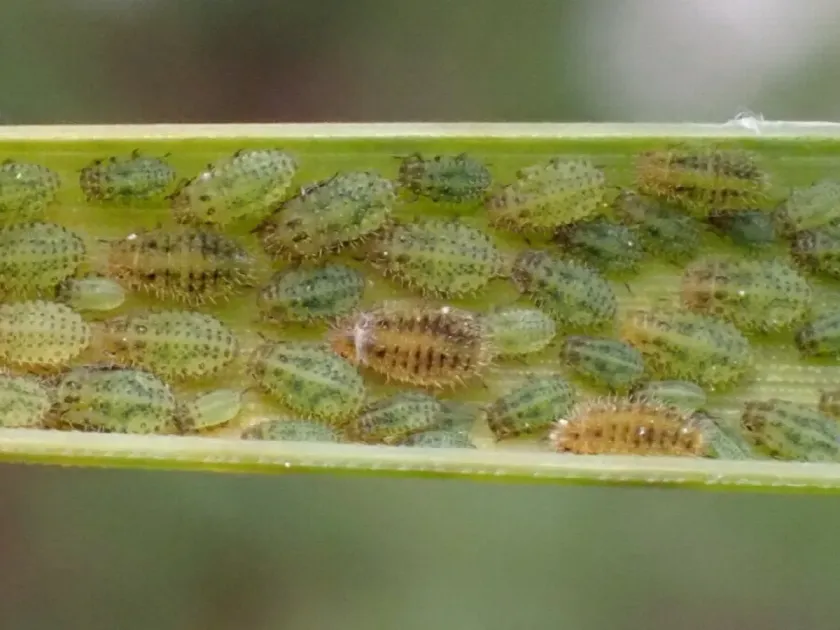
Description
How to identify
Sipha elegans is a species of aphid belonging to the family Aphididae within the order Hemiptera. These small insects are characterized by a slightly elongated body covered in fine hairs, which is a key feature that helps distinguish them from other common cereal aphid species.
The life cycle of this pest typically involves overwintering as eggs on crop debris or stubble. As spring temperatures rise, the eggs hatch into nymphs, which eventually develop into wingless or winged adults, depending on the population density and environmental factors.
Reproduction is largely parthenogenetic during the growing season, allowing for rapid colonization of host plants. The aphid thrives in warm, dry weather conditions, which are conducive to high population growth rates and quick dispersal across fields.
Adaptability is a major strength of this species. It has evolved to synchronize its development with the growth stages of cereal crops, ensuring a consistent food supply during the most vulnerable phases of plant development.
Identifying Sipha elegans requires close observation, often with a hand lens to see the unique distribution of hairs on the body and the structure of the siphunculi. Correct identification is essential for choosing the appropriate management strategy.
What it damages
Sipha elegans primarily targets plants in the Poaceae family. Important cereal hosts include wheat, barley, rye, and oats. In the absence of primary crops, the pest may persist on various wild grasses found in field margins and waste areas.
The damage is caused by both adults and nymphs feeding on the phloem sap of the host plant. This extraction of nutrients weakens the plant and redirects energy away from grain filling, significantly impacting overall yield potential.
Physiological stress on the plant results in characteristic leaf yellowing, curling, and deformation. In severe cases, particularly during the boot and heading stages, the infestation can lead to stunted growth and reduced grain weight.
This aphid species is also implicated in the transmission of viral pathogens. The introduction of virus particles during feeding can cause secondary damage, including necrosis and systemic disease that drastically lowers crop quality.
The extent of damage is influenced by the density of the colony and the duration of the infestation. Agronomists often assess the percentage of infested tillers to determine if chemical intervention is necessary to prevent significant financial loss.
Signs of infestation
The primary sign of an infestation is the presence of aphid colonies on the underside of leaves and within the leaf sheaths. Look for clusters of small, hairy insects that may vary in color from light green to brownish tones.
Plants affected by Sipha elegans often display chlorotic patches. As the colony grows, the leaves may show necrotic streaks or begin to curl, which protects the insects from both predators and spray applications.
The excretion of honeydew is a telltale sign of aphid activity. This sticky substance attracts ants and provides a substrate for sooty mold growth, which appears as a dark, powdery layer on the surface of the leaves, hindering photosynthesis.
A reduction in plant vigor is another common sign. Infested crops will often show a lag in growth compared to healthy areas of the field, leading to an uneven canopy appearance that is visible from a distance.
Finally, the presence of predatory insects such as ladybird beetles or hoverfly larvae is an indicator that aphids are present. Farmers should monitor these natural enemies to evaluate the balance of the agroecosystem.
Control measures
Integrated Pest Management (IPM) is the best approach for controlling Sipha elegans. This includes cultural practices such as destroying volunteer cereals and controlling grassy weeds that act as refuges for the aphid during the off-season.
Choosing resistant or tolerant crop varieties is a highly effective long-term strategy. Breeding programs focus on creating cultivars that can withstand aphid feeding without significant loss of yield or quality.
Chemical control should be implemented only when scouting reports indicate that the economic threshold has been reached. Systemic insecticides are preferred as they effectively reach the aphids hidden within the leaf sheaths.
Resistance management is critical. It is recommended to rotate insecticides with different modes of action to ensure the pest population remains susceptible and to preserve the effectiveness of available crop protection products.
Enhancing biological control by protecting natural predators is essential. Avoiding unnecessary insecticide sprays in early spring allows populations of ladybugs and parasitic wasps to thrive, providing natural pressure that can keep aphid levels below the economic threshold.
Taxonomy
- Latin name
- Sipha elegans
- Order
- Hemiptera (bugs, aphids, leafhoppers)
- Family
- Aphididae
- EPPO code
- SIPHAG
Discussion
No discussions yet — be the first.