
Photinia aphid
Sinomegoura photiniae
Description
How to identify
The Photinia aphid (Sinomegoura photiniae) is a specialized insect belonging to the family Aphididae, order Hemiptera, known for targeting specific ornamental plants.
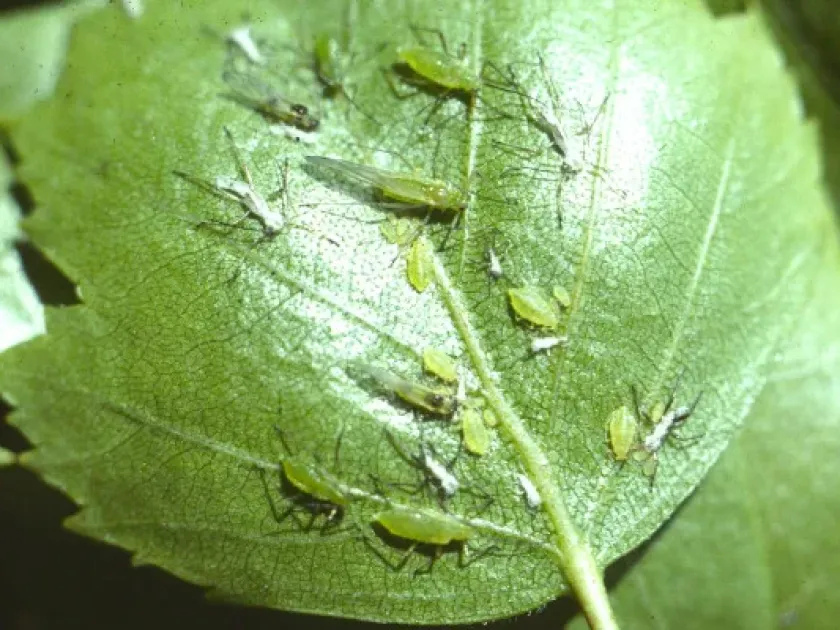
The adult aphids typically display an elongated, green-colored body, which allows them to blend in perfectly with the young, tender growth of their host plants.
These insects are highly efficient at colonization, forming dense groups on the undersides of leaves and at the tips of shoots to maximize nutrient uptake.
Both winged and wingless forms can be found within a single colony, with winged individuals facilitating the rapid spread of the pest across the landscape.
Understanding their reproductive cycle is crucial for effective management, as they can transition through several generations during the favorable growing season.
What it damages
The primary host plant is Photinia, though the aphid can occasionally impact other species within the Rosaceae family if they are located nearby.
By using their piercing-sucking mouthparts, these aphids extract essential plant sap, which leads to significant physiological stress for the shrub.
The visual impact of feeding is seen in the stunted development and severe curling of leaves, which ruins the aesthetic appeal of ornamental hedges.
The continuous loss of sap also weakens the overall health of the plant, making it more susceptible to environmental stress and secondary infections.
In nursery settings, this aphid can cause substantial commercial losses by compromising the quality and development of young nursery stock.
When it appears
Activity typically begins in early spring, synchronized with the emergence of new buds and tender leaves that provide the necessary food source.
Peak population levels are generally observed during late spring and early summer when warm temperatures accelerate their developmental rate.
Throughout the warmer months, the aphids produce multiple generations, rapidly increasing their numbers if the environmental conditions remain optimal.
As summer draws to a close, the colony size begins to decline, and the insects focus on survival strategies, including the production of overwintering eggs.
These eggs are deposited in crevices or near plant buds, where they remain dormant throughout the winter until the next growth cycle starts.
Signs of infestation
The earliest symptom of an infestation is the visible deformation of young leaves, which often curl or twist as the aphids feed on their underside.
The presence of honeydew, a sticky sugary substance secreted by the aphids, creates a shiny surface on the leaves and attracts ants to the plant.
Sooty mold growth is a very common secondary sign, as it develops on the sugary honeydew, turning the plant's foliage black and unsightly.
- Clusters of small green aphids on the undersides of leaves.
- Visible presence of ants actively farming the aphid colonies.
- Yellowing, wilting, and premature dropping of young, tender leaves.
Regular inspection of the plant's new growth is essential for detecting the colony early before the damage becomes extensive.
Control measures
Integrated pest management starts with cultural practices such as removing and destroying heavily infested branches to reduce the immediate population.
Encouraging natural predators, including ladybugs, lacewings, and hoverflies, is a sustainable way to control aphid numbers naturally.
For severe infestations, the application of systemic insecticides is often necessary to reach the pests and protect the developing foliage effectively.
It is important to ensure thorough coverage when spraying, paying particular attention to the undersides of the leaves where the aphids congregate.
Routine monitoring and early detection are the most effective tools to prevent a small colony from developing into a major pest outbreak in the garden.
Taxonomy
- Latin name
- Sinomegoura photiniae
- Order
- Hemiptera (bugs, aphids, leafhoppers)
- Family
- Aphididae
- EPPO code
- SINMPH
Discussion
No discussions yet — be the first.