
Sinomegoura
Sinomegoura
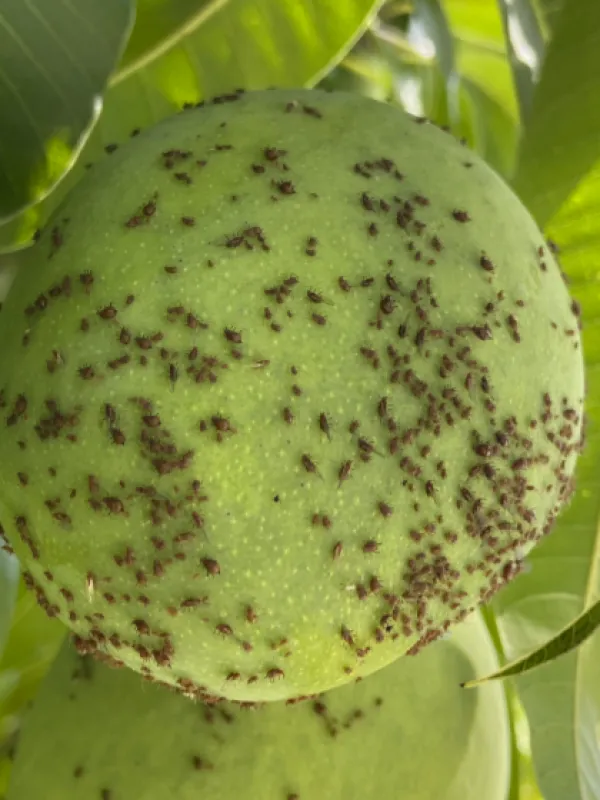
Description
How to identify
Sinomegoura is a genus of aphids belonging to the family Aphididae, within the order Hemiptera. These insects are specialized plant-feeders that rely on the sap of their hosts for survival.
Adults and nymphs typically possess an elongated body structure. Depending on the specific species, their coloration ranges from vibrant green to yellow, which helps them blend in with host vegetation.
These aphids are characterized by distinct siphunculi (cornicles) on their abdomen and a specialized piercing-sucking mouthpart. Microscopic inspection of the antennae and cauda is often required for precise species-level identification.
They are colonial insects, usually found in dense clusters on the undersides of leaves or along the soft, tender stems of new plant growth.
The life cycle includes both apterous (wingless) and alate (winged) forms. The emergence of winged individuals is a response to overcrowding or host plant degradation, facilitating dispersal to new areas.
What it damages
This genus infests a wide range of plants, with a notable preference for legumes and various vegetable crops. They act as primary pests by weakening the host through excessive sap removal.
By piercing plant tissues, these aphids inject toxins that cause leaf curling, stunted growth, and general physiological stress to the plant.
A significant portion of the damage is indirect, as Sinomegoura acts as a vector for various plant viruses, potentially devastating entire harvests if viral spread occurs.
The excretion of honeydew promotes the growth of sooty mold, a dark fungal coating that severely inhibits the plant's ability to perform photosynthesis efficiently.
High infestations often result in the premature dropping of blossoms and developing fruit, leading to significant yield losses in terms of both quantity and quality.
When it appears
The activity of these aphids typically coincides with the beginning of the growing season when temperatures are favorable for plant development.
Peak populations are usually recorded during the late spring and early summer, when environmental conditions allow for rapid reproduction and multiple generation turnovers.
As the season progresses, environmental stressors can trigger the production of winged forms, allowing the population to shift to different host plants or prepare for the overwintering phase.
During autumn, many species produce overwintering eggs, often deposited on the bark of woody host plants or the debris of perennial weeds.
Climate patterns, particularly warm and dry springs, significantly shorten the reproduction cycle, leading to rapid outbreaks in commercial fields.
Signs of infestation
Leaf curling or crinkling at the tips of shoots is a hallmark sign of a Sinomegoura infestation, providing a sheltered micro-habitat for the colony.
The presence of a sticky, shiny film (honeydew) on foliage is a clear indicator that sucking insects are actively feeding above that location.
Increased ant activity on plants often serves as a warning, as ants tend to farm aphids to collect their honeydew secretions, protecting them from natural enemies.
The development of a black, sooty coating on the leaves and stems indicates an advanced infestation that has already significantly weakened the plant.
General yellowing (chlorosis) of the plant foliage, coupled with a lack of new healthy terminal growth, suggests high feeding pressure from the aphid colonies.
Control measures
Biological control is a cornerstone of management, involving the protection and augmentation of natural predators such as lady beetles, lacewings, and hoverfly larvae.
Chemical control using systemic insecticides is effective when applied during the early stages of an outbreak, as these chemicals are translocated through the plant tissue.
Integrated Pest Management (IPM) practices, including the removal of weeds that serve as alternate hosts, are critical to limiting the population spread.
Regular scouting of fields during the critical growth phases allows for early detection, enabling spot-treatment rather than broad-spectrum chemical application.
In greenhouses, the introduction of parasitoid wasps or entomopathogenic fungi provides an environmentally friendly way to suppress aphid numbers effectively.
Taxonomy
- Latin name
- Sinomegoura
- Order
- Hemiptera (bugs, aphids, leafhoppers)
- Family
- Aphididae
- EPPO code
- SINMSP
Discussion
No discussions yet — be the first.