
Singhius
Singhius
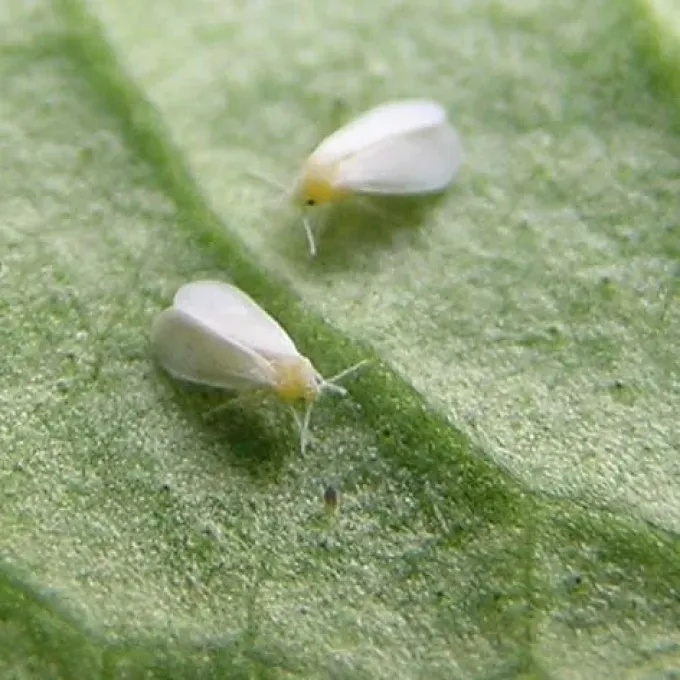
Description
How to identify
Singhius is a genus of insects belonging to the whitefly family (Aleyrodidae) within the order Hemiptera. These small insects resemble tiny moths covered in a white, powdery wax substance.
Adults typically measure between 1 and 2 mm in length. A defining characteristic of the Singhius genus is the specific wing venation and the morphology of the puparia (final-instar nymphs), which feature distinctive wax processes along the body margins.
The nymphs are sessile, flattened, and scale-like. They attach firmly to the leaf surface, making them difficult to spot during the early stages of an infestation when their population density is still low.
Precise species identification usually requires microscopic analysis of the puparium, as the morphological traits of the pupal case are the primary diagnostic features for this genus.
Females lay eggs on the underside of young leaves, often arranging them in groups or neat semi-circles, which is a critical diagnostic sign for field monitoring.
What it damages
This pest attacks a wide range of host plants, including various agricultural crops, ornamentals, and vegetables grown in both greenhouse and open-field conditions.
The primary damage is caused by the nymphs, which extract cell sap from the host plant. This feeding process weakens the plant, hinders its growth, and significantly reduces the rate of photosynthesis.
Localized chlorosis, manifesting as yellowing and discoloration of leaves, occurs at the feeding sites. In severe cases, the plant may experience premature leaf drop and stunted overall development.
Singhius secretes honeydew, which serves as a substrate for sooty mold fungi. This black fungal layer covers the leaves, further blocking sunlight and disrupting the gas exchange of the plant.
Beyond direct feeding damage, some species in this group are known to act as vectors for various plant viruses, posing a significant risk to commercial crop production.
When it appears
The life cycle of Singhius is highly temperature-dependent. In controlled environments like greenhouses, the pest can reproduce year-round, continuously moving through generations.
In open fields, activity increases with the arrival of warm weather. Optimal conditions for rapid reproduction are air temperatures between +22°C and +28°C combined with moderate humidity levels.
The complete life cycle from egg to adult can take approximately 3 to 4 weeks under favorable conditions, leading to rapid population surges during the summer months.
In temperate climates, the pest overwinters primarily in the pupal stage on plant debris or in the root zone of weeds, which act as reservoirs for the next season.
Peak infestation levels typically occur in the second half of summer when overlapping generations create a massive presence on the host plants.
Signs of infestation
The first visual indication is the presence of small white insects flying in a cloud when the host plant is disturbed or shaken.
The appearance of a sticky, glistening substance (honeydew) on the upper surface of lower leaves is a clear indicator of a pest colony residing on the leaves above.
Development of sooty mold—black patches on the leaves—signifies an advanced infestation. The leaves eventually curl, become deformed, and lose their vitality.
Close inspection of the underside of leaves reveals the presence of translucent or wax-covered, scale-like nymphs adhering to the leaf tissue.
- Presence of winged white adults.
- Sticky honeydew secretions.
- Sooty mold growth on leaf surfaces.
- Chlorotic spots on leaves.
- General plant wilting and stunted growth.
Control measures
Effective management begins with cultural practices, such as strict crop rotation and the removal of plant debris and reservoir weeds where the pest overwinters.
In protected cultivation, yellow sticky traps are essential tools for early detection and for monitoring the dynamics of the pest population throughout the season.
Biological control involves the use of natural enemies, such as parasitic wasps or predatory insects, which can effectively keep the Singhius population under control.
Chemical control requires the application of systemic insecticides. It is vital to rotate different chemical classes to prevent the development of resistance in the pest population.
When applying pesticides, it is crucial to ensure thorough coverage of the underside of the leaves, where the nymphs congregate, to achieve the highest possible mortality rates.
Taxonomy
- Latin name
- Singhius
- Order
- Hemiptera (bugs, aphids, leafhoppers)
- Family
- Aleyrodidae
- EPPO code
- SINGSP
Discussion
No discussions yet — be the first.