
Ficus whitefly
Singhiella simplex
Description
How to identify
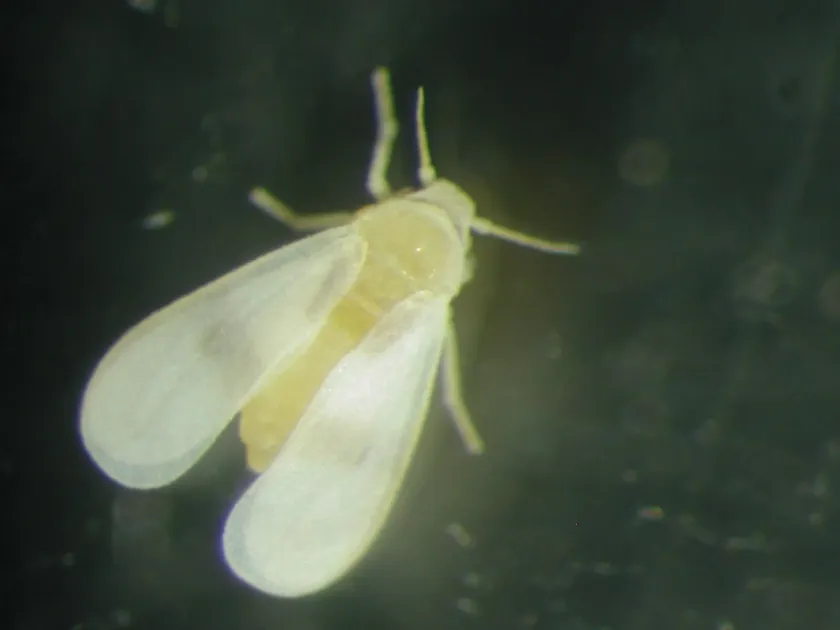
The Ficus whitefly (Singhiella simplex) belongs to the order Hemiptera and is a specialized pest targeting Ficus species. Adults are small, measuring approximately 1 to 2 mm in length.
These insects are covered in a fine, white, waxy secretion that gives them their characteristic appearance, resembling tiny moths or flies when viewed by the naked eye.
The life cycle progresses through eggs, several nymphal stages, and adults. Nymphs are typically sedentary, attaching themselves firmly to the underside of the leaves to feed.
Development is highly influenced by temperature and humidity levels. Warm, stagnant conditions within indoor environments significantly accelerate their reproductive cycle.
Due to the high reproductive potential of females, a small infestation can rapidly explode into a large colony, causing significant stress to the host plant in a short duration.
What it damages
The primary hosts for this pest are various Ficus species, especially the popular Ficus benjamina. The whitefly extracts plant sap directly from the leaf tissues.
Constant feeding leads to leaf chlorosis, curling, and deformation. The weakened plant eventually suffers from decreased vitality and stunted shoot growth.
A major side effect is the excretion of honeydew, a sticky substance that collects on the leaves, creating an ideal environment for the growth of sooty mold fungus.
This black, sooty mold covers the foliage, effectively blocking sunlight and severely inhibiting the plant's ability to perform photosynthesis, leading to leaf drop.
Prolonged heavy infestations can lead to massive defoliation, leaving the Ficus bare and highly susceptible to secondary environmental stressors or diseases.
Signs of infestation
One of the earliest signs is the sudden appearance of white, moth-like insects flitting around the plant when the branches or the pot are disturbed.
Sticky residue on the top of leaves or on surfaces beneath the plant indicates the presence of honeydew, which is a telltale sign of whitefly activity.
Visible yellowing of leaves, starting as small spots and progressing to large chlorotic areas, indicates that the insect has been feeding on the tissue for some time.
The presence of dark, crusty spots (sooty mold) that do not wipe off easily is a clear indication that the infestation has reached a critical stage.
Premature dropping of leaves, often starting from the lower or interior sections of the canopy, is a classic response of the plant to the stress caused by the pest.
Control measures
Immediate quarantine is essential; affected plants must be moved away from healthy ones to prevent the spread of adult whiteflies across the collection.
Manual washing with insecticidal soap or a mild dish soap solution is recommended to physically remove nymphs and clear the honeydew from the leaf surfaces.
Systemic insecticides (such as imidacloprid) are the gold standard for controlling Singhiella simplex, as they are absorbed by the plant and kill the insects upon ingestion.
Yellow sticky traps can be deployed to capture adult whiteflies, which helps in monitoring the population size and reducing the number of breeding adults.
Repeated applications are necessary to break the life cycle, typically every 7 to 10 days, to ensure that newly emerged nymphs from eggs are also eliminated.
Taxonomy
- Latin name
- Singhiella simplex
- Order
- Hemiptera (bugs, aphids, leafhoppers)
- Family
- Aleyrodidae
- EPPO code
- SINLSI
Discussion
No discussions yet — be the first.