
Hackberry aphid
Shivaphis celti
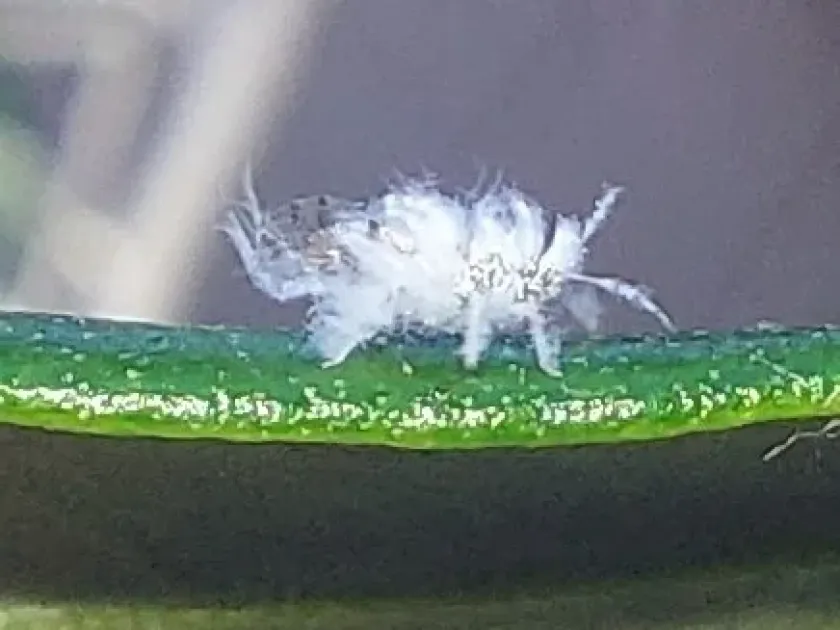
Description
How to identify
The hackberry aphid (Shivaphis celti) is a small insect species belonging to the family Aphididae, which specializes in feeding on various species of hackberry trees (genus Celtis).
Adult insects are typically light yellow or greenish in color, often covered in a characteristic white waxy secretion that makes them stand out against the leaf tissue.
Nymphs are smaller versions of the adults and lack developed reproductive organs, yet they are extremely mobile, facilitating the rapid spread of the colony across the canopy.
The species is highly specialized, maintaining a stable biological relationship with its host plant throughout its entire development cycle.
Detection is usually performed by inspecting the abaxial (lower) surface of the leaves, where the aphids congregate in large groups protected by the waxy residue.
What it damages
This pest exclusively targets hackberry trees, which are widely used as ornamental plants in urban landscaping and forestry due to their resilience.
By using their piercing-sucking mouthparts, these aphids drain the plant's cell sap, causing stress and disrupting the tree's photosynthetic efficiency.
Feeding damage often results in the curling or crinkling of leaves and the retardation of new shoot growth, impacting the tree's overall structural development.
The excretion of honeydew promotes the growth of sooty mold, a fungus that covers the leaf surface and blocks the absorption of sunlight.
Heavy infestations can lead to severe leaf drop during mid-summer, significantly reducing the aesthetic value and long-term health of the infested trees.
When it appears
The lifecycle of the hackberry aphid is strictly synchronized with the seasonal phenology of its host, the Celtis tree.
Eggs overwinter in bark crevices or near leaf buds, and as the buds begin to open in early spring, the founding nymphs emerge to start the new colony.
Several generations of aphids develop during the spring and summer months, with population numbers peaking during periods of high temperature and low humidity.
As the season comes to an end, sexual forms of the aphid appear, ensuring the production of overwintering eggs to continue the cycle for the following year.
Environmental variables, particularly air temperature, play a crucial role in regulating the frequency of generations and the density of the aphid population.
Signs of infestation
Initial signs of infestation include visible curling of young leaves and a generalized stunted appearance of branch tips.
The accumulation of sticky honeydew on foliage is a primary sign of an active colony, frequently accompanied by the presence of ants foraging for the secretions.
A dark, velvety coating of sooty mold on the leaves is a common secondary symptom that indicates the presence of aphids earlier in the season.
Small white patches of cast-off aphid skins are often found on the undersides of leaves, providing a clear indication of high aphid density.
Early leaf senescence and yellowing in the middle of the growing season are strong indicators that the tree is suffering from significant aphid pressure.
Control measures
Integrated Pest Management (IPM) for this species relies heavily on preserving natural predators like lady beetles and lacewings that feed on aphid colonies.
In ornamental settings, the use of systemic insecticides can provide effective control by translocating the active ingredient within the plant's tissue.
Timing the application of treatments to match the early spring hatching phase is essential to suppress population growth before it becomes problematic.
Proper horticultural care, including adequate irrigation and soil fertilization, enhances the tree's natural resilience against minor aphid attacks.
- Application of entomopathogenic fungi as a biological control agent.
- Water jet cleaning of foliage for small or isolated infestations.
- Targeted chemical application using environmentally friendly contact insecticides.
Taxonomy
- Latin name
- Shivaphis celti
- Order
- Hemiptera (bugs, aphids, leafhoppers)
- Family
- Aphididae
- EPPO code
- SHIVCE
Discussion
No discussions yet — be the first.