
Walnut rust mite
Setoptus semiornatum
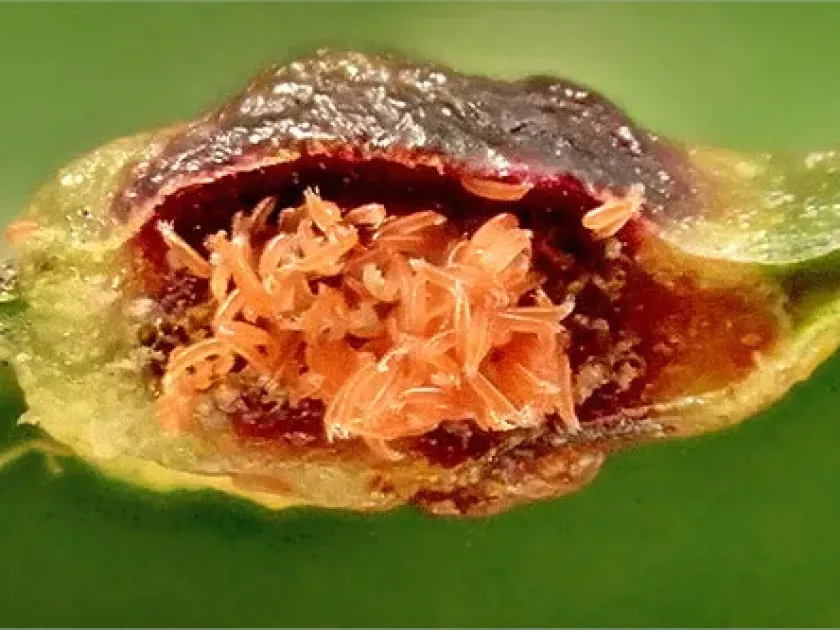
Description
How to identify
The walnut rust mite, scientifically known as Setoptus semiornatum, belongs to the Eriophyidae family. These are extremely small, microscopic pests that cannot be easily observed with the naked eye.
The body of an adult mite is elongated, worm-like, and semi-transparent, consisting of numerous rings. This specialized morphology allows them to inhabit the narrow spaces within leaf tissue and under bud scales.
The life cycle of this mite is closely synchronized with the phenology of the walnut tree. Fertilized females hibernate in the protection of the tree's buds, surviving the winter months effectively.
As temperatures rise in the spring and the tree starts its growth phase, the mites emerge from their dormancy. They quickly migrate to the young, unfolding leaves to feed and begin the reproductive cycle.
Multiple generations can occur throughout the growing season, with populations peaking in warm and humid conditions, which allow for rapid expansion across the entire canopy of the host tree.
What it damages
The walnut rust mite primarily feeds on the leaves and tender shoots of the walnut tree. By piercing plant cells and extracting sap, the mites disrupt the vital functions of the foliage.
The removal of cell contents causes chlorosis, where leaves develop yellow or bronze spots. This damage significantly hinders the photosynthesis process, reducing the overall vitality of the tree.
Heavy infestations lead to leaf curling, deformation, and premature leaf drop. This is especially detrimental to young saplings that need to store energy for the coming dormant season.
The mites can also damage developing buds, leading to stunted or distorted twig growth. Such structural damage affects the tree's architecture and can decrease the quality of future nuts.
By weakening the host plant, these mites also create entry points for secondary pathogens like fungi and bacteria, which may cause further deterioration of the tree's health.
Signs of infestation
Symptoms of infestation often begin as small, discolored patches on the leaf surface. These spots are usually concentrated along the midrib or primary veins of the walnut leaf.
As the feeding continues, the leaf may start to curl, twist, or buckle. The texture of the affected leaves often becomes rougher compared to healthy foliage on the same tree.
In cases of severe infestation, the leaves may show a characteristic browning or rusting effect, which gives the pest its common name. The edges of the leaves might become wavy or scorched.
Microscopic examination of the underside of damaged leaves reveals the presence of the mites themselves and their cast skins, which appear as tiny white specks amidst the leaf veins.
Stunted growth of new shoots is another clear indicator of mite activity, particularly when the buds were infested during their initial swelling and opening stage in early spring.
Control measures
Managing the walnut rust mite requires the use of effective acaricides. Treatments should be timed strategically to target the mites when they are most vulnerable, specifically during early spring emergence.
Because these mites are microscopic and well-hidden under bud scales, thorough spray coverage is critical. Using a surfactant or spreader-sticker can improve the penetration of the pesticide.
Integrated Pest Management (IPM) practices, including the removal and destruction of heavily infested pruning debris, can significantly reduce the overwintering population.
Maintaining tree vigor through proper fertilization and irrigation helps the walnut trees withstand and recover from the stress induced by mite feeding throughout the season.
- Application of specialized acaricides during the bud-burst stage.
- Rotation of chemical classes to prevent the development of mite resistance.
- Monitoring the orchard regularly to identify early signs of localized outbreaks.
- Encouraging beneficial predator insects that naturally feed on eriophyid mites.
Taxonomy
- Latin name
- Setoptus semiornatum
- Order
- Mites
- Family
- Phytoptidae
- EPPO code
- SETPSE
Discussion
No discussions yet — be the first.