
Sericostoma personatum
Sericostoma personatum
Description
How to identify
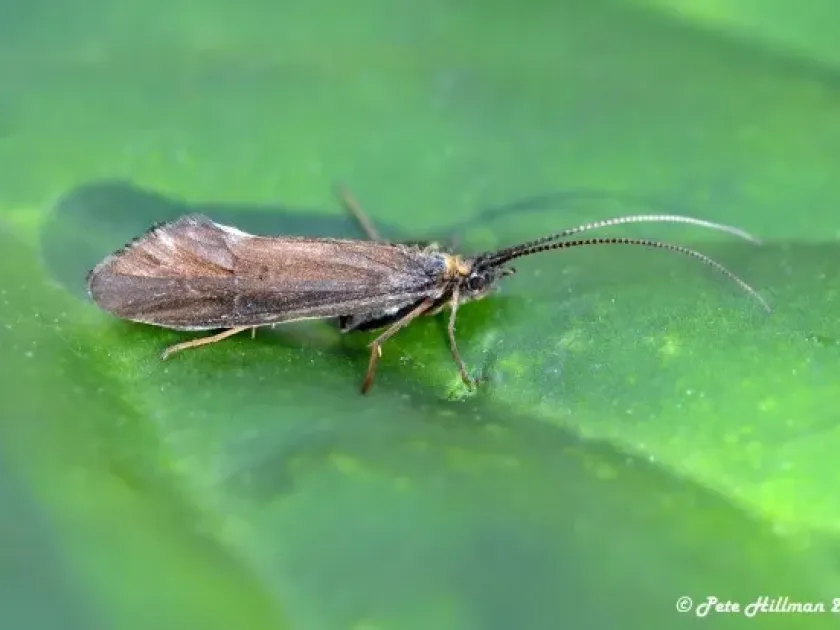
Sericostoma personatum is a species of caddisfly belonging to the family Sericostomatidae. These insects are characteristic inhabitants of flowing water ecosystems, such as streams and brooks.
Adult insects are typically nocturnal or crepuscular, featuring brown-tinted wings covered in dense, fine hairs, which is a hallmark of the Trichoptera order.
The larvae are known for constructing distinct, portable cases made from sand grains and small mineral particles, which they cement together with silk secretions.
They possess a heavily sclerotized head and thoracic plates, designed to withstand the turbulent currents of their natural aquatic habitats.
Development is relatively slow, often spanning multiple years, which makes the presence of this species a reliable long-term indicator of water quality.
What it damages
In aquaculture or commercial aquatic plant nurseries, high concentrations of Sericostoma personatum larvae can become a significant nuisance.
While their primary diet consists of detritus and algae, they are known to graze on soft tissues of aquatic plants when their preferred food sources are scarce.
The larvae may damage the stems and roots of cultivated species, often causing structural weakness that renders the plants susceptible to fungal infections.
Their cases, when attached in large numbers to plant surfaces, can interfere with photosynthesis and impede the proper rooting of new cuttings.
In ornamental pond environments, their activity can degrade the visual appeal of aquatic landscapes and create maintenance difficulties for operators.
When it appears
Larval stages are present throughout the year, as they remain active even in cool water conditions by residing within their protective cases on the substrate.
The adult emergence period usually occurs in late spring and continues into the summer, during which time the insects are observed near the water surface.
Lifecycle timing is heavily influenced by water temperature and flow rate, meaning that populations in different locations can have staggered emergence dates.
Pupation takes place within a sealed case attached to a solid substrate, providing a period of stability before the insect transitions into the flying adult stage.
Monitoring should be most intense during the warmer months when larval metabolic rates increase, leading to higher consumption of available organic material.
Signs of infestation
The most prominent sign of infestation is the discovery of small, slightly curved, sand-encrusted tubes attached to submerged rocks or plant stems.
Visible feeding marks on the leaves and stems of aquatic plants, appearing as irregular holes or frayed edges, indicate grazing activity by the larvae.
Mass emergence of adult caddisflies around the edges of a water body during twilight hours is a strong indicator of a substantial underlying larval population.
The accumulation of shed pupal skins (exuviae) on stones or the sides of tanks confirms that a successful generation cycle has been completed.
A noticeable decline in plant health, particularly in the lower regions of submerged specimens, often correlates with high densities of Sericostoma cases.
Control measures
Managing Sericostoma personatum in artificial systems relies primarily on mechanical removal of organic debris that acts as a food source for larvae.
Installing fine-mesh filters at water inlets effectively prevents larvae from entering cultivation basins and significantly reduces initial population levels.
Introducing predatory fish species that naturally feed on benthic invertebrates can provide sustainable biological control in pond environments.
Maintaining high water flow and cleanliness minimizes the accumulation of detritus, which discourages the colonization of these insects in sensitive areas.
- Mechanical cleaning of substrate
- Fine-mesh water filtration
- Biological control with fish
- Regular health inspections of aquatic plants
Taxonomy
- Latin name
- Sericostoma personatum
- Family
- Sericostomatidae
- EPPO code
- SRCSPE
Discussion
No discussions yet — be the first.