
Notidobia
Notidobia
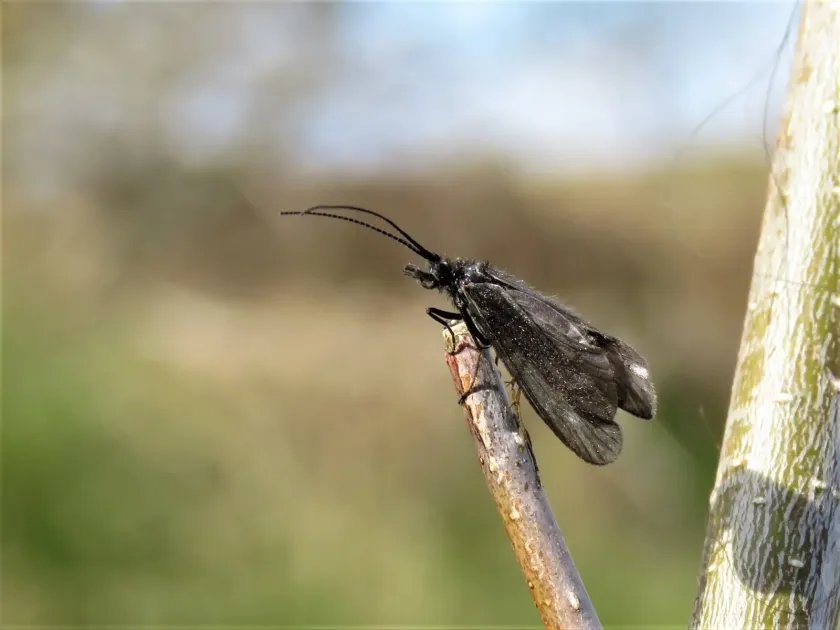
Description
How to identify
Notidobia is a genus of insects belonging to the order Trichoptera (caddisflies), specifically within the family Sericostomatidae. Adults are small, moth-like insects with wings covered in fine hairs.
The life cycle involves complete metamorphosis, including egg, larva, pupa, and adult stages. Most of the larval stage is spent in aquatic or semi-aquatic habitats, which is typical for this order.
A distinctive feature of these larvae is their ability to construct portable protective cases from sand grains, soil particles, or vegetable debris, making them very resilient to environmental changes.
These insects are generally inhabitants of natural water bodies, but they can adapt to wet agricultural environments if specific moisture conditions are met.
Identifying Notidobia requires careful observation of both the adult flight patterns near water and the presence of larvae in the soil or wet root zones.
What it damages
While not a major agricultural pest on a global scale, Notidobia can cause localized damage to crops in low-lying fields or areas with high humidity and poor drainage.
Larvae primarily damage the young stems of crops, especially seedlings that are in contact with moist soil, potentially causing stunted growth or plant death.
In addition to feeding on stems, larvae can graze on the epidermis of roots, which makes the plant more susceptible to soil-borne pathogens and fungal infections.
Vegetable crops planted early in the season are particularly vulnerable, as the cool, damp weather creates perfect conditions for larval activity.
Economic damage is usually low, but persistent infestations in specific zones can result in an uneven stand density, requiring corrective replanting.
When it appears
The activity of adult Notidobia is concentrated in the spring and early summer, which is the period when they emerge to mate and lay eggs.
Larvae remain active throughout the growing season, particularly after periods of high rainfall or irrigation, which increase soil moisture levels.
During dry conditions, larvae often retreat to deeper, wetter layers of the soil to maintain their physiological stability until the next moist period.
Monitoring the soil moisture content is essential, as the emergence and activity of the larvae are highly dependent on the local hydrology of the field.
Understanding the seasonal shifts helps farmers time their tillage and irrigation practices to disturb the larval development cycle effectively.
Signs of infestation
The most reliable sign of an infestation is the presence of irregular chewing patterns on the lower parts of stems near the soil surface.
The discovery of tiny, tube-like cases composed of sand or debris attached to the stem base is a clear indicator that Notidobia larvae are present.
Wilting of seedlings without apparent foliage damage often suggests that the root system or the base of the plant has been compromised.
Mass sightings of adult caddisflies near irrigation ditches are often a precursor to larval outbreaks in the adjacent planting zones.
- Gnawed areas at the plant's base.
- Portable cases made of soil particles attached to stems.
- Premature yellowing or wilting of young crops in damp areas.
Control measures
The primary control strategy involves improving field drainage to reduce the damp conditions that favor larval survival and activity.
Regular cultivation of the soil effectively breaks up the larval cases and disrupts their habitat, significantly lowering their population density.
Removing weeds and debris from irrigation canals or field borders removes the secondary food sources and shelters the larvae rely on.
Insecticidal intervention is rarely required but can be employed in highly concentrated pockets if larval populations exceed standard threshold limits.
Proper crop rotation and avoiding the use of low-lying, poorly drained fields for sensitive seedlings are the most sustainable preventative measures.
Taxonomy
- Latin name
- Notidobia
- Family
- Sericostomatidae
- EPPO code
- NTDBSP
Discussion
No discussions yet — be the first.