
Notidobia ciliaris
Notidobia ciliaris
Description
How to identify
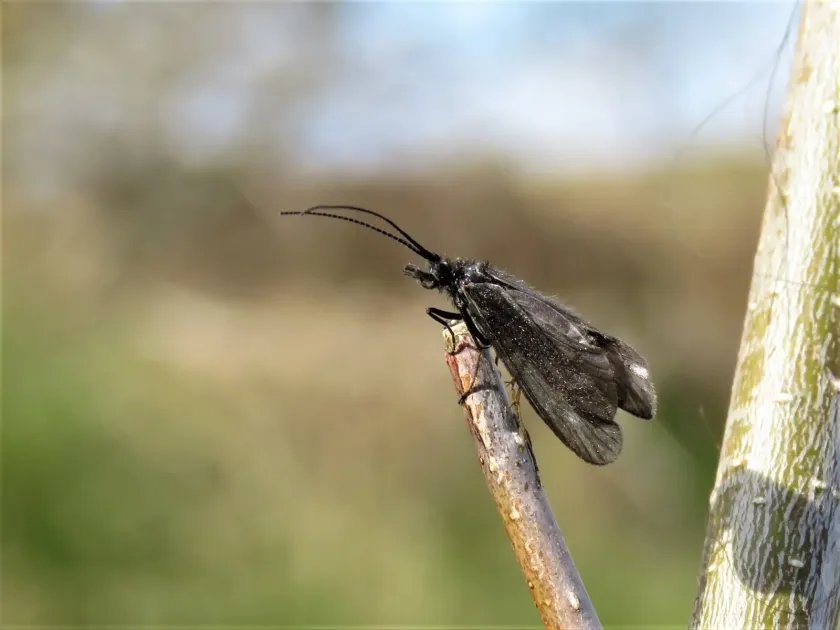
Notidobia ciliaris is a species of caddisfly (Trichoptera) belonging to the family Sericostomatidae. These insects are primarily aquatic in their larval stages, with adults resembling small moths.
Adults feature dark wings covered in fine hairs and a specific wing venation pattern. The larvae are distinct because they construct sturdy, protective cases made of sand grains, small stones, or plant detritus, which they carry around as they move.
Identification is best confirmed by examining the larval case architecture and the genital structure of adult males. They prefer slow-moving water bodies, such as ditches, ponds, and slow rivers with significant vegetation.
Unlike many other agricultural pests, the adult stage of this insect does not feed on crops; it lives only for a short time to reproduce. The primary threat to plants is the larval stage that resides in the water or at the water's edge.
This species is widely distributed across the Palearctic region and has successfully adapted to human-modified environments, including irrigation systems and drainage channels.
What it damages
The larvae of Notidobia ciliaris are primarily detritivores but can become opportunistic herbivores when their natural food supply is low or when their population density becomes abnormally high.
They damage crops grown in flooded or saturated soil conditions, such as rice or certain vegetable varieties. Larvae feed by rasping the epidermis of stems and eating the delicate root structures of young plants.
Root damage is particularly critical, as it restricts the plant's ability to uptake water and nutrients. This results in stunted growth, chlorosis, and increased susceptibility to secondary infections such as root rot.
In high-density outbreaks, the larvae can cause significant stand reduction by killing young seedlings. The mechanical damage also provides entry points for various bacterial and fungal pathogens.
Agricultural fields adjacent to irrigation canals are at the highest risk, as these environments provide ideal conditions for larval survival and development throughout the growing season.
When it appears
The life cycle of this species is highly dependent on water temperature. Larvae start to increase their activity in early spring, as soon as the water temperature begins to rise above freezing.
The adult flight period typically occurs in late spring and early summer (May and June). During this time, they swarm, mate, and lay eggs directly into or near the water.
Larvae pass through several developmental stages (instars) over the course of the season. They remain active through most of the year, including winter, although their metabolic rate decreases significantly in colder months.
Understanding these seasonal patterns allows farmers to implement preventive measures, such as adjusting water levels in irrigation systems prior to the onset of the main larval growth period.
Because the species has a univoltine cycle, its population levels are often predictable, allowing for planned management in areas with a history of infestation.
Signs of infestation
The most reliable sign of an infestation is the presence of the characteristic larval cases (small sand-covered tubes) attached to the lower parts of plants or submerged debris.
Localized feeding marks on the submerged stem surfaces, appearing as scraped, uneven patches, are classic indicators of larval grazing activity on the plant tissue.
Patches of reduced crop vigor or stunted growth within an otherwise healthy field near water sources often indicate an underlying infestation of caddisfly larvae.
Observation of adult caddisflies near irrigation ditches during dusk is a key indicator that egg-laying is occurring, signaling the need for closer monitoring of the crop roots.
The development of brownish, necrotic lesions on the base of stems near the water line often suggests that the larvae have compromised the plant's structural integrity.
Control measures
The most effective management strategy is hydraulic control, specifically the manipulation of water levels in drainage and irrigation systems to disrupt the larval environment.
Regular maintenance of irrigation canals, including the removal of aquatic weeds and organic debris, significantly reduces the carrying capacity of the environment for Notidobia ciliaris.
Biological control using microbial insecticides based on Bacillus thuringiensis is a viable option for reducing larval populations in water bodies without damaging the surrounding ecosystem.
Chemical control is rarely the first choice due to the proximity of the pest to water resources; therefore, it is used only when economic thresholds are strictly met and ecological regulations permit.
- Implementing crop rotation with less water-dependent species.
- Using physical barriers (mesh screens) at irrigation intake points to prevent larval dispersal.
- Conducting thorough tillage and soil preparation before planting to destroy wintering habitats.
Taxonomy
- Latin name
- Notidobia ciliaris
- Family
- Sericostomatidae
- EPPO code
- NTDBCI
Discussion
No discussions yet — be the first.