
Sericostoma
Sericostoma
Description
How to identify
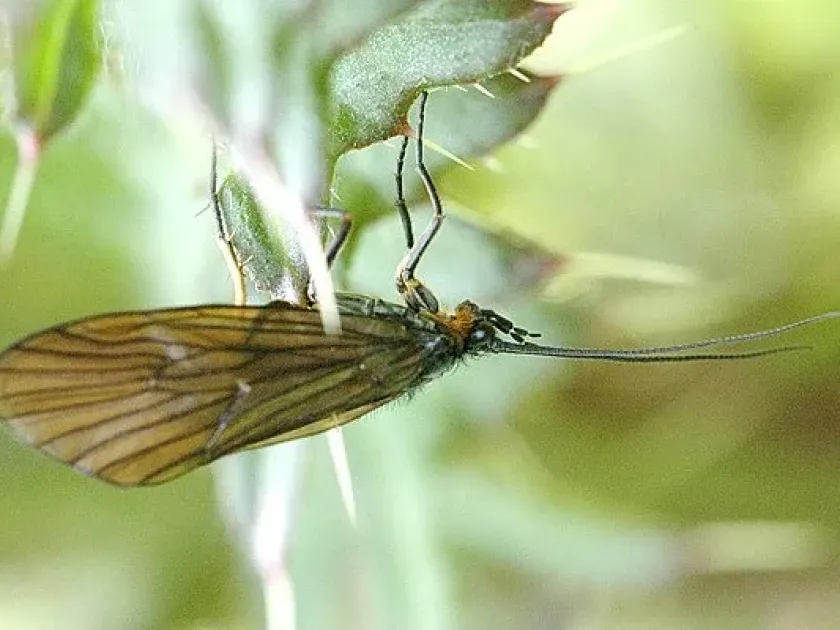
Sericostoma is a genus of caddisflies belonging to the family Sericostomatidae, order Trichoptera. The adults are small, moth-like insects with hairy wings that are folded tent-like over the body when at rest.
The larvae are exclusively aquatic and live inside a portable case, which they meticulously construct from sand grains, tiny stone fragments, or pieces of organic detritus found in their habitat.
They possess a well-developed chewing mouthpart designed for shredding aquatic vegetation and decomposing organic matter, which is a key adaptation for their ecological niche.
Identification often requires careful inspection of the larval case structure and the habitat, as these insects prefer clean, oxygen-rich running waters typical of streams.
Adults exhibit limited lifespan and primarily focus on reproduction, having evolved to prioritize energy conservation rather than active feeding during their short-lived stage.
What it damages
While Sericostoma is not typically regarded as a major agricultural pest, it can cause damage in specific environments, such as rice paddies or flooded greenhouse crops.
The larvae feed on young stems and leaf tissues of submerged plants, which can weaken the plant and make it susceptible to further physiological stress or diseases.
Mass infestations within irrigation networks can result in the clogging of small channels, which alters water flow and negatively impacts the distribution of water to crops.
By consuming organic debris and occasionally living plant tissues, they can disturb the fine balance of the aquatic ecosystem within irrigation ditches.
The damage is usually localized, but in intensive agricultural systems, even minor reductions in the density of water-loving crops can influence the overall yield.
When it appears
The life cycle of Sericostoma is highly dependent on water temperature and the seasonal flow regimes of the water bodies they inhabit.
Adult activity peaks during the warmer summer months when environmental conditions favor mating and the deposition of eggs in suitable aquatic substrates.
Larval growth and feeding activity are most intense during late spring and early summer, coinciding with the rapid growth phase of aquatic and semi-aquatic crops.
As water temperatures drop during autumn, the larvae become less active, often transitioning into a period of slower growth or preparing for pupation.
The entire development cycle is generally completed within a single year, making the presence of the pest predictable for agricultural monitoring purposes.
Signs of infestation
One of the most obvious signs of presence is the accumulation of small, cone-shaped cases composed of sand and debris at the bottom of drainage or irrigation ditches.
Leaf damage, characterized by irregular holes and notched edges on submerged plant parts, serves as a direct indicator of larval grazing activity in the vicinity.
Increased turbidity in shallow water channels during the growth season is often a secondary symptom caused by larvae disturbing the sediment during feeding.
Observing adult caddisflies flying near irrigation pumps or flooded fields during evening hours suggests an established population in the local water system.
The presence of empty larval cases attached to submerged plants often indicates that a brood has recently completed its development and emerged as adults.
Control measures
Effective management of Sericostoma focuses on physical and cultural practices rather than chemical intervention to maintain ecological safety in aquatic zones.
Routine maintenance of irrigation and drainage infrastructure is the most reliable method for reducing larval populations and preventing mass colonization.
Installing fine-mesh filtration screens at the entry points of water supplies can prevent the introduction of larvae into the agricultural field environment.
- Periodic mechanical removal of sediment from irrigation channels
- Monitoring of water quality to discourage excessive larval proliferation
- Usage of biological barriers to prevent larvae migration
In cases of significant crop impact, environmentally friendly biological agents targeting aquatic insects may be utilized in compliance with local regulations.
Taxonomy
- Latin name
- Sericostoma
- Family
- Sericostomatidae
- EPPO code
- SRCSSP
Discussion
No discussions yet — be the first.