
Umbellifer aphid
Semiaphis heraclei
Description
How to identify
The umbellifer aphid (Semiaphis heraclei) belongs to the Hemiptera order and Aphididae family. It is a specialized pest affecting plants within the Apiaceae family.
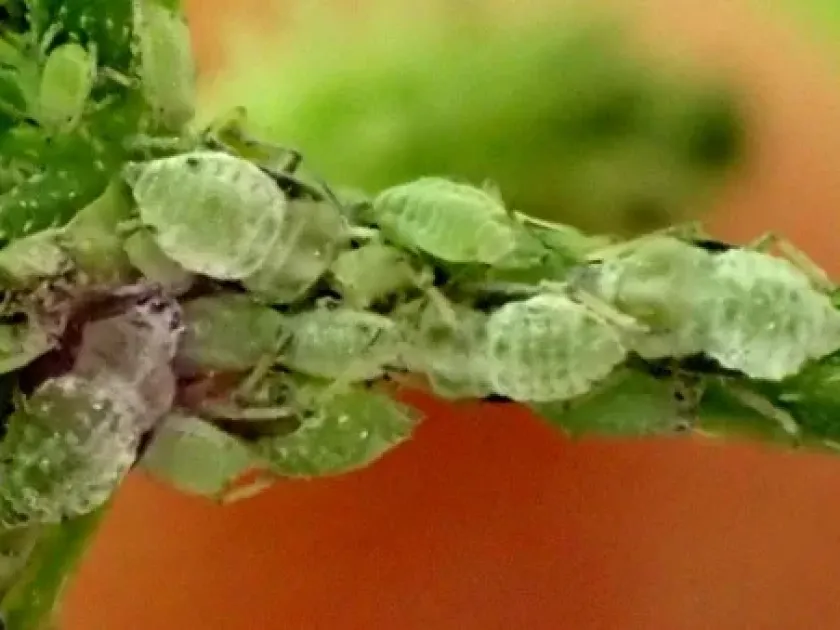
Adult aphids are small, typically measuring between 1.5 and 2.2 millimeters in length. Their bodies exhibit pale yellow or light green hues, providing camouflage on the host plant.
The life cycle of this species is complex, involving both apterous (wingless) and alate (winged) forms, which facilitates both rapid local colonization and dispersal.
Nymphs undergo several molting stages, growing steadily while feeding on the nutrient-rich phloem sap of the host plants throughout their development.
Parthenogenetic reproduction allows the aphid to establish massive populations quickly, often bypassing the need for sexual mating during the active growth season.
What it damages
These aphids primarily target members of the Apiaceae family, including carrots, parsnips, parsley, dill, and celery, causing significant agricultural damage.
Wild host plants like giant hogweed and angelica act as reservoirs for the pest, allowing it to move to cultivated fields when conditions become favorable.
By piercing and sucking plant tissues, the aphids deprive the host of essential nutrients, leading to stunted growth and impaired development of roots and leaves.
Feeding often results in severe leaf curling and distortion, which reduces the photosynthetic area and directly impacts the quality of the harvest.
Furthermore, this aphid species is a known vector for various plant viruses, which can cause systemic infections leading to total crop failure if left unchecked.
When it appears
Umbellifer aphids begin to emerge from overwintering sites in late spring, coinciding with the onset of favorable temperatures and active plant growth.
The peak population density usually occurs during the warm summer months of July and August, when conditions are optimal for exponential reproduction.
Winged forms appear mid-season, enabling the migration of the pest to neighboring fields and new host patches, effectively expanding the area of infestation.
As autumn approaches and temperatures drop, the aphids shift their cycle toward the production of winter-hardy eggs deposited on host tissues.
The duration of the active season depends heavily on regional climate, with warmer autumns potentially extending the feeding period of the pest.
Signs of infestation
The most prominent sign of infestation is the curling and yellowing of foliage, as the plant tissues react to the aphid's saliva and mechanical feeding.
Closer inspection of the underside of leaves reveals dense colonies of aphids, which often appear as sticky, mealy, or yellowish clusters.
Honeydew, a sticky sugary secretion, coats the leaves and serves as a medium for sooty mold growth, resulting in dark, unsightly patches on the plant.
Infested plants show reduced vigor, with leaves becoming chlorotic or necrotic as the population pressure on the vascular system increases over time.
In severe cases, flowering stems are affected, leading to premature drying of blooms and a significant reduction in the production of viable seeds.
Control measures
Cultural control measures include the removal of wild host plants from field margins and the strict sanitation of crop remains after the harvest season.
Integrated pest management (IPM) strategies, such as crop rotation, help break the cycle of the aphid and reduce the reliance on chemical inputs.
Biological control agents, including lady beetles, lacewings, and syrphid fly larvae, are effective natural predators that can keep aphid numbers in check.
If chemical intervention is necessary, the use of systemic insecticides applied at the threshold of infestation can effectively mitigate the damage to crops.
Regular monitoring of fields for early signs of colonisation is critical for the timely application of treatments, preventing the development of heavy outbreaks.
Taxonomy
- Latin name
- Semiaphis heraclei
- Order
- Hemiptera (bugs, aphids, leafhoppers)
- Family
- Aphididae
- EPPO code
- SEMIHE
Discussion
No discussions yet — be the first.