
Seinura
Seinura
Description
How to identify
The genus Seinura belongs to the phylum Nematoda, class Chromadorea, order Aphelenchida, and family Aphelenchoididae. These are microscopic worms characterized by a sharp stylet used for feeding.
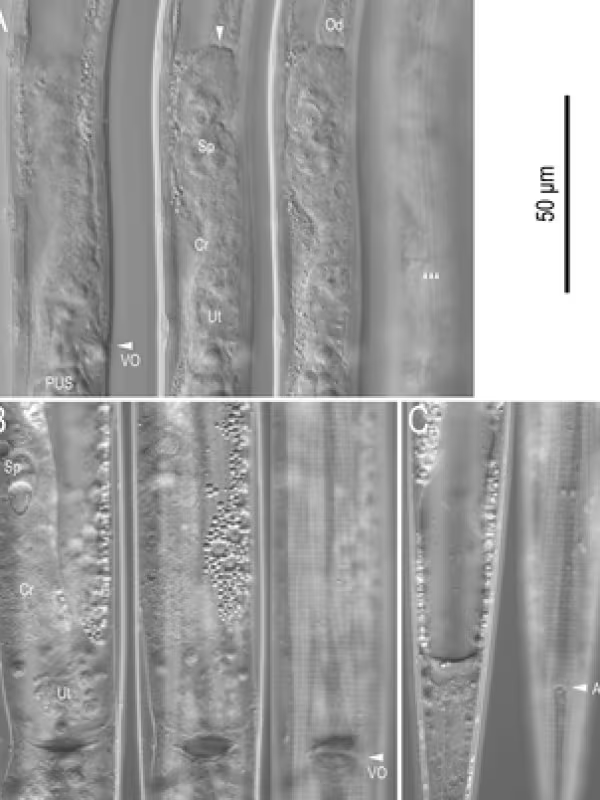
Morphologically, Seinura are slender worms. The primary distinguishing feature of the genus is the structure of the esophagus with a well-developed median bulb and the specific tail shape of both females and males, allowing for differentiation from other nematode genera.
Unlike many obligate parasites, many Seinura species are predatory or mycophagous, feeding on fungi or other small soil nematodes. However, certain species demonstrate associations with higher plant tissues, causing pathological changes.
The taxonomy of this genus is complex and requires microscopic analysis of cross-sections or molecular genetic testing for accurate species identification, as they closely resemble other family members.
These nematodes are widely distributed, inhabiting both soil environments and the rhizosphere of various agricultural crops, successfully adapting to a wide range of temperatures and moisture levels.
What it damages
Seinura can affect a broad range of crops, including cereals, vegetables, and ornamental plants. Interaction with the plant often occurs through damaged root or stem tissues.
Damage manifests as stunted plant growth, leaf yellowing, and decreased productivity. In some instances, these nematodes facilitate the entry of secondary fungal or bacterial infections.
The economic harm is also associated with their ability to act as vectors for various pathogens, complicating the phytosanitary status of crops and reducing the quality of harvested produce.
The primary impact is on the root system, rendering the plant more susceptible to drought and nutrient deficiency, as the water and nutrient absorption capacity of the roots significantly declines.
In ornamental crops, the activity of these nematodes can lead to the deformation of above-ground parts, significantly reducing the market value of plants in nurseries and greenhouses.
When it appears
The activity of Seinura nematodes is directly dependent on soil moisture and ambient temperature, peaking during periods of moderate weather.
During the summer, with sufficient moisture, the nematode life cycle accelerates, leading to a rapid increase in population density within the plant root zone.
As autumn approaches or if the soil dries out, the pests can enter a state of anabiosis, maintaining viability under adverse conditions for long periods.
The spring season is a critical time for young seedlings, as nematode activity during this period can lead to seedling death or significant developmental delays.
The life cycle includes several larval stages capable of active migration in search of favorable conditions or food sources, which complicates infection forecasting.
Signs of infestation
Visually identifying Seinura presence in the early stages is extremely difficult, as symptoms often mimic common micronutrient deficiencies or root rot.
A primary sign is localized plant wilting that does not recover after irrigation. Upon extracting the plant from the soil, one may notice browning or necrosis of the root tips.
When the stem part of the plant is affected, shoot deformation, leaf curling, and the appearance of unusual spots may occur due to toxins released by the nematodes during feeding.
Accurate confirmation of the pest's presence is conducted through phytogelminthological analysis of soil and damaged tissue samples in laboratory settings using nematode extraction techniques.
Specific signs, such as root "hairiness" or excessive branching, often indicate systemic nematode damage occurring throughout the growing season.
Control measures
The primary control method is the implementation of crop rotation to prevent pest buildup in the soil, as well as the use of healthy, nematode-free planting material.
Agrotechnical practices, such as deep autumn plowing and the timely removal of reservoir weeds, help significantly reduce population density in the field.
- Using organic fertilizers that suppress pathogen activity.
- Applying biological products based on antagonistic fungi or predatory nematodes.
- Thermal treatment of soil or substrates in greenhouse conditions.
- Chemical soil fumigation in cases of critical infestation levels.
The use of chemical protection products must be strictly regulated and based on soil analysis results, as nematode control requires high precision in dosage.
Biological control, aimed at creating an environment unfavorable for the pest, is prioritized within integrated pest management systems.
Taxonomy
- Latin name
- Seinura
- Order
- Nematodes
- Family
- Aphelenchoididae
- EPPO code
- SEINSP
Discussion
No discussions yet — be the first.