
Aphelenchoides
Aphelenchoides
Description
How to identify
Aphelenchoides is a genus of microscopic parasitic nematodes within the order Aphelenchida and the family Aphelenchoididae. These organisms are highly specialized endoparasites that occupy the aerial parts of host plants, moving through the thin film of moisture on leaf surfaces.
Their bodies are slender and transparent, designed for navigating between plant cells. Equipped with a sharp, needle-like structure known as a stylet, they puncture individual cells to inject digestive enzymes and ingest the cellular contents, leading to necrosis.
These nematodes thrive in environments with high humidity and moderate temperatures, which makes them particularly problematic in greenhouse settings. They can survive adverse conditions by entering a state of cryptobiosis, persisting in dried plant debris or soil for long periods.
The life cycle of Aphelenchoides is rapid, typically completing in less than two weeks under optimal conditions. This speed allows for exponential population growth and quick infestations throughout a crop area if left unchecked by management practices.
Transmission occurs primarily through the trade of infested nursery stock, cuttings, or contaminated tools. Because they require water for mobility, they are easily spread via splashing water from irrigation systems, especially in densely planted indoor environments.
What it damages
Aphelenchoides species infect a diverse array of host plants, including popular ornamentals such as chrysanthemums, begonias, ferns, and various berry crops like strawberries. The damage is primarily internal, affecting the leaf tissue directly.
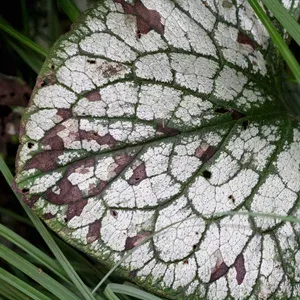
Symptoms typically begin as small, discolored spots that are bounded by the leaf veins, creating a characteristic mosaic or angular appearance. As the infestation progresses, these lesions turn brown or black, leading to leaf distortion and curling.
In cases of severe infestation, the foliage becomes necrotic and drops prematurely, which can lead to complete defoliation. In strawberry plants, the infection results in stunted growth, deformed leaf development, and a significant reduction in fruit yield.
Beyond direct feeding, these nematodes facilitate the entry of secondary pathogens, including bacteria and fungi, through the wounds caused by their stylets. This synergistic effect often accelerates the decline of the plant, making diagnosis more complex.
In greenhouses, an infestation of foliar nematodes can rapidly destroy entire collections if not managed proactively. The hidden nature of the pests often means that significant damage has occurred before the symptoms become obvious to the grower.
Control measures
The most effective strategy for managing Aphelenchoides is strict sanitation and quarantine protocols. Only certified, nematode-free propagation material should be introduced into the growing facility to prevent initial outbreaks.
Hot water treatment is a standard and effective control method for cuttings and dormant plants. Soaking the plant material in water at 45–48 degrees Celsius for approximately 15 to 20 minutes can effectively kill the nematodes without damaging most host plant tissues.
Chemical control options are generally limited and often provide only temporary suppression. While certain systemic nematicides exist, they must be used carefully and in accordance with local regulations, as they can be harmful to beneficial insects and the environment.
Cultural management plays a vital role in preventing the spread of the pest. Growers should switch from overhead irrigation to drip irrigation to keep the foliage dry, thereby breaking the moisture bridge that nematodes use to migrate between leaves.
- Regular sterilization of all gardening tools and pots using heat or disinfectants.
- Routine monitoring of lower foliage for signs of early chlorosis or necrosis.
- Prompt destruction of infested plants to serve as a barrier to further spread.
- Using sterile, pathogen-free growing media for all nursery activities.
Taxonomy
- Latin name
- Aphelenchoides
- Order
- Nematodes
- Family
- Aphelenchoididae
- EPPO code
- APLOSP
Discussion
No discussions yet — be the first.