
Schoutedenia emblica
Schoutedenia emblica
Description
How to identify
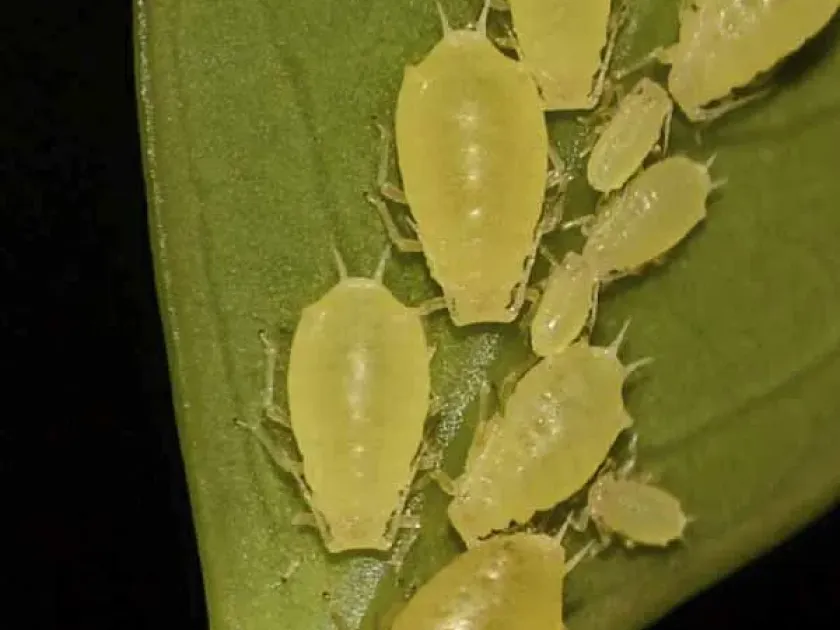
Schoutedenia emblica is an aphid species belonging to the family Aphididae, order Hemiptera. It is a specialized pest that typically forms dense colonies on the undersides of young leaves and soft stems.
Adult individuals can be either apterous (wingless) or alate (winged). Their coloration usually ranges from pale yellow to light green, providing excellent camouflage against the foliage of their host plant.
Field identification requires the use of a hand lens to inspect the siphunculi (cornicles) on the abdomen, which is a definitive taxonomic feature for accurately distinguishing this aphid species.
The life cycle is closely tied to plants within the Phyllanthaceae family. Reproduction is primarily parthenogenetic, allowing for rapid population growth under optimal environmental conditions.
High reproductive rates mean that a single colony can produce numerous generations within one growing season, necessitating vigilant monitoring to prevent heavy infestations in nurseries and gardens.
What it damages
The primary host plant is Phyllanthus emblica, though the pest can also impact various ornamental and medicinal species within the Phyllanthus genus.
The damage is caused by the aphids piercing plant tissues and sucking out sap. This feeding process depletes essential nutrients and causes significant physiological stress to the host.
Aphids secrete honeydew, a sugary waste product that promotes the growth of sooty mold. This black fungal layer covers the leaves, effectively blocking sunlight and inhibiting photosynthesis.
Impacted plants often exhibit curled, distorted leaves, stunted shoot growth, and premature leaf drop, which significantly reduces the aesthetic and commercial value of the crop.
Furthermore, Schoutedenia emblica is known to act as a vector for various plant viruses, posing a secondary risk of disease spread within plant collections.
When it appears
Activity typically begins in the early spring, coinciding with the flush of new vegetative growth, which is the preferred feeding site for the aphid population.
In greenhouses or controlled indoor environments, this pest can remain active year-round, as the absence of cold stress prevents the initiation of winter diapause.
Peak population levels usually occur during periods of moderate temperatures and humidity; extreme heat or prolonged dry conditions tend to suppress the size of colonies.
During late autumn, as day length decreases, sexual morphs may emerge to lay overwintering eggs on bark crevices or dormant buds, ensuring the survival of the species until spring.
Scouting programs should prioritize the inspection of apical buds and tender new foliage, as these areas are the most likely sites for initial colonisation by winged migrants.
Signs of infestation
The first indicator of an infestation is the curling and puckering of young leaves on the terminal shoots, often accompanied by yellowing at the feeding sites.
Close inspection reveals clusters of small, light-colored insects. White, papery exuviae (cast-off skins from molting) scattered among the colony are a tell-tale sign of active feeding.
The presence of ants patrolling the stems is a strong indicator of aphid presence, as ants protect the aphids to harvest the sugary honeydew they secrete.
Sticky, shiny deposits on the leaves and nearby branches indicate the accumulation of honeydew and the potential onset of sooty mold, signaling a well-established colony.
Neglected infestations lead to progressive decline, including the necrosis of leaf margins and the overall stunted growth of the entire plant specimen.
Control measures
The first line of defense involves regular phytosanitary inspection and the mechanical removal of heavily infested shoot tips to reduce the immediate population load.
Biological control is highly effective; introducing natural enemies such as ladybeetles (Coccinellidae), lacewings, and parasitic wasps can significantly suppress aphid numbers.
For severe outbreaks, systemic insecticides are recommended as they are absorbed by the plant, providing long-lasting protection by targeting the aphids through their feeding.
Environmentally friendly options include the application of horticultural oils or insecticidal soaps, which act by suffocating the insects upon direct contact.
- Perform systematic monitoring at 7-10 day intervals during peak growth.
- Use yellow sticky traps to detect the arrival of winged adults early.
- Maintain optimal plant health through balanced fertilization and correct watering to improve tolerance.
Taxonomy
- Latin name
- Schoutedenia emblica
- Order
- Hemiptera (bugs, aphids, leafhoppers)
- Family
- Aphididae
- EPPO code
- SHOUEM
Discussion
No discussions yet — be the first.