
Pine needle aphid
Schizolachnus pineti
Description
How to identify
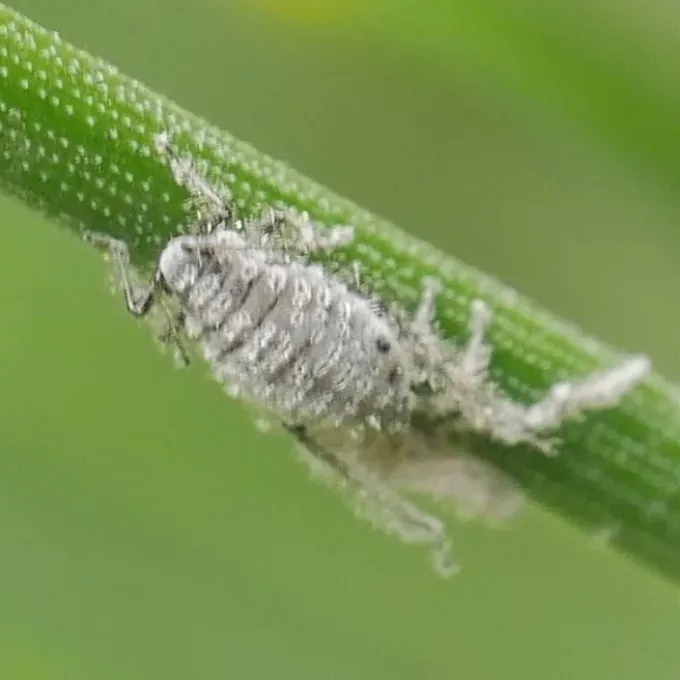
The pine needle aphid (Schizolachnus pineti) is a small insect belonging to the Aphididae family, order Hemiptera. They are typically brown or dark brown, often covered in a fine grey wax powder.
Adult aphids appear in both wingless and winged forms. The wingless adults are about 2–3 mm long and have a plump, oval-shaped body suited for life on pine needles.
Nymphs are smaller versions of the adults, very active, and move quickly along the needles to find the best spots for feeding on sap.
They live in tight clusters, often aligned in long rows on the underside of pine needles, which helps them remain hidden from visual predators.
This species is highly host-specific, primarily found on various species within the Pinus genus, making them a common sight in pine forests and nurseries.
What it damages
The aphid feeds exclusively on pine species, including Scots pine (Pinus sylvestris) and many ornamental pine varieties planted in urban landscapes.
Damage is most severe on young trees, nursery saplings, and trees under environmental stress, where heavy infestations can lead to significant vigor loss.
By constantly extracting sap from the needles, the aphids drain the tree's energy reserves, resulting in stunted growth and shorter needle development.
Prolonged infestation weakens the overall physiological state of the pine, making it more susceptible to opportunistic pathogens and secondary pests.
In ornamental settings, the primary issue is the loss of aesthetic value due to yellowing, needle drop, and the growth of sooty mold caused by aphid excrement.
When it appears
The overwintering stage consists of eggs laid by females during the autumn, placed securely near the base of the needles on last year's shoots.
Hatching occurs in the spring, synchronized with the onset of bud break and the beginning of active sap flow in the host tree.
Multiple generations occur throughout the growing season, with population numbers peaking during warm and dry summer months.
During the peak of the season, a single tree can harbor thousands of aphids, which reproduce rapidly through parthenogenesis.
As autumn temperatures drop, sexual individuals emerge to mate and lay eggs, ensuring the species survives the harsh winter temperatures.
Signs of infestation
The most reliable sign of an infestation is the presence of brown, line-like clusters of insects on the needles, often overlooked at first glance.
Needles become sticky due to honeydew, a sugary byproduct of aphid feeding, which subsequently attracts ants and promotes sooty mold growth.
Sooty mold creates a black, powdery coating on the needles and twigs, interfering with the tree's photosynthesis and causing premature needle yellowing.
Infested trees often show signs of branch dieback, needle drop, and a general loss of color and density in the foliage compared to healthy trees.
The active movement of ants on the branches is a strong indicator that a colony of aphids is being protected or farmed by the ants.
Control measures
Regular visual inspections are the most effective way to detect aphid populations early before they reach damaging levels.
Chemical control using systemic or contact insecticides is recommended only when population densities threaten the health of the trees, particularly in nurseries.
Encouraging natural predators such as lady beetles, lacewings, and syrphid fly larvae is the best strategy for long-term integrated pest management.
Maintaining tree health through proper irrigation and soil management reduces the tree's susceptibility to aphid colonization and subsequent stress.
- Regular monitoring of pine foliage.
- Use of insecticidal soaps for light infestations.
- Application of systemic pesticides for severe cases.
- Conservation of natural predator populations.
Taxonomy
- Latin name
- Schizolachnus pineti
- Order
- Hemiptera (bugs, aphids, leafhoppers)
- Family
- Aphididae
- EPPO code
- SCHLPI
Discussion
No discussions yet — be the first.