
Pine needle aphid
Schizolachnus
Description
How to identify
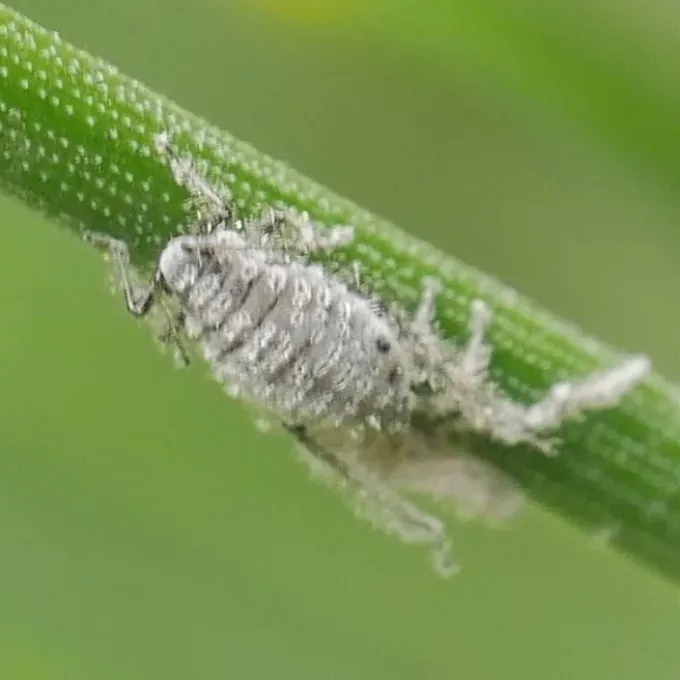
The pine needle aphid (Schizolachnus) belongs to the Aphididae family. These insects are small, typically measuring 2–3 mm in length, and often display dark brown or greyish coloration.
A distinctive feature of this species is the presence of long setae (hairs) on their bodies, which gives them a somewhat fuzzy appearance when viewed closely.
These aphids are social insects that live in open colonies. They are known for arranging themselves in precise rows along the pine needles, which is a unique behavior compared to other aphid species.
They often secrete a waxy substance that acts as a protective layer against environmental stress, making them appear coated in a white or greyish dust.
The life cycle involves overwintering as eggs on the needles, with nymphs emerging in early spring to initiate new colonies that grow rapidly through multiple generations.
What it damages
These aphids primarily target pine trees (Pinus species), including both native forest species and ornamental varieties used in landscaping.
Infestations are particularly damaging in nurseries and young plantations, where aphids can significantly weaken the young trees by depriving them of vital nutrients.
Continuous feeding causes the needles to lose vigor, leading to chlorosis, stunted growth, and a general decline in the tree's physiological health.
In mature trees, while they rarely kill the host, they create stress that opens the tree to secondary attacks by wood-boring insects and various fungal pathogens.
The aesthetic damage is also a major concern for garden owners, as the discolored and falling needles destroy the ornamental appeal of the pines.
When it appears
Activity typically begins in the early spring, synchronized with the bud break of the host pine trees, as nymphs emerge from their overwintered eggs.
The most significant population growth occurs during the warm months of spring and early summer when sap flow is abundant and favorable for feeding.
As temperatures increase in late summer, the populations may stabilize or fluctuate depending on the availability of moisture and the presence of natural predators.
In the autumn, sexual reproduction occurs, leading to the deposition of eggs on the needles, which will serve as the next generation's starting point.
Proactive monitoring should be conducted from late March onwards to catch the initial colonies before they multiply beyond manageable levels.
Signs of infestation
The most visible sign of an infestation is the appearance of small, dark insects lined up on the needles, often mistaken for debris or dirt particles.
The needles begin to show yellowing or browning, followed by premature needle drop, which results in visible thinning of the tree's canopy.
Aphids produce large amounts of honeydew, a sticky sugary waste, which accumulates on the foliage and branches underneath the feeding colonies.
This honeydew promotes the growth of sooty mold, a black fungus that coats the needles and inhibits the tree's ability to photosynthesize effectively.
Increased ant activity on the tree is a strong indicator of aphid presence, as ants are attracted to the honeydew and will defend the aphid colonies.
Control measures
Management often involves the use of systemic insecticides, which are absorbed by the plant and provide long-lasting control as the aphids feed on the sap.
For ornamental plants, insecticidal soaps or horticultural oils can be effective if applied directly to the colonies to ensure thorough coverage.
Integrated Pest Management (IPM) practices recommend encouraging natural predators such as lady beetles, lacewings, and hoverfly larvae to maintain population balance.
Proper irrigation and fertilization help trees maintain a strong immune system, making them more resilient to aphid-induced stress.
- Regular monitoring of pine foliage starting in early spring.
- Application of systemic insecticides during peak infestation periods.
- Encouraging natural predator habitats in and around the plantation.
- Removal and destruction of heavily infested branches to reduce local population.
- Using dormant oils in late winter to target overwintering eggs.
Taxonomy
- Latin name
- Schizolachnus
- Order
- Hemiptera (bugs, aphids, leafhoppers)
- Family
- Aphididae
- EPPO code
- SCHLSP
Discussion
No discussions yet — be the first.