
Rousettus
Rousettus
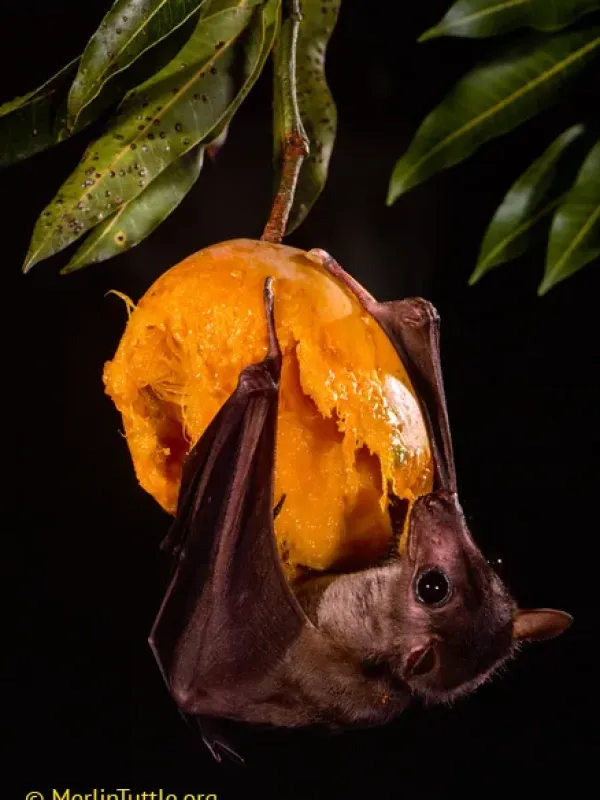
Description
How to identify
Rousettus, commonly known as rousette fruit bats, belongs to the Pteropodidae family. Unlike most other bats, these animals do not use echolocation; instead, they rely on their excellent eyesight and highly developed sense of smell to navigate and find food.
These bats are characterized by a dog-like snout and large, expressive eyes adapted for nocturnal activity. They are capable of covering significant distances during their nightly foraging flights, making them highly mobile crop pests.
Their dental structure is specifically evolved for feeding on fruits and soft plant tissues. They live in large social colonies, often roosting in caves or dense tree canopies, which allows them to mobilize quickly in response to food availability.
The reproduction rate of Rousettus is relatively low, with females typically producing one offspring per year. Despite this, their habit of living in dense colonies allows them to impact large agricultural areas effectively.
Their ability to fly over long distances means that an orchard can be targeted even if no colony is present in the immediate vicinity, complicating early detection and management efforts for farmers.
What it damages
Rousettus bats are major pests for various fruit-bearing plants, including mangoes, bananas, citrus, and stone fruits. They cause damage by consuming the pulp of ripening fruits, often rendering the remaining harvest unsalable.
The damage is not limited to the fruit consumed; bats often leave partially eaten or scratched fruit on the branches. These damaged items become susceptible to fungal infections, rotting, and attracting secondary pests like insects.
In cases of heavy infestation, a colony can destroy 30-50% of the harvest in a very short period. Besides eating fruit, they can break young branches and damage sensitive buds, impacting the overall health and productivity of the trees.
Their droppings can contaminate the tree canopy and the soil underneath. This biological waste can alter the soil chemistry and potentially spread pathogens that are harmful to the health of the orchard trees.
For commercial growers, the damage is particularly severe because these bats specifically select the ripest and most high-quality fruit, directly impacting the profitability of the agricultural operation.
When it appears
The presence of Rousettus in orchards is highly seasonal and depends on the ripening schedule of local fruit crops. In tropical regions, this can occur throughout the year depending on the tree species.
Peak damage usually occurs in the final stages of fruit ripening, when sugar content and aroma are highest. This is when growers must be most vigilant and prepare their defense strategies.
These bats are nocturnal, starting their feeding activity shortly after sunset and continuing until dawn. Their activity levels increase significantly during periods when natural forest food sources are scarce, such as dry seasons.
Seasonal migration patterns also play a critical role; as environmental conditions change, colonies may move to new areas, leading to sudden and unexpected outbreaks of pest activity in orchards that were previously unaffected.
Monitoring the orchard for signs of bat activity should begin at least two to three weeks before the estimated harvest date to ensure that protective measures are in place before major damage occurs.
Signs of infestation
The primary sign of Rousettus activity is the presence of fruit with deep tooth marks and gouges. Unlike insect damage, which is often surface-level or small, bat damage is characterized by larger missing chunks and deep scratches.
Discarded fruit remains, such as peels, seeds, and chewed pulp found on the ground under trees, are clear indicators that bats have been feeding in the area during the night.
The presence of guano (droppings) under the tree canopy is a strong indicator of bat activity, as they often roost or rest in the branches while feeding. A distinctive pungent odor may also be noticeable.
At night, audible signs include the sound of wings flapping and the characteristic social calls of the bats in the canopy. These are easily detectable with a flashlight or by listening to the orchard environment at night.
Sudden weight loss of the harvest or a quick decline in the number of fruits on the trees without visible insect presence often suggests that the orchard is being visited by a colony of fruit bats.
Control measures
The most effective method for protecting orchard crops is the use of netting or bird-proof exclusion netting that completely covers the tree canopy. This provides a physical barrier that prevents bats from reaching the fruit.
- Deploying ultrasonic deterrents designed to disrupt the bats' sensitive hearing and orientation.
- Using bright lighting systems (floodlights) at night, as these bats generally prefer to forage in dark, shaded environments.
- Implementing mechanical deterrents like wind-powered noise makers or streamers that discourage roosting.
Maintaining orchard hygiene is essential; prompt harvesting and the removal of fallen or rotten fruit reduce the scent trails that attract bats to the site. Cleanliness significantly decreases the attractiveness of the orchard.
Canopy management, such as pruning, can sometimes make trees less favorable for landing and feeding. This should be combined with other protective measures for maximum efficiency against fruit bats.
Chemical control is rarely recommended or effective against Rousettus due to the high risk of environmental contamination and the bats' ability to travel large distances, which makes localized chemical treatments largely useless.
Taxonomy
- Latin name
- Rousettus
- Family
- Pteropodidae
- EPPO code
- ROUSSP
Discussion
No discussions yet — be the first.