
Straw-colored fruit bat
Eidolon
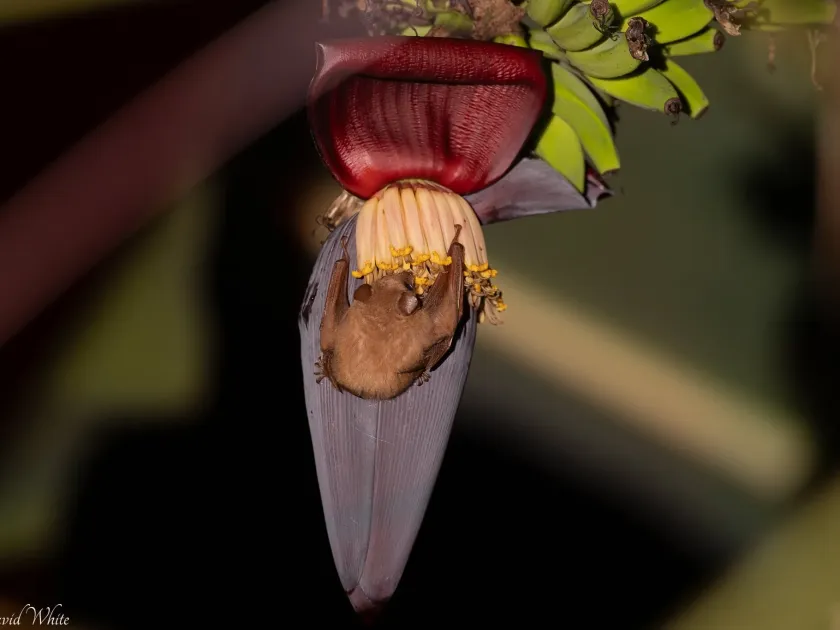
Description
How to identify
The straw-colored fruit bat, scientifically known as Eidolon helvum, is a large megabat species found across Africa. Unlike microbats, these animals do not use echolocation; they rely primarily on their keen sense of smell and vision to locate food sources.
They are characterized by a yellowish-brown coat, large eyes, and a dog-like snout. With a wingspan of up to 80 centimeters, these mammals are easily recognizable during their nocturnal foraging flights.
They belong to the family Pteropodidae within the order Chiroptera. Their social structure is highly developed, as they often roost in large, noisy colonies that can contain hundreds of thousands of individuals.
As highly mobile creatures, they can travel vast distances in search of ripe fruit. This makes them a significant challenge for farmers in regions where their migratory paths intersect with intensive fruit production zones.
Understanding their behavior is crucial for agricultural management, as their reliance on scent makes them exceptionally good at detecting maturing fruit in orchards from great distances.
What it damages
Eidolon helvum is a major pest for commercial fruit production. They feed on a wide range of soft fruits, including mangoes, citrus, guavas, and bananas, often causing severe financial losses during the harvest season.
The damage is two-fold: direct consumption and mechanical destruction. They frequently bite into fruit and discard large portions, which then become susceptible to secondary infections, such as mold and fungal rots, rendering the harvest unmarketable.
Heavy roosting by large colonies in orchard trees can cause significant structural damage. Branches may break under the collective weight of thousands of bats, leading to long-term decline in tree productivity and increased maintenance costs.
Furthermore, the presence of large colonies leads to the accumulation of waste, which may contaminate the orchard floor and create unhygienic conditions that invite further pests and disease vectors.
Economic impact assessments frequently highlight that Eidolon helvum activity can reduce marketable yields by over 30% if no protection measures are implemented during the peak fruit maturity period.
When it appears
The appearance of Eidolon helvum in agricultural zones is strictly seasonal, corresponding to the ripening phases of target crops. They are most active when fruit sugar levels are highest, which coincides with the final weeks of the harvest period.
Migration patterns are influenced by environmental stressors, such as drought or the depletion of natural forest food sources. During such times, the bats are more likely to seek out irrigated plantations where food and water are consistently available.
Nocturnal activity peaks immediately after dusk, when the colony leaves the roosting site to forage. They may remain in the orchards until just before dawn, making consistent monitoring essential during these hours.
Breeding seasons can also dictate their presence in certain areas. During periods when they are raising young, their caloric requirements increase, which correlates with an intensified foraging effort and higher pressure on crops.
Agricultural monitoring programs should track local bat migration trends to predict arrival times and prepare physical barriers before the fruit becomes attractive to the foraging colony.
Control measures
Managing Eidolon helvum requires a strategy centered on exclusion and deterrence. The most effective method for high-value orchards is the use of high-quality netting, which prevents bats from landing on and accessing the fruit.
Acoustic deterrents that broadcast warning signals or ultrasonic frequencies can be effective, though they are best used as part of an integrated approach. Rotating the signals is necessary to prevent habituation by the bats.
Lighting systems can act as a natural deterrent. Because these bats prefer dark environments to forage, keeping orchards well-lit during the night can disrupt their feeding behavior and force them to migrate to less protected areas.
Sanitation is a vital cultural practice. Removing overripe fruit and fallen debris prevents the orchard from becoming a persistent food source, which encourages the bats to move elsewhere once the main harvest is secured.
While various chemical repellents have been researched, their efficacy and impact on fruit quality often make them less desirable. Currently, a combination of physical netting and light-based deterrence remains the gold standard for protecting fruit crops.
Taxonomy
- Latin name
- Eidolon
- Family
- Pteropodidae
- EPPO code
- EIDLSP
Discussion
No discussions yet — be the first.