
Rivellia
Rivellia
Description
How to identify
Rivellia is a genus of picture-winged flies belonging to the family Platystomatidae. These insects are widely recognized in agricultural entomology for their role as pests in legume production.
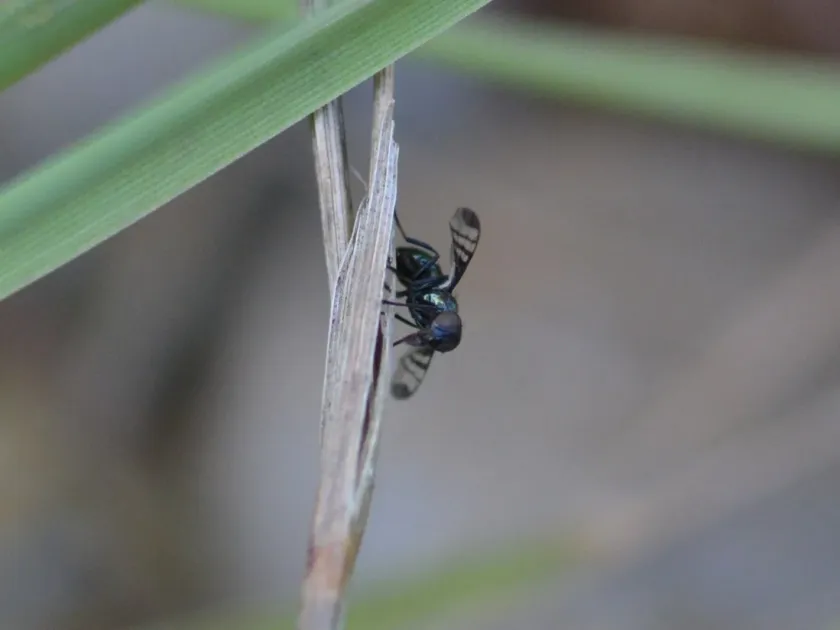
The adults are characterized by distinct dark markings on their wings, which is a primary feature used for visual identification in the field among other Diptera species.
Larvae are small, legless, and white or cream-colored, typically living within the soil or in the root zones of host plants where they complete their feeding phase.
The life cycle encompasses four stages: egg, larva, pupa, and adult. They often overwinter in the soil, which necessitates careful soil management practices in infested areas.
Monitoring the adult population is best achieved through the use of yellow sticky traps placed near the field edges during the early vegetative stages of crop development.
What it damages
Rivellia larvae primarily target the roots and root nodules of legume crops, with soybeans being the most frequently reported host susceptible to significant damage.
By consuming the root tissues, the larvae disrupt the plant's nutrient and water uptake, which leads to stunted growth and reduced vigor during critical development periods.
The destruction of nitrogen-fixing nodules significantly limits the plant's ability to utilize atmospheric nitrogen, often resulting in nutrient deficiency symptoms.
In addition to direct feeding, the wounds created by the larvae provide easy entry points for soil-borne pathogens, which may lead to widespread root rot infections.
Severe infestations can cause substantial yield losses, particularly in fields where soil moisture or environmental conditions already place the crop under stress.
Signs of infestation
Early signs of Rivellia presence include yellowing of the leaves and an overall reduction in plant size compared to the surrounding healthy canopy.
Infected plants often show signs of wilting even when soil moisture is adequate, indicating that the root system has been compromised by the feeding larvae.
Upon excavating the roots, one can observe tunnels or hollowed-out sections of the primary and secondary roots, which confirm the activity of the pest.
The absence or partial destruction of nitrogen-fixing nodules is a clear diagnostic sign of larval infestation in soybean fields during the active growth phase.
Patches of sparse or irregular growth within the field serve as a key indicator for scouts that a closer inspection of the root health is required.
Control measures
Crop rotation is the most effective cultural control method, as it breaks the life cycle of the pest by removing the host plant in subsequent growing seasons.
Deep plowing in the autumn can disturb the overwintering pupae in the soil, significantly reducing the population pressure for the upcoming planting cycle.
Seed treatment with systemic insecticides is recommended to protect seedlings during the vulnerable early stages of germination and establishment.
Maintaining high soil fertility and balanced nutrition helps plants better tolerate root damage and promotes faster recovery from minor infestations.
- Use of pheromone or visual attractant traps for monitoring and early detection.
- Application of foliar insecticides if adult population thresholds are exceeded.
- Weed management to eliminate alternative host plants that support larval development.
Taxonomy
- Latin name
- Rivellia
- Order
- Diptera (flies)
- Family
- Platystomatidae
- EPPO code
- RIVESP
Discussion
No discussions yet — be the first.