
Platystoma seminationis
Platystoma seminationis
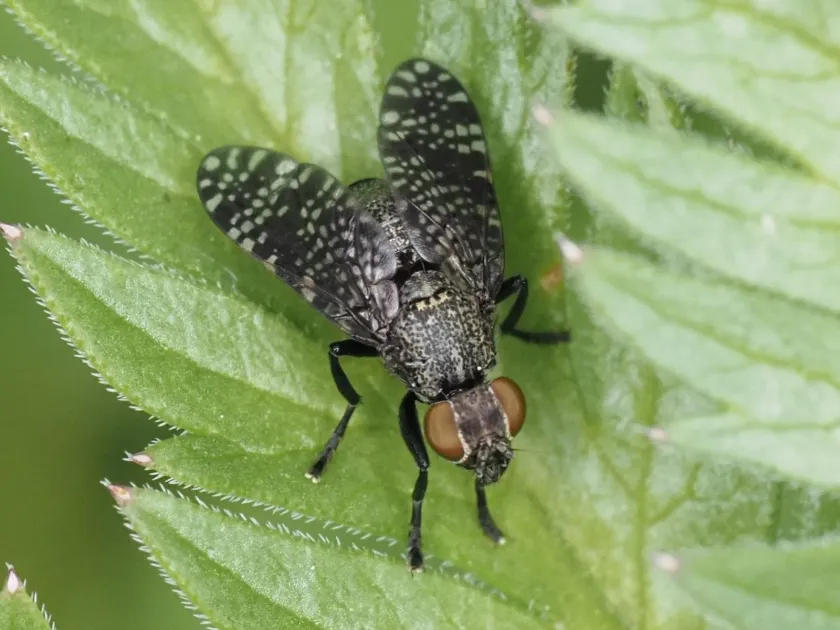
Description
How to identify
Platystoma seminationis belongs to the order Diptera, family Platystomatidae. These flies are easily recognized by their distinctively patterned wings, which feature dark spots and bands, making them a unique subject for entomological study.
The adult fly possesses a dark, often metallic-toned body covered with fine hairs. Their head is well-developed with large compound eyes, and their mouthparts are adapted for feeding on liquid food sources found in nature.
Larvae of this species are legless and worm-like, typically pale yellowish in color. They develop in organic-rich moist substrates, reflecting their role in the decomposition chain and their preference for specific environmental niches.
The lifecycle includes a complete metamorphosis consisting of four stages: egg, larva, pupa, and adult. The developmental speed is heavily dependent on temperature and moisture levels, which dictates their seasonal activity.
Commonly found in temperate regions across the Palearctic, these flies inhabit gardens, fields, and wetlands where they find suitable conditions for breeding and feeding on decaying organic matter.
What it damages
This pest primarily targets various vegetables and ornamental plants, especially those that are already stressed or suffering from minor mechanical damage. They thrive in damp environments where organic matter breakdown occurs.
The harm caused by Platystoma seminationis is often indirect. The larvae invade tissues already weakened by disease or mechanical injury, turning a minor issue into a severe infestation that leads to plant tissue rot.
They act as vectors for various pathogenic bacteria and fungi. By moving between rotting vegetation and healthy plants, they facilitate the spread of secondary infections that compromise the plant's health.
In greenhouses or high-density planting environments, these flies can cause significant quality reduction in fruits and root systems. Plants infested by the larvae exhibit stunted growth and eventually collapse due to tissue degradation.
Overall crop loss is particularly high when favorable weather conditions, such as prolonged humidity, allow for rapid larval development within the root zone or fruit surface, rendering harvest unusable.
Control measures
Effective management begins with strict field sanitation. Removing decaying organic matter and plant debris is the most critical step in depriving the larvae of their primary food and breeding site.
Improving soil aeration through regular cultivation and preventing over-irrigation are essential cultural practices. A well-drained soil environment is highly unfavorable for the survival of the larvae.
Crop rotation should be implemented to disrupt the pest's lifecycle. By not planting susceptible species in the same soil repeatedly, the population density of the pest can be naturally kept in check.
Chemical control should be considered as a last resort. If necessary, selective insecticides can be applied, following strict label guidelines to minimize the impact on beneficial insects within the ecosystem.
- Proper soil drainage to prevent waterlogging.
- Removal of damaged or rotting plant material from the field.
- Use of sticky traps to monitor and control adult fly populations.
- Biological soil treatments to encourage healthy plant growth.
Taxonomy
- Latin name
- Platystoma seminationis
- Order
- Diptera (flies)
- Family
- Platystomatidae
- EPPO code
- PLZMSE
Discussion
No discussions yet — be the first.