
Mesanopin londti
Mesanopin londti
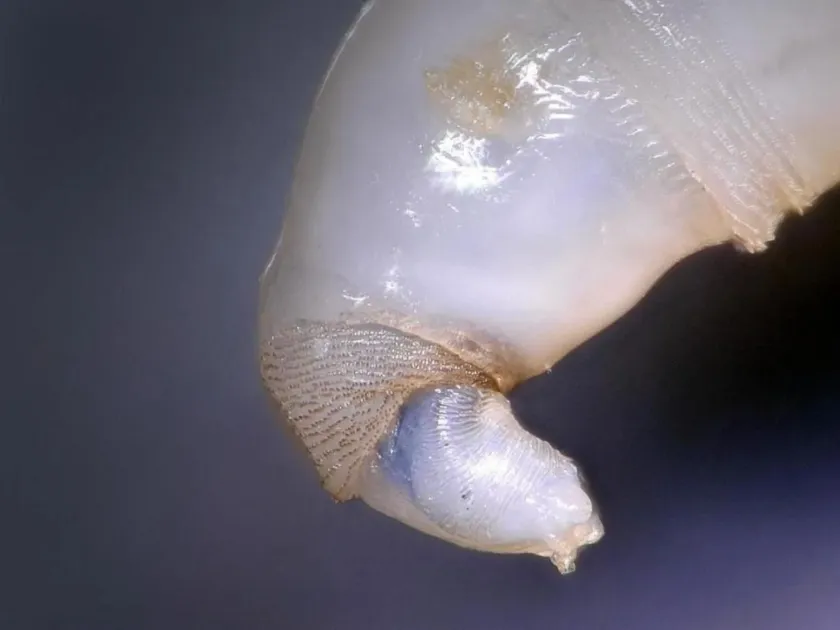
Description
How to identify
Mesanopin londti belongs to the order Coleoptera and the family Curculionidae (weevils). This insect is characterized by a specialized morphology adapted for a cryptic lifestyle within plant structures.
Adult insects possess a characteristic rostrum (snout) which is used for both feeding and preparing sites for oviposition inside plant tissues.
The life cycle encompasses four distinct stages: egg, larva, pupa, and adult. The development typically occurs within the host plant, protecting the larvae from environmental stressors.
Larvae are generally apodous, white or cream-colored, and are equipped with strong mouthparts capable of consuming plant tissue from the inside.
Adults are often cryptic, exhibiting behaviors that minimize their exposure to predators, such as nocturnal or crepuscular activity patterns.
What it damages
Larval feeding creates tunnels within stems and fruits, disrupting vascular transport and causing the affected parts of the plant to wither or die.
Adult feeding causes cosmetic and physiological damage to leaves, often resulting in small circular holes or edge grazing, which reduces the plant's photosynthetic capacity.
Severe infestations frequently lead to the premature abscission of buds, flowers, and developing fruits, significantly reducing total crop yields.
Secondary infections, such as pathogens, often colonize the damaged areas, exacerbating the stress on the host plant and leading to decay.
In high-density populations, this pest can cause substantial economic losses, especially in young or sensitive cultivars during critical growth phases.
When it appears
The emergence of adults typically coincides with the onset of spring, triggered by rising temperatures and the resumption of plant growth.
The peak activity period for oviposition usually occurs during the flowering and fruit-setting stages of the host plants, which are vital for larval development.
Environmental conditions, particularly temperature and humidity, play a crucial role in the speed of the pest's life cycle and its reproductive success throughout the season.
Towards the end of the growing season, adults enter a dormant stage or seek overwintering sites, often moving into the soil or plant debris.
Field monitoring should be intensified during the spring and early summer when the pest population is most active and vulnerable to interventions.
Signs of infestation
Early symptoms include small punctures on leaves and stems, indicating adult feeding or sites where eggs have been deposited.
Stunted growth or drooping of terminal shoots is a classic sign that larvae are active within the internal tissues of the stem.
Accumulation of frass (insect excrement) at the base of the plant or in leaf axils often suggests a high level of larval activity.
Deformation of fruits or flowers, often accompanied by discoloration or early abscission, serves as a clear diagnostic feature of infestation.
- Holes in leaves.
- Wilting of shoots.
- Internal tissue tunneling.
- Premature fruit drop.
Control measures
Cultural practices, such as crop rotation and the thorough destruction of crop residues, are essential to disrupt the life cycle of the pest.
Field sanitation helps minimize overwintering sites and reduces the overall pest pressure in the subsequent growing season.
Biological control strategies may involve the application of entomopathogenic fungi or the conservation of natural predators that target larvae.
Chemical control should rely on systemic insecticides that can reach the larvae hidden inside the plant, timed precisely with the egg-laying and larval emergence periods.
Integrated Pest Management (IPM) programs should be implemented, combining regular field scouting with economic threshold assessments to guide treatment decisions.
Taxonomy
- Latin name
- Mesanopin londti
- Order
- Diptera (flies)
- Family
- Platystomatidae
- EPPO code
- MSANLO
Discussion
No discussions yet — be the first.