
Platystoma
Platystoma
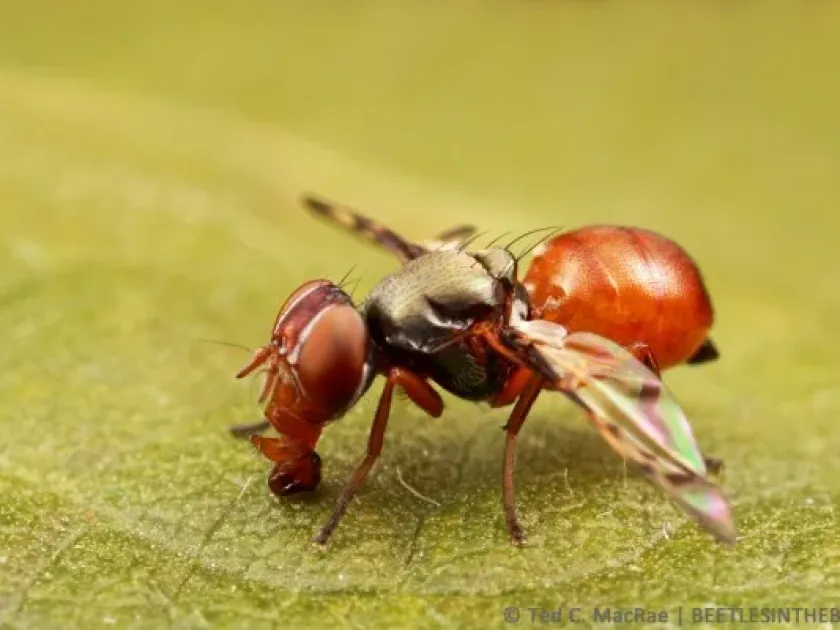
Description
How to identify
Platystoma is a genus of flies belonging to the family Platystomatidae, within the order Diptera. These insects are often characterized by their patterned wings and robust body structure.
The life cycle follows complete metamorphosis, comprising the stages of egg, larva, pupa, and adult. Each stage has specific ecological requirements for survival.
Adult Platystoma flies are typically found in moist environments, often attracted to decaying organic matter where they find suitable conditions for reproduction.
The larvae are specialized to thrive in organic-rich substrates, but under certain conditions, they may transition to feeding on live plant tissues, becoming pests.
Physically, these flies possess a distinct head structure with well-developed eyes, enabling them to navigate effectively in complex agricultural habitats.
What it damages
Larval stages of Platystoma can cause significant damage to vegetable crops, particularly bulbous plants like onions and garlic, by burrowing into the roots.
Feeding damage often compromises the integrity of the plant, leading to stunted growth, wilting, and susceptibility to secondary infections such as bacterial soft rot.
The economic impact is particularly severe during wet seasons when the larvae multiply rapidly in the moist soil surrounding the host plants.
In addition to physical feeding damage, these flies may serve as vectors for various plant pathogens, further exacerbating the decline of the affected crops.
Young seedlings are especially vulnerable, as the larvae can destroy the primary root system, leading to total plant failure before maturity.
Signs of infestation
The primary visual symptom is the premature wilting or yellowing of the foliage, which suggests that the root system has been compromised by larvae.
Inspection of the root zone often reveals tunneling or decaying tissues within the bulbs, often accompanied by a foul odor due to secondary bacterial decomposition.
Visible clusters of small, pale-colored larvae may be found in the damp soil near the base of the plant during the early stages of infestation.
A noticeable unevenness in plant emergence or development across the field is a reliable indicator of potential pest pressure below the surface.
Observing adult flies gathering on decaying organic debris near the garden beds indicates a population presence that requires immediate attention.
Control measures
Effective management relies heavily on cultural practices, such as crop rotation, which disrupts the life cycle of the pest by removing its primary food source.
Deep autumn plowing of the soil is highly recommended to expose pupae to harsh winter conditions, effectively reducing the overwintering population.
Sanitation plays a critical role; all post-harvest crop residues should be removed and destroyed to minimize sites for future larval development.
In cases of high infestation, soil-applied insecticides may be necessary to target the larval stage during the critical growth phase of the crop.
- Utilizing disease-resistant and vigorous plant varieties.
- Maintaining proper soil drainage to prevent decay.
- Regular field scouting to monitor pest density.
Taxonomy
- Latin name
- Platystoma
- Order
- Diptera (flies)
- Family
- Platystomatidae
- EPPO code
- PLZMSP
Discussion
No discussions yet — be the first.