
Apple-grass aphid
Rhopalosiphum oxyacanthae
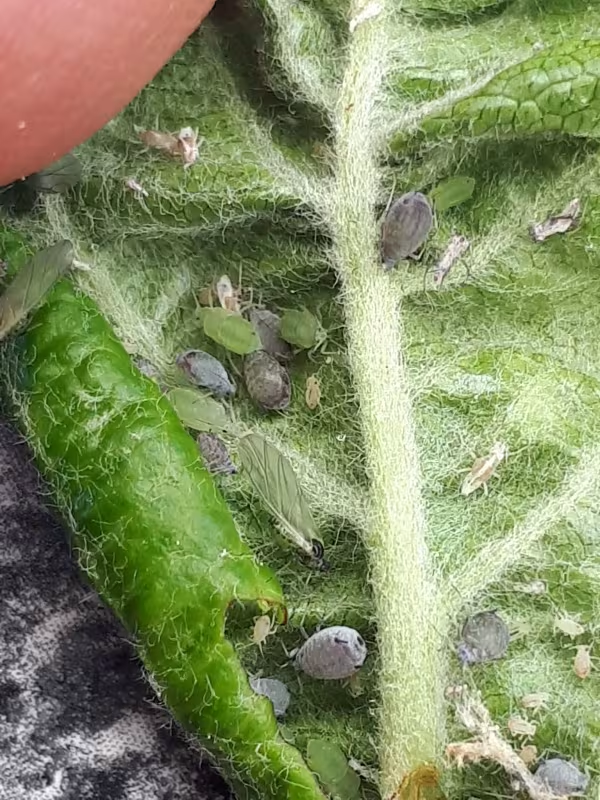
Description
How to identify
The apple-grass aphid (Rhopalosiphum oxyacanthae) is a small insect species belonging to the family Aphididae, characterized by a complex, heteroecious life cycle.
They are distinguishable by their specific morphology, including short cornicles and a particular arrangement of sensory hairs on their antennae, which can be observed under magnification.
The body color of these aphids changes according to the host plant and the generation, ranging from pale green during the initial spring growth to darker olive or brownish hues in summer.
Overwintering eggs, which are deposited on the bark of fruit trees, appear as small, shiny black, oval structures that are quite resistant to freezing winter temperatures.
Adult individuals may exist in both apterous (wingless) and alate (winged) forms, with the winged forms primarily responsible for long-distance migration between host plants.
What it damages
In spring, the primary damage occurs on Rosaceae family trees, specifically apples and hawthorns, where aphids feed on emerging buds and young leaf tissue.
As the season progresses, the pest migrates to secondary hosts, including various cereals like wheat, barley, and oats, causing significant sap loss and leaf deformation.
Feeding activities often lead to the stunting of shoot growth and can cause the premature yellowing of foliage, which weakens the plant's overall health and physiological resilience.
This aphid species is also a major vector for several plant viruses, including barley yellow dwarf virus, which poses a severe threat to grain production worldwide.
The accumulation of honeydew produced by aphids encourages the growth of sooty mold, which further interferes with the plant's ability to photosynthesize effectively.
When it appears
The life cycle begins in early spring, synchronized with the bud burst of apple trees, when overwintered eggs hatch into the first generation of nymphs.
By late spring, winged generations are produced, which migrate to their secondary hosts in cereal fields and grassy areas to establish new, rapidly growing colonies.
During the summer months, reproduction occurs rapidly on cereal crops, potentially reaching high population densities that can cause economic damage if not managed.
As day length decreases in autumn, the population produces gynoparae and males that migrate back to the primary woody hosts to mate and deposit overwintering eggs.
Environmental factors, particularly temperature and humidity, play a critical role in determining the timing and success of these seasonal migrations.
Signs of infestation
Visual confirmation of an infestation often involves observing curled, distorted leaves on apple trees, which act as protective shelters for the aphid colonies.
A sticky residue on the foliage, known as honeydew, is a classic sign of aphid presence and often leads to the appearance of dark, sooty fungal growth on the surface.
On cereal crops, infested plants may show yellowing patches and stunted growth, particularly at the base of the stems or along the leaf blades where aphids congregate.
The presence of ants attending to aphid colonies is a common indirect sign, as ants farm the aphids for their nutritious honeydew secretions.
Regular scouting using yellow sticky traps in the orchard or field can help detect the arrival of alate (winged) aphids before they begin to colonize the crops.
Control measures
Early season control measures include the use of dormant oil sprays on fruit trees, which can effectively suffocate overwintering eggs before they hatch.
Encouraging natural predators such as lady beetles, lacewings, and parasitic wasps is a sustainable strategy to maintain aphid populations below the economic injury level.
If chemical intervention becomes necessary, systemic insecticides are preferred as they are translocated throughout the plant and provide more thorough control of hidden colonies.
Integrated Pest Management (IPM) practices, such as controlling grassy weeds around orchards and fields, reduce the habitat available for the aphid's intermediate stages.
Monitoring the population density allows for precise timing of interventions, ensuring that applications are effective while minimizing the impact on non-target beneficial insects.
Taxonomy
- Latin name
- Rhopalosiphum oxyacanthae
- Order
- Hemiptera (bugs, aphids, leafhoppers)
- Family
- Aphididae
- EPPO code
- RHOPIN
Discussion
No discussions yet — be the first.