
Water lily aphid
Rhopalosiphum nymphaeae
Description
How to identify
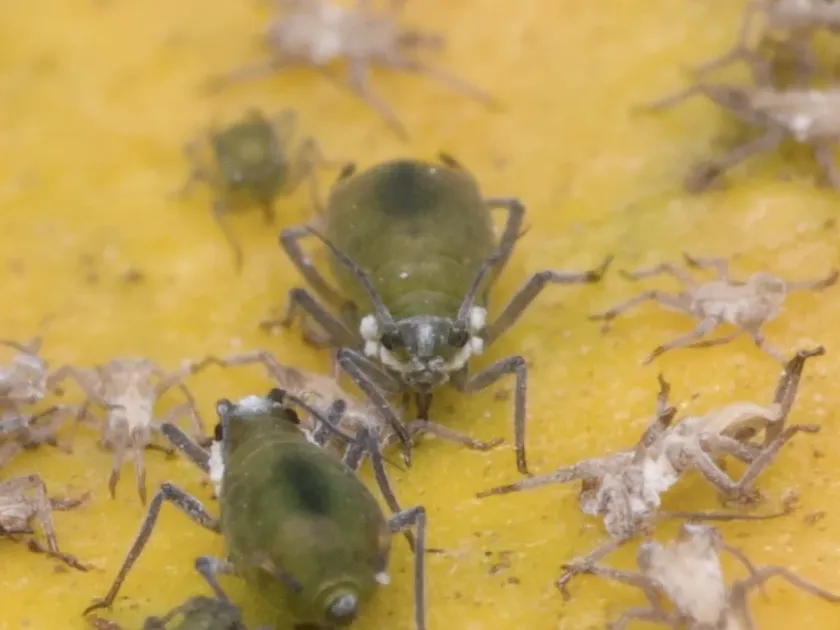
The water lily aphid is a small insect, approximately 1.5–2.5 mm in length, known for infesting various aquatic and marginal plants.
It belongs to the order Hemiptera and the family Aphididae, characterized by a complex lifestyle involving a primary and secondary host.
The adult form is typically dark brown or olive-black, allowing it to blend in with the leaves of aquatic plants such as Nymphaea and Nuphar.
Both winged and wingless forms exist, with winged individuals facilitating migration between woody plants and aquatic habitats during different seasons.
These insects are highly prolific, capable of forming dense colonies that cover large areas of foliage in a very short period of time.
What it damages
The primary aquatic hosts include water lilies, spatterdock, and other floating or emergent vegetation found in garden ponds.
In spring and autumn, the pest occupies primary hosts, which are woody plants such as plum, cherry, and peach trees, causing early season damage.
Feeding occurs by extracting sap, which weakens the plant and stunts the growth of leaves and floral structures.
Infestation also promotes the growth of sooty mold due to the excretion of honeydew, which further compromises the photosynthesis process.
Severe infestations lead to yellowing leaves, deformed flowers, and, in some cases, the complete death of the affected plant parts.
When it appears
The lifecycle begins in early spring on woody host trees, where overwintering eggs hatch into the first generation of aphids.
By early summer, winged individuals migrate from these trees to aquatic environments, establishing new colonies on water plants.
Peak activity occurs throughout the summer months when warm water and air temperatures optimize the reproductive rates of the aphids.
As autumn approaches and temperatures drop, winged forms return to the primary woody hosts to lay eggs, ensuring the next season's survival.
Local conditions and mild climates may occasionally allow for extended periods of activity on aquatic hosts throughout the season.
Signs of infestation
The most noticeable sign is the presence of dense, dark clusters of aphids on the undersides of leaves or on emerging flower buds.
Plants may show signs of yellowing or curling leaves, accompanied by a sticky residue on the foliage surface known as honeydew.
Deformation of flower stalks or the failure of buds to open correctly are common indicators of a significant aphid population.
The presence of ants, which protect and farm the aphids for their sweet secretions, is a clear indicator of an ongoing infestation.
- Curling and yellowing of leaves.
- Sticky honeydew buildup.
- Stunted growth of floral stalks.
Control measures
The most effective and eco-friendly method for pond management is to manually wash the aphids off leaves and into the water, where they are consumed by fish.
Avoid using chemical insecticides, as they are toxic to aquatic life and can easily upset the biological balance of the pond ecosystem.
Removing heavily infested leaves and disposing of them away from the pond is a simple yet effective way to curb the spread of the colony.
Springtime monitoring and treatment of nearby stone fruit trees can significantly reduce the potential number of aphids that migrate to the pond.
Encouraging natural predators such as ladybugs and lacewings in the surrounding garden can help maintain aphid populations at manageable levels.
Taxonomy
- Latin name
- Rhopalosiphum nymphaeae
- Order
- Hemiptera (bugs, aphids, leafhoppers)
- Family
- Aphididae
- EPPO code
- RHOPNY
Discussion
No discussions yet — be the first.