
Cattail aphid
Rhopalosiphum enigmae
Description
How to identify
The cattail aphid Rhopalosiphum enigmae is a member of the family Aphididae, specialized in inhabiting aquatic and semi-aquatic plants, particularly cattails (Typha genus).
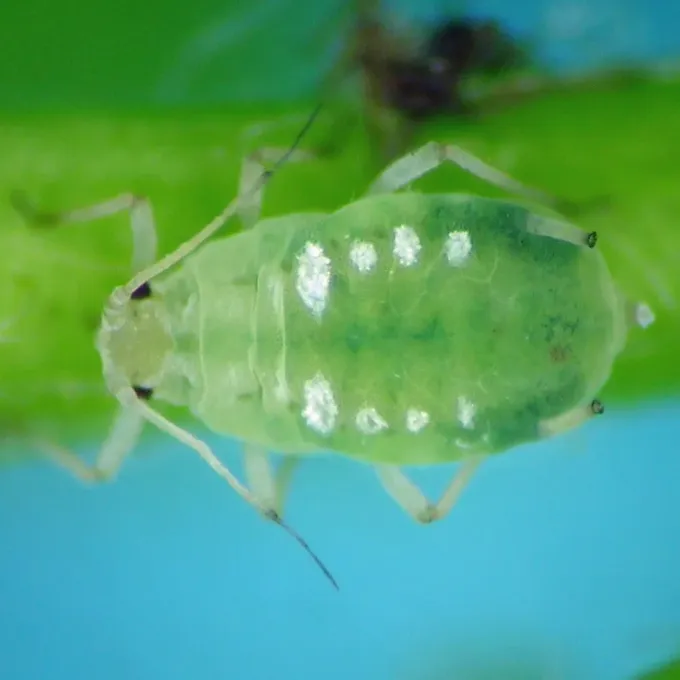
Morphologically, these insects are characterized by their small, oval-shaped bodies. Their coloration ranges from light green to olive or dark brown, allowing them to blend into the dense foliage of their host plant.
The species exhibits a distinct life cycle with both apterous (wingless) and alate (winged) forms. The winged individuals serve as the primary colonizers, capable of flying to distant cattail patches.
The aphids possess specialized structures on their tarsi that facilitate firm attachment to the smooth, waxy surfaces of cattail leaves, a necessary adaptation for surviving in wind-prone environments.
Diagnostic identification typically involves microscopic examination of the siphunculi (tubular structures on the abdomen) and the antennal morphology, which distinguishes this species from other related aphids.
What it damages
The primary host for Rhopalosiphum enigmae is the cattail. Infestations occur when large colonies accumulate on the plant, feeding on the phloem sap of leaves and stems.
Significant sap loss severely weakens the plant, leading to stunted growth and yellowing of the leaves. In extreme cases, the plant's ability to produce healthy seeds or propagate is compromised.
The feeding process results in the excretion of honeydew, a sugary substance that coats the leaves. This serves as a substrate for sooty mold, which blocks photosynthesis and further stresses the plant.
In decorative ponds and managed wetlands, an infestation of cattail aphids can drastically reduce the aesthetic and functional value of the cattail population.
While often viewed as a nuisance in natural systems, in agro-ecological zones, these aphids can serve as vectors for various plant viruses, posing a secondary risk to adjacent crops.
When it appears
The seasonal activity of the cattail aphid is strictly correlated with the growth stages of the cattail plant. Activity begins in early spring as new shoots emerge from the soil.
Throughout the summer, the population grows exponentially through multiple generations. High humidity and warm temperatures create optimal conditions for rapid reproduction and colony expansion.
As autumn temperatures drop, the aphid enters a overwintering stage. Eggs are laid in protected crevices, often near the base of the plant or on dormant vegetation debris.
The overwintering eggs are highly resistant to environmental stressors, ensuring the survival of the species until the next spring when the cycle restarts with hatching nymphs.
Local population dynamics are heavily influenced by weather; heavy rainfall events can significantly reduce aphid density, whereas stable, dry weather facilitates population outbreaks.
Signs of infestation
The first indication of a cattail aphid infestation is the visual observation of dark or green clusters of insects on the undersides of cattail leaves.
The plant may exhibit signs of chlorosis, where leaves turn yellow due to nutrient depletion. Furthermore, leaf curling is a common reaction to heavy aphid feeding pressure.
- Sticky honeydew residues covering the leaf surface.
- Increased presence of ants tending to the aphid colonies for their honeydew.
- Development of dark, sooty mold patches on the leaves.
- Visible deformation or stunted development of the cattail stalk.
- Presence of discarded white aphid skins (exuviae) clinging to the foliage.
In advanced cases, the aphid colonies may cover the entire inflorescence, hindering the plant's natural development and seasonal maturation cycle.
When examined closely, the aphids are seen in high density, often crowded together, demonstrating a social structure within their feeding patches.
Control measures
Management of the cattail aphid should focus on ecological balance rather than total eradication, especially in wetland areas where chemical use is restricted.
For ornamental garden ponds, manual removal or using a forceful jet of water to dislodge colonies is often sufficient to keep the population below a damaging threshold.
Encouraging natural predators such as lady beetles, lacewings, and hoverfly larvae is the most effective long-term strategy for maintaining biological control.
Chemical intervention should be avoided due to the proximity to water bodies, which are sensitive to residues. If absolutely necessary, contact-based, short-lived, and environmentally friendly soaps are preferred.
Proactive management includes regular monitoring and maintaining the health of the cattail population, as stressed plants are significantly more prone to severe infestations than healthy ones.
Taxonomy
- Latin name
- Rhopalosiphum enigmae
- Order
- Hemiptera (bugs, aphids, leafhoppers)
- Family
- Aphididae
- EPPO code
- RHOPEN
Discussion
No discussions yet — be the first.