
Cereal aphid
Rhopalosiphum
Description
How to identify
The genus Rhopalosiphum belongs to the Hemiptera order and the Aphididae family. Key species include the bird cherry-oat aphid and the corn leaf aphid, which are widespread in agriculture.
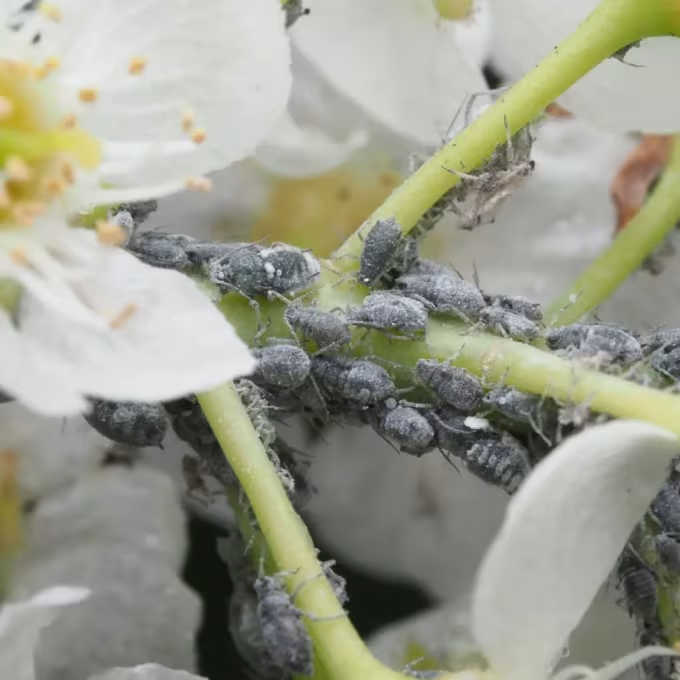
These insects are small, typically measuring between 1.5 and 2.5 mm in length. Their bodies are pear-shaped and range in color from pale green to olive or deep black.
A distinctive feature of the genus is the presence of club-shaped siphunculi (cornicles) on the rear of the abdomen, which are usually darker than the rest of the body.
The population consists of both wingless and winged individuals. Winged forms have translucent wings with complex venation, enabling them to migrate over long distances to colonize new fields.
The life cycle is often complex, involving alternating host plants, typically moving from woody perennials in the spring to cereal crops or grasses during the summer season.
What it damages
These aphids primarily target cereal crops, including wheat, barley, oats, rye, and maize, as well as various wild grass species that grow near crop fields.
Damage occurs when both nymphs and adults pierce plant tissues to feed on phloem sap, which stunts growth and leads to significant yield losses in terms of biomass and grain weight.
Severe infestations during the booting and heading stages are particularly harmful, as they prevent proper kernel development and reduce the overall quality of the harvested grain.
Beyond direct feeding damage, these aphids act as primary vectors for serious viral diseases, most notably barley yellow dwarf virus, which can cause total crop failure in extreme cases.
The accumulation of honeydew on the leaves fosters the growth of sooty mold, which impairs photosynthesis and results in further physiological stress on the host plants.
When it appears
Cereal aphids typically appear in fields during the tillering phase, provided that the spring temperatures are favorable, generally ranging from +15°C to +20°C.
Population densities usually peak during the boot and heading stages of the host plants, often corresponding with dry and warm weather conditions that accelerate reproductive cycles.
The insect's life cycle is remarkably fast, with a single generation developing in as little as 7 to 10 days, allowing for rapid colonization during peak environmental conditions.
Mass migrations of winged aphids from their primary woody hosts to cereal crops typically occur in late spring, establishing the initial colonies that threaten the harvest.
In autumn, as the climate cools and crop senescence begins, aphids migrate back to their winter hosts or permanent grasses to lay eggs and ensure the survival of the species.
Signs of infestation
Early identification is possible by inspecting the lower surfaces of leaves and the whorls of the plants, where these aphids tend to form dense, clustered colonies.
Visibly stressed plants will show yellowing of the leaves and may exhibit curling or twisting, which are early signs of sap extraction and nutrient depletion by the aphid colony.
The presence of a sticky, glistening substance known as honeydew on the foliage is a primary field sign indicating an active infestation and a need for immediate monitoring.
Deformation of the ears or premature blanching of the spikes often indicates that the aphids have been feeding on the generative parts of the plant during the grain filling stage.
In infested areas, ants are often observed moving across the plants, as they are attracted to the honeydew produced by the aphids and actively protect them from predators.
Control measures
Cultural control strategies include maintaining diverse crop rotations and implementing strict weed management to eliminate alternative host plants during the off-season.
Early planting dates can help cereal crops reach more resistant growth stages before the peak population of migrating aphids arrives in the fields.
Conservation of natural predators, such as lady beetles, lacewings, and parasitic wasps, is a highly effective biological method to suppress aphid populations naturally.
Chemical control via systemic or contact insecticides is recommended when aphid numbers exceed the economic threshold, which is typically calculated per plant or stem.
Farmers should rotate between different classes of insecticides to prevent the development of resistant populations, ensuring that chemical interventions remain effective in the long term.
Taxonomy
- Latin name
- Rhopalosiphum
- Order
- Hemiptera (bugs, aphids, leafhoppers)
- Family
- Aphididae
- EPPO code
- RHOPSP
Discussion
No discussions yet — be the first.