
Tulip aphid
Rhopalosiphoninus staphyleae
Description
How to identify
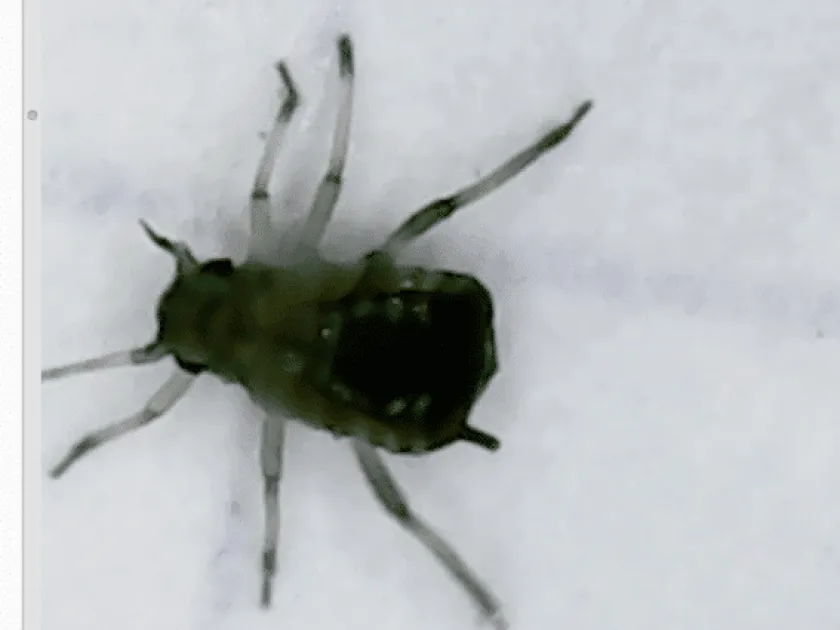
The tulip aphid belongs to the order Hemiptera, family Aphididae. It is characterized by a dark, often nearly black body color, although individuals may range from olive green to brownish.
Adults reach about 2-3 millimeters in length. They are identified by their long antennae, which are typically longer than their bodies, and their distinctive dark, swollen cornicles located at the end of the abdomen.
The species exists in both wingless and winged forms; the latter allows the pest to actively migrate and spread between plants throughout the growing season.
A specific feature of this species is its high adaptability to colonizing underground parts of plants, making it difficult to detect during standard foliage inspections.
The life cycle includes both sexual and asexual reproduction, and in greenhouses or storage facilities, the aphid can reproduce year-round without entering diapause.
What it damages
The primary hosts are tulips, but the pest is widely distributed across various bulbous plants, including lilies, narcissus, and gladiolus.
In greenhouses and during storage, the tulip aphid can attack almost any ornamental plant species present in a collection.
The pest is also commonly found on vegetable crops, particularly potatoes, where it prefers to settle on sprouting tubers in storage.
The greatest risk is the hidden damage to planting material stored under high temperatures and humidity levels during the winter months.
Severe infestations of stored bulbs lead to nutrient depletion, moisture loss, and reduced germination rates, resulting in poor flower production.
When it appears
During the summer months, the aphid develops actively on the above-ground parts of plants, settling on stems and the underside of leaves during their peak growth phase.
In the autumn, following bulb harvest, aphids often migrate into storage areas with the bulbs, where they find ideal conditions to survive the winter.
Winter is a critical period; in warm indoor storage, the pest continues to reproduce rapidly, potentially infesting the entire stock of bulbs.
In spring, when infested bulbs are planted in the soil, the aphids quickly transition to young shoots, becoming the primary source of infestation for the garden.
The aphid's ability to maintain a continuous development cycle makes it a dangerous, year-round threat, especially when storage conditions are inadequate.
Signs of infestation
The first sign of infestation is the presence of insect colonies near the base of stems or between bulb scales, which appear as a dark, dusty layer upon close inspection.
Infested plants begin to lag in growth, and their leaves may become deformed, curled, and yellowed due to the sap-sucking activity of the aphids.
The surface of leaves and bulbs is often covered with sticky honeydew, which serves as a substrate for sooty mold, further harming the plant's health.
Stored bulbs lose turgor, become soft or shriveled, and display characteristic puncture marks, which often lead to secondary fungal decay.
- deformation of flower stalks and buds;
- premature yellowing and wilting of foliage;
- stunted growth;
- reduced quality of flowering;
- secondary infections at puncture sites.
Control measures
The most important control method is ensuring proper bulb storage by maintaining low temperatures and performing regular inspections for any signs of pest activity.
Before placing bulbs into storage, it is recommended to perform prophylactic treatments with insecticides or appropriate disinfectant agents.
During the growing season, if aphid colonies are detected, it is necessary to spray the plants with systemic insecticides that effectively control aphid populations.
It is crucial to remove weeds from around planting beds, as they can serve as intermediate reservoirs for the pest during the summer.
Biological control methods include encouraging natural predators, such as ladybugs and lacewings, which can effectively suppress aphid populations in open field conditions.
Taxonomy
- Latin name
- Rhopalosiphoninus staphyleae
- Order
- Hemiptera (bugs, aphids, leafhoppers)
- Family
- Aphididae
- EPPO code
- MYZTST
Discussion
No discussions yet — be the first.