
Currant shoot aphid
Rhopalosiphoninus ribesinus
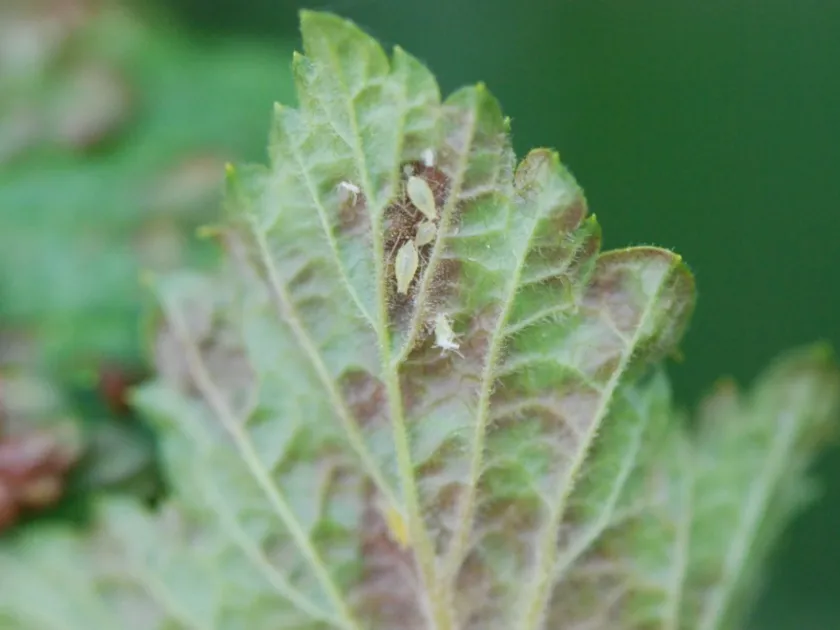
Description
How to identify
The currant shoot aphid (lat. Rhopalosiphoninus ribesinus) is a small insect belonging to the family Aphididae, order Hemiptera. This pest is a specialized feeder that primarily targets the young growth of plants within the Grossulariaceae family.
Adult aphids typically exhibit a dark brown to black coloration with a characteristic shine. A key morphological feature that distinguishes this species is the presence of long, slightly swollen siphunculi (cornicles) on the posterior end of the abdomen.
The life cycle involves an overwintering stage as eggs, which are deposited in the autumn on the stems of currants, specifically near the buds. As spring temperatures rise, the eggs hatch, releasing fundatrices that initiate new colonies.
Throughout the growing season, the aphid undergoes several generations. Due to parthenogenetic reproduction, the population size can expand rapidly, covering young shoots with dense colonies in a very short period.
Winged forms, known as migrants, appear in mid-summer. These individuals play a critical role in the dispersal of the species, moving to neighboring plants or new sections of the orchard to continue their reproductive cycle.
What it damages
The primary hosts of this aphid include black, red, and white currants, as well as gooseberries. The pest concentrates its feeding activity on the most tender parts of the plant, specifically the apical shoots.
By piercing the plant tissues and extracting sap, the aphid depletes the vital nutrient reserves required for vigorous shoot elongation and leaf development. This nutrient loss leads to metabolic stress within the plant.
Chronic infestation results in stunted growth and a general decline in the plant's health. The bushes become increasingly susceptible to secondary stressors, such as drought or frost, due to their weakened physiological state.
Furthermore, this aphid acts as a vector for various plant viruses. When the aphid feeds, it can transmit pathogens directly into the phloem, causing systemic diseases that significantly reduce the productive lifespan of the currant bush.
A heavy infestation inevitably leads to lower fruit yields. The plant diverts its remaining energy toward wound repair and foliage maintenance, leaving insufficient resources for berry formation and development.
Signs of infestation
The initial signs of an infestation become visible in early spring when the young leaves at the tips of the shoots begin to curl and twist. These deformed leaves provide a protected microenvironment for the aphid colonies.
A hallmark of aphid presence is the accumulation of honeydew on the leaf surfaces. This sticky substance serves as a substrate for sooty mold, which manifests as a dark, dusty layer on the foliage, further impeding photosynthesis.
Inspection of the underside of the curled leaves typically reveals large clusters of dark-colored aphids. They are usually found aligned along the veins, where access to the vascular system of the plant is most efficient.
Heavily infested shoots exhibit significant distortion, becoming twisted or gnarled. In some cases, the apical meristem may be severely damaged, halting further vertical growth of the branch.
The presence of ants patrolling the currant bushes is a reliable indicator of aphid activity. Ants aggressively protect these colonies to ensure a continuous supply of the sweet honeydew secreted by the aphids.
Control measures
Effective management begins with good horticultural practices, including proper pruning in early spring and late autumn to remove infested or overcrowded shoots where eggs may be overwintering.
Biological control strategies should focus on encouraging beneficial predatory insects, such as lady beetles, lacewings, and hoverflies, which are natural enemies that can significantly reduce aphid population density.
In cases of severe infestation, systemic or contact insecticides may be necessary. It is crucial to apply these products outside of the blooming period to protect pollinators and follow label instructions regarding harvest intervals.
Dormant season oil sprays are highly effective for targeting the overwintering eggs on the bark. Applying these during the early spring before bud break can drastically decrease the initial pest population.
Continuous monitoring of the berry patch is essential for early detection. Identifying small, localized colonies allows for precise intervention, preventing the need for broad-spectrum chemical treatments across the entire garden.
Taxonomy
- Latin name
- Rhopalosiphoninus ribesinus
- Order
- Hemiptera (bugs, aphids, leafhoppers)
- Family
- Aphididae
- EPPO code
- RHOSRI
Discussion
No discussions yet — be the first.