
Rhopalosiphoninus
Rhopalosiphoninus
Description
How to identify
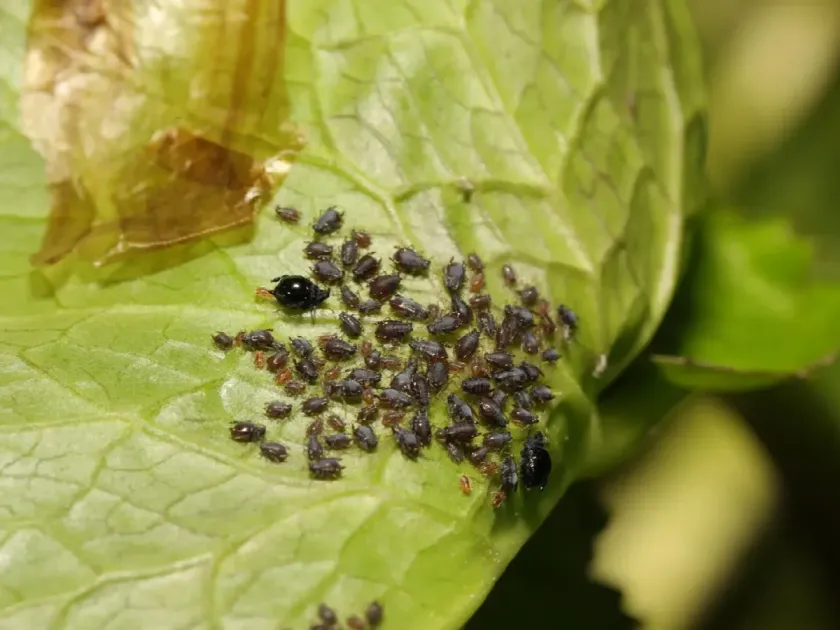
Rhopalosiphoninus is a genus of aphids within the family Aphididae. They are distinguished primarily by their swollen, club-shaped siphunculi, which are much thicker than those of most other aphid species found on agricultural crops.
These insects vary in color from shiny black to dark green or brownish. The body is typically plump, and they possess long antennae. They are primarily sap-sucking pests that colonize specific parts of host plants.
The life cycle involves both apterous (wingless) and alate (winged) forms, with the winged individuals facilitating rapid spread between fields or greenhouse bays during the growing season.
They can survive in various environments, often overwintering as eggs on primary hosts or as active colonies in protected structures such as greenhouses and storage facilities.
Reproduction is typically rapid, allowing the pest to reach high population densities very quickly under favorable temperature and humidity conditions.
What it damages
The primary hosts of Rhopalosiphoninus include potatoes, tomatoes, cucumbers, and various bulbous ornamental plants. They are particularly detrimental in potato production due to their role as virus vectors.
Damage occurs primarily through the extraction of phloem sap, which deprives the plant of nutrients and moisture, causing stunted growth and leaf deformation. Heavy infestations can lead to total plant failure.
As a vector, the aphid is notorious for transmitting persistent plant viruses, such as the Potato Leafroll Virus (PLRV), which can devastate crop yields and quality.
The secretion of honeydew onto the plant surface creates an ideal environment for sooty mold fungi to grow. This black mold interferes with photosynthesis, significantly reducing the plant's ability to produce energy.
Feeding often occurs on the underside of leaves or at the growing tips, making these areas the focus for monitoring and scouting programs.
Control measures
Integrated Pest Management (IPM) is essential for controlling Rhopalosiphoninus. This includes cultural practices like crop rotation and maintaining weed-free field borders to minimize alternative hosts.
Monitoring using yellow sticky traps is a standard practice for early detection. Once the economic threshold is reached, targeted chemical interventions should be implemented.
Systemic insecticides are the most effective way to protect crops from these aphids, as they ensure long-term control by traveling through the plant's vascular system to kill pests that feed on the sap.
- Frequent scouting of the undersides of foliage.
- Use of biological control agents like lady beetles and lacewings in greenhouses.
- Rotation of different chemical classes to prevent resistance.
- Removal and destruction of crop debris post-harvest.
It is crucial to avoid overuse of broad-spectrum pesticides, which can eliminate natural enemies and lead to secondary pest outbreaks. Always follow label directions regarding dosage and pre-harvest intervals.
Taxonomy
- Latin name
- Rhopalosiphoninus
- Order
- Hemiptera (bugs, aphids, leafhoppers)
- Family
- Aphididae
- EPPO code
- RHOSSP
Discussion
No discussions yet — be the first.