
Alpine honeysuckle aphid
Rhopalomyzus alpigenae
Description
How to identify
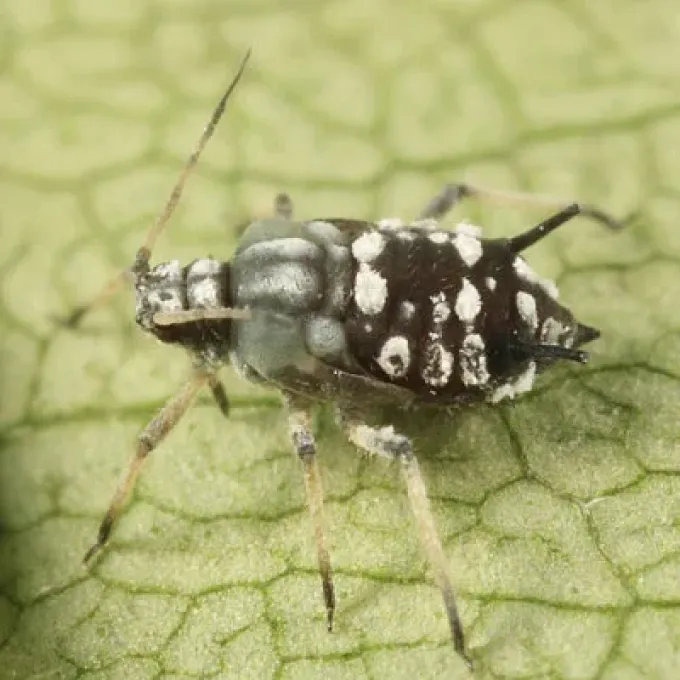
The Alpine honeysuckle aphid (Rhopalomyzus alpigenae) is a small sap-sucking insect belonging to the family Aphididae. It is a specialized pest that targets various species of Lonicera (honeysuckle).
The adults are typically characterized by a soft, oval body ranging in color from pale green to brownish tones. They possess a delicate rostrum used for piercing plant tissues.
The life cycle involves overwintering eggs laid near the buds on the host plant. Once temperatures rise in spring, the eggs hatch into nymphs, beginning the first generation.
Both winged and wingless forms exist within the colony. Winged individuals play a crucial role in dispersal and colonization of new host plants during the summer months.
Identification is best achieved by inspecting the underside of young leaves. The presence of dense clusters of small, soft-bodied insects is a key indicator of this species.
What it damages
This pest feeds primarily on the phloem sap of young honeysuckle shoots. This activity diverts vital nutrients away from the plant's active growth zones.
Continuous feeding causes the leaves to curl, twist, and become severely deformed. The overall vigor of the shrub is significantly reduced over the course of the growing season.
Damage can lead to stunted growth and failure of the plant to develop healthy buds for the following year, impacting overall garden aesthetics and vitality.
The secretion of honeydew not only promotes fungal growth but can also obstruct stomatal gas exchange on the leaf surface, further stressing the plant.
In cases of heavy infestation, the cumulative damage can weaken the honeysuckle plant, making it more susceptible to environmental stressors like drought or frost.
Signs of infestation
Leaf curling and yellowing at the shoot tips are the most visible symptoms. The leaves may take on a stunted, gnarled appearance due to irregular feeding patterns.
The appearance of sticky honeydew on the leaves is a classic sign of aphid activity. This sugary substance is highly attractive to ants, which often tend to the aphids.
Sooty mold growth on leaves is a secondary sign, caused by fungi thriving on the excreted honeydew. This black layer can cover parts of the plant, further reducing photosynthesis.
A noticeable reduction in the rate of shoot extension is common. In severe cases, the shoot tips may dry out completely and die back, causing permanent structural damage.
White, cast-off skins (exuviae) left behind after molting are visible on the undersides of leaves and on the ground, indicating an actively breeding population.
Control measures
Cultural control practices, such as maintaining healthy soil conditions and balanced fertilization, are the first line of defense against pest outbreaks.
Pruning away heavily infested tips in the early stages of infestation can help suppress the population before it spreads throughout the entire shrub.
Biological control is highly recommended, involving the encouragement of natural predators like ladybeetles, lacewings, and parasitic wasps in the garden.
- Application of systemic insecticides during the pre-flowering stage.
- Use of insecticidal soaps to disrupt the aphid's outer cuticle.
- Regular monitoring to catch outbreaks early before population spikes.
Chemical interventions should be used sparingly and only when necessary to ensure the survival of beneficial insects that keep the aphid population in check.
Taxonomy
- Latin name
- Rhopalomyzus alpigenae
- Order
- Hemiptera (bugs, aphids, leafhoppers)
- Family
- Aphididae
- EPPO code
- RHOMAL
Discussion
No discussions yet — be the first.