
Rhizophagus grandis
Rhizophagus grandis
Description
How to identify
Rhizophagus grandis is a specialized predatory beetle belonging to the family Rhizophagidae, widely recognized for its ecological importance in forest ecosystems.
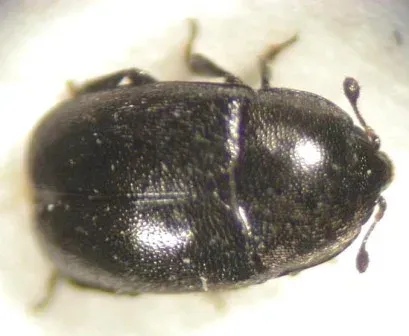
The adult beetle is small, typically measuring 3 to 5 mm in length, with a dark, elongated body and a smooth, shiny cuticle that is highly resistant to external influences.
Larvae of this species are elongated, pale-colored, and extremely agile, specialized for navigating the narrow galleries created by bark beetles beneath the bark of coniferous trees.
The species is phylogenetically and ecologically linked to the Great Spruce Bark Beetle (Dendroctonus micans), which it tracks through chemical signals emitted by infested trees.
Identification is best performed by an entomologist during systematic field monitoring, as its appearance is easily confused with other small coleopterans residing in the sub-cortical layer.
What it damages
Rhizophagus grandis is not a pest. It is a predatory insect that feeds exclusively on the larvae and eggs of wood-boring bark beetles, thereby acting as a natural safeguard for forest health.
It causes zero damage to living tissues of conifers, as it does not consume bark, phloem, or wood. Its presence is a positive indicator of the natural regulatory mechanisms at work.
Concerns regarding its status often stem from misunderstandings of forest ecology, where natural predators are wrongly targeted by non-selective pest control measures.
Misidentifying this beetle as a pest can lead to the overuse of broad-spectrum pesticides, which ultimately harms the forest by destroying its most efficient natural defense system.
In forest management, the value of this species lies in its ability to prevent the widespread death of trees caused by bark beetle outbreaks through biological suppression.
When it appears
The activity cycle begins in early spring when temperatures rise, synchronizing with the emergence of bark beetles from their wintering sites.
Adult beetles actively search for infested trees throughout the summer, responding to volatiles that indicate the presence of bark beetle populations.
Larval development peaks in mid-summer, providing the necessary predatory pressure to control the bark beetle population density before they emerge as adults.
As autumn approaches, the beetles prepare for wintering by seeking shelter in the forest floor litter or protected niches within the lower parts of tree trunks.
Under optimal conditions, the species demonstrates significant resilience, with the potential for multiple generations if the climate allows for a prolonged warm season.
Signs of infestation
The presence of Rhizophagus grandis is evidenced by empty or cleaned-out bark beetle galleries, indicating successful predation upon the pest's larvae.
Field monitoring often involves the use of specialized traps baited with bark beetle attractants, which also capture Rhizophagus grandis as they follow their prey.
Physical inspection of the area beneath the bark of infested trees can reveal the presence of the predator feeding in the vicinity of bark beetle eggs and larvae.
Effective monitoring requires the observation of beetle ratios, where the predator is found in direct proximity to the current infestation sites of its primary prey.
The lack of alive bark beetle larvae in heavily infested galleries often suggests that an established population of this predator is present and active.
Control measures
No control measures are needed to combat this beetle; instead, forest management practices should focus on conservation and supporting its natural populations.
The use of broad-spectrum insecticides should be strictly limited to prevent collateral damage to this beneficial predator, prioritizing targeted biological control instead.
Artificial distribution or inoculation of forest stands with Rhizophagus grandis is a proven management technique used to mitigate bark beetle outbreaks in many regions.
Maintaining a healthy forest environment with adequate moisture and litter provides the necessary conditions for the long-term survival and breeding of the species.
Integrated pest management strategies should emphasize the role of this predator to ensure sustainable forest health and prevent future outbreaks of destructive bark beetles.
Taxonomy
- Latin name
- Rhizophagus grandis
- Order
- Coleoptera (beetles)
- Family
- Rhizophagidae
- EPPO code
- RHISGR
Discussion
No discussions yet — be the first.