
Rhizophagus depressus
Rhizophagus depressus
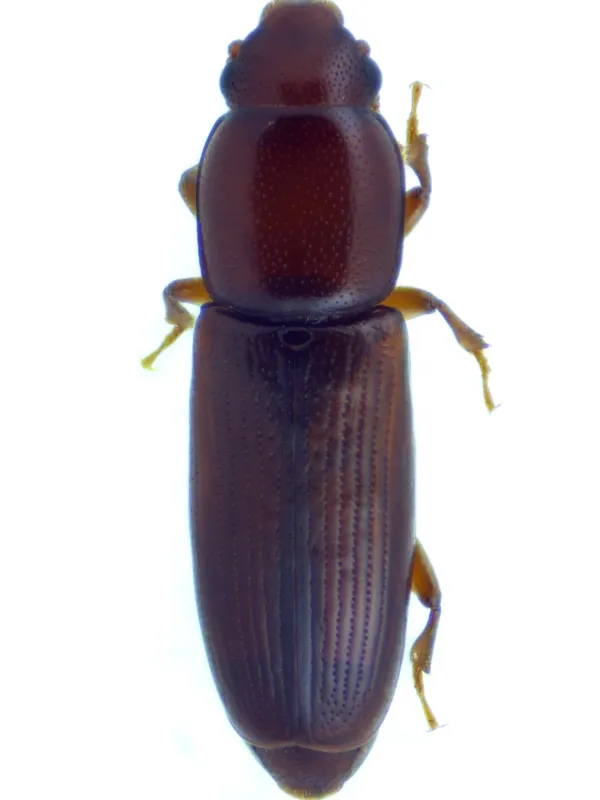
Description
How to identify
Rhizophagus depressus is a beetle belonging to the family Rhizophagidae within the order Coleoptera. It is specifically recognized by its flattened body structure, which is a characteristic feature of this genus.
Adult beetles typically measure between 2 and 3.5 millimeters in length. They generally exhibit a dark brown to black coloration and have sparse hair covering their bodies, allowing them to thrive in narrow crevices.
The larvae are light-colored and elongated, possessing well-developed mouthparts that enable them to move effectively and feed within the sub-cortical environments of coniferous trees.
As members of the Rhizophagidae family, they are ecologically tied to specific niches, frequently appearing in habitats modified by other wood-boring insects, such as bark beetles.
Precise species identification requires microscopic examination, as the morphological differences between various species in the Rhizophagus genus are often quite subtle for field observers.
What it damages
These pests primarily target coniferous trees, such as pine and spruce. They are most commonly found in weakened trees or those already colonized by primary bark beetle species.
Rhizophagus depressus is typically categorized as an associate or predator, feeding within the tunnels created by primary pests, which accelerates the deterioration of the tree's vascular system.
While not usually the primary cause of tree death, its presence in large numbers signals a severely compromised state of the forest stand, necessitating a prompt phytosanitary evaluation.
Feeding activity by larvae and adults further damages the cambium layer, exacerbating the stress on the tree and facilitating the entry of decay-causing fungi and secondary pathogens.
The economic impact involves the degradation of timber quality and the acceleration of forest decline in areas affected by bark beetle outbreaks.
When it appears
The activity of adult beetles begins in early spring as temperatures rise, signaling the end of their overwintering period and the start of the search for suitable host trees.
Peak flight activity typically occurs during May and June, aligning closely with the breeding cycles of the primary coniferous pests with which they are ecologically associated.
The development of generations is highly dependent on environmental conditions, particularly the humidity and temperature levels found under the bark of infested trees.
Overwintering usually takes place in the adult stage, with beetles seeking shelter in bark cracks, forest litter, or abandoned galleries of other insects to survive the cold months.
Climatic variability can influence the number of generations per year, making it essential to monitor the timing of emergence throughout the growing season.
Signs of infestation
The primary indicators of infestation include the presence of entrance holes on the bark and accumulations of fine boring dust at the base of the trunk or caught in bark crevices.
When the bark is removed, one can observe galleries where both primary pests and their associates, including Rhizophagus depressus, may be found active or sheltering.
Needle yellowing and eventual browning are significant symptoms of severe infestation, reflecting the tree's inability to maintain water and nutrient flow due to extensive cambial damage.
Patches of loosened bark on the trunk often indicate advanced stages of colonization, providing entry points for other opportunistic insects and pathogens.
- Boring dust at the base of the tree.
- Yellowing or fading foliage in the crown.
- Visible insect tunnels under loosened bark.
Control measures
The most effective strategy for management is the timely implementation of sanitary logging, removing infested trees before the pests can complete their life cycle and spread to healthy stands.
Regular forest pathology monitoring is crucial for the early detection of infestation hotspots, which allows for immediate intervention and minimizes the spread to unaffected areas.
Pheromone traps designed to control primary bark beetle populations can help reduce the overall pressure of associated species like Rhizophagus depressus by limiting their food sources.
Chemical control is generally restricted to high-value ornamental trees or nursery settings and must be executed in accordance with strict safety protocols to protect the environment.
Promoting forest health through proper silviculture and maintaining stand diversity is the best long-term preventive measure against the colonization of pests.
Taxonomy
- Latin name
- Rhizophagus depressus
- Order
- Coleoptera (beetles)
- Family
- Rhizophagidae
- EPPO code
- RHISDE
Discussion
No discussions yet — be the first.