
Bulb mite
Rhizoglyphus setosus
Description
How to identify
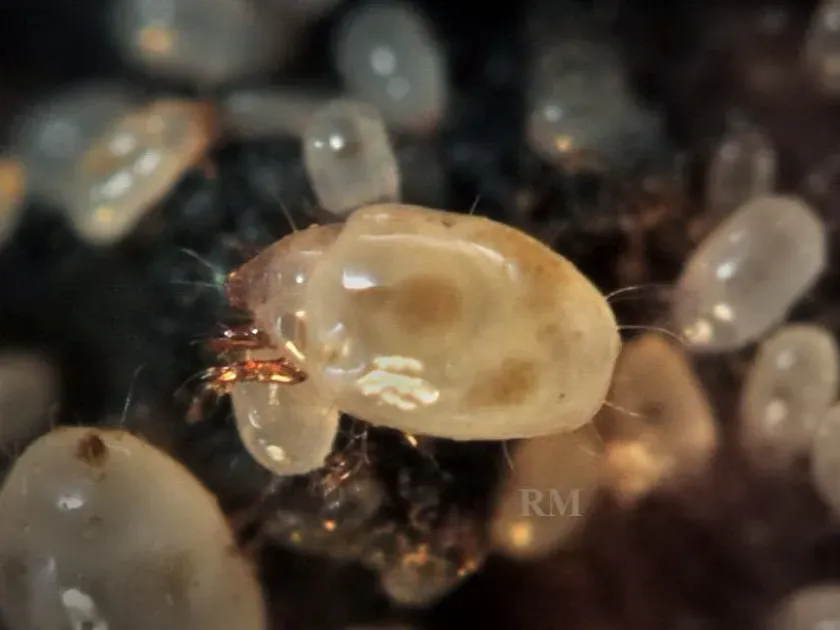
The bulb mite (Rhizoglyphus setosus) is a microscopic arachnid belonging to the Acaridae family. They are invisible to the naked eye, appearing as small, white, oval-shaped organisms.
Their body structure includes a translucent cuticle and short, stout legs adapted for crawling through tight spaces within plant bulbs and soil pores.
These mites possess a unique biological feature known as the hypopus stage. This is a dormant, highly resistant phase that allows the mite to survive harsh environmental conditions or food shortages.
Under optimal conditions—temperatures between 22°C and 26°C and high humidity—the lifecycle can be completed in as little as 20 to 30 days, leading to multiple generations per season.
They are primarily soil-dwelling organisms but can migrate extensively through moisture, colonizing new healthy bulbs located in close proximity to infested ones.
What it damages
Bulb mites primarily attack various ornamental and food crops, including tulips, lilies, hyacinths, onions, garlic, and many other geophytes.
The mites bore into the basal plate or damaged areas of the bulb. Once inside, they feed on the fleshy scales, destroying the integrity of the plant tissue.
During storage, their feeding activity can quickly devastate entire collections of bulbs, leaving behind nothing but hollowed-out shells and debris.
In the field, their damage to the root system significantly hinders the plant's ability to absorb water and nutrients, resulting in stunted, weak growth.
Furthermore, the physical wounds created by the mites provide entry points for secondary pathogens like fungi and bacteria, leading to soft rot diseases.
Signs of infestation
Early symptoms include pale, chlorotic, or stunted leaves in the spring. Plants often fail to reach their normal height and may appear wilted even when soil moisture is adequate.
Inspecting the bulb reveals a darkened, soft, or disintegrating basal plate. Often, a brown, powdery substance—consisting of mite waste—is visible between the scales.
Weakened roots are another clear indicator. If a plant is easily pulled from the ground, it is highly likely that the root system has been consumed by the mite.
In stored bulbs, a foul odor and the presence of wet, mushy spots indicate that the mite population has successfully colonized the interior tissue.
- Yellowing and wilting of foliage.
- Decomposed and soft basal plates.
- Presence of powdery residue within bulbs.
- Lack of root development.
Control measures
Prevention starts with proper storage conditions: maintain temperatures below 5°C and ensure relative humidity stays below 60% to discourage mite activity.
Always inspect and cull damaged bulbs before planting or storage. Discard any material that shows signs of soft rot or structural damage to the base.
Treating planting material with acaricides (hot water treatment or chemical dips) before sowing is a highly effective way to eliminate hitchhiking mites.
Practice crop rotation by avoiding the planting of bulbous species in the same soil for several consecutive years to starve out soil-borne populations.
If an infestation is detected during the growing season, apply systemic acaricides specifically labeled for mite control to prevent further spread to healthy plants.
Taxonomy
- Latin name
- Rhizoglyphus setosus
- Order
- Mites
- Family
- Acaridae
- EPPO code
- RHIGSE
Discussion
No discussions yet — be the first.