
Bulb mite
Rhizoglyphus robini
Description
How to identify
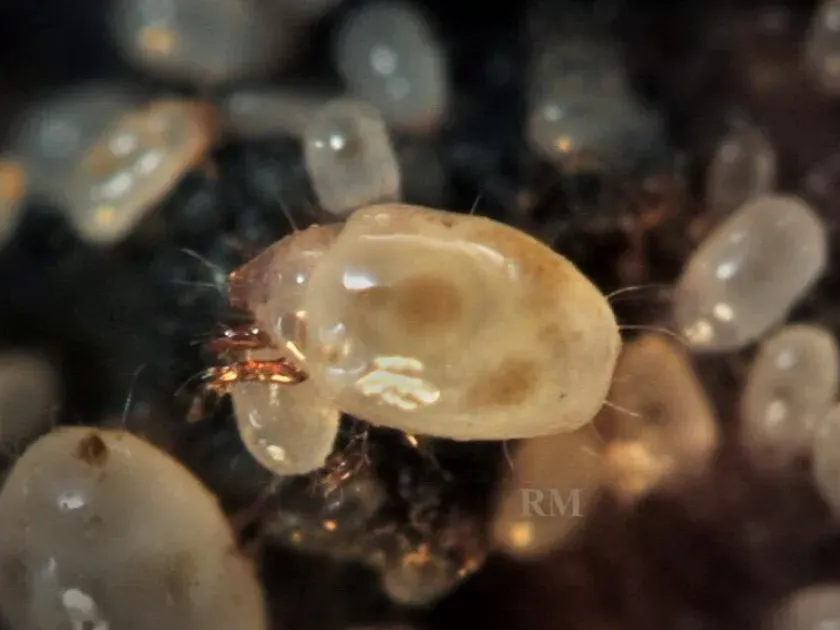
The bulb mite Rhizoglyphus robini is a pest belonging to the family Acaridae, order Acariformes. These microscopic arachnids have a globular, shiny, creamy-white body with brown legs and a characteristic slow movement, reaching about 0.5–0.7 mm in length.
The life cycle encompasses several stages: egg, larva, protonymph, deutonymph (hypopus stage), and adult. The hypopus stage is a dispersal phase specifically adapted to survive drought or starvation by hitching rides on insects or moving through soil pores.
These mites thrive in high humidity and temperatures between +20°C and +25°C. Under favorable conditions, the developmental cycle can be completed in approximately 20–30 days, leading to multiple overlapping generations throughout the growing season and storage.
What it damages
The pest primarily targets bulbous plants, including onions, garlic, tulips, lilies, hyacinths, and gladioli. They are opportunistic feeders that quickly colonize stressed or previously damaged plant tissues, effectively turning them into a food source.
Bulb mites bore into the basal plate of the bulbs. By feeding on internal scales, they create pathways for secondary infections, such as fungi and bacteria, which rapidly destroy the structure of the bulb, eventually resulting in the complete collapse of the plant.
Signs of infestation
Initial signs include stunted growth, yellowing foliage, and a failure to thrive. As the infestation progresses, the basal plate begins to rot, and the roots die off, making the plant unstable and easily removable from the soil.
During storage, infested bulbs appear shriveled and may show signs of wet rot. A brown, powdery material, consisting of mite excrement and plant debris, is often visible between the scales of the bulb upon inspection.
Control measures
Integrated pest management starts with using healthy, certified planting material. It is crucial to ensure that harvested bulbs are dried thoroughly before storage to prevent the moisture levels that promote rapid mite reproduction.
Chemical control focuses on soaking bulbs in acaricidal solutions before planting to eradicate existing populations. During the growing season, if thresholds are exceeded, targeted applications of systemic acaricides are necessary to manage the population and prevent further spread.
Taxonomy
- Latin name
- Rhizoglyphus robini
- Order
- Mites
- Family
- Acaridae
- EPPO code
- RHIGRO
Discussion
No discussions yet — be the first.