
Bulb mite
Rhizoglyphus narcissi
Description
How to identify
The bulb mite (Rhizoglyphus narcissi) belongs to the Acaridae family and the Acariformes order. These are microscopic arachnids, measuring approximately 0.5 to 0.8 mm in length.
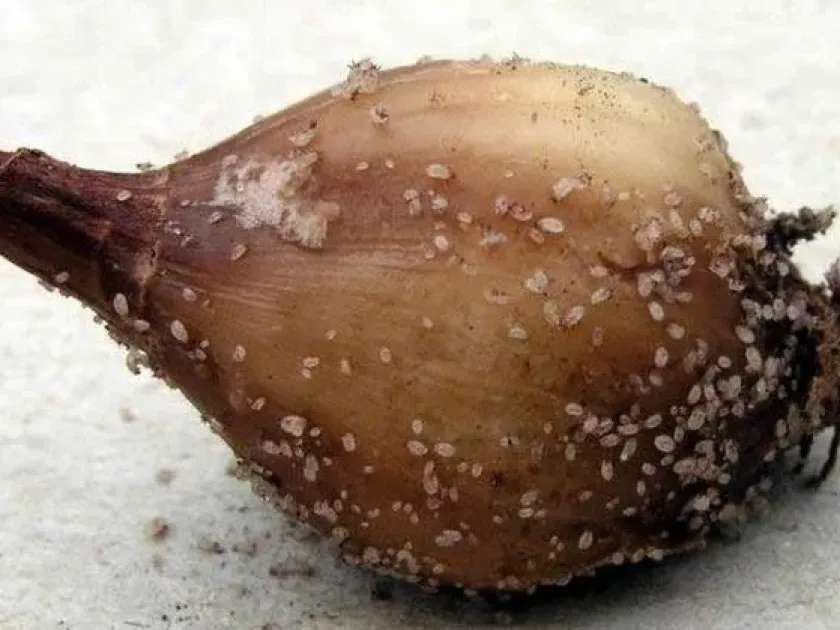
The body of the mite is whitish-yellow, semi-transparent, and shiny, with characteristic brown legs. They are highly sensitive to environmental factors.
Their life cycle includes egg, larva, protonymph, deutonymph, and adult stages. Under unfavorable conditions, they can form a specialized mobile stage called a hypopus.
Reproduction is rapid, with a generation time of about 10–12 days at temperatures between +20°C and +25°C in humid conditions.
Bulb mites are primarily subterranean pests that prefer staying inside the tissues of bulbs, making them difficult to detect during early infestation stages.
What it damages
The bulb mite causes severe damage to a wide range of bulbs, including onions, garlic, tulips, lilies, narcissus, and hyacinths.
They penetrate the bulb through the basal plate, where they feed on the soft tissues, creating tunnels and hollow spaces inside the bulb.
Infestation by bulb mites often facilitates the entry of secondary pathogens, such as fungi (Fusarium) and bacteria, leading to soft rot and total decay.
In the field, infested plants show stunted growth, yellowing leaves, and a poorly developed root system that easily separates from the bulb.
Stored bulbs suffer the most significant damage, often turning into powdery decay or becoming completely hollowed out by the mite population.
When it appears
Mite activity in the soil begins as soon as temperatures rise above +10°C, triggering movement toward plant roots and basal plates.
The primary period of high activity occurs during the growing season when high soil moisture levels support rapid population growth.
Inside storage facilities, mites remain active throughout the year if temperatures remain above +5°C and moisture levels are kept high.
Infestation is usually spread through contaminated soil or by using already infected planting material, which allows the pest to colonize new areas.
Excessive rainfall or poorly drained soil can create an ideal environment for bulb mites, leading to localized outbreaks in the garden.
Signs of infestation
Early symptoms include pale or yellow streaks on the foliage and a general failure of the plant to thrive or reach its full height.
Inspection of the bulb reveals a hollowed-out or decayed basal plate, often accompanied by a brownish powdery material left by the mites.
Severely infested bulbs feel soft to the touch and the roots are often entirely missing due to the destruction caused by the mites feeding.
When cutting open an infected bulb, you may find the mites themselves, which appear as tiny white dots clustering in the crevices of the bulb scales.
The presence of a sour or putrid smell from stored onions is often a strong indicator of mite-induced rot and secondary bacterial infection.
Control measures
The most crucial step in management is the use of certified, clean planting material and rigorous visual inspection before sowing.
Crop rotation is essential for preventing the buildup of mite populations; bulbs should not be planted in the same soil for at least four years.
Chemical control involving the treatment of bulbs with acaricides before planting is a common and effective practice for professional growers.
- Ensure proper drying of harvested bulbs to reduce humidity in storage.
- Maintain storage temperatures near 0 to +2°C to inhibit mite reproduction.
- Destroy all infected plant material and debris to break the cycle of infestation.
Maintaining soil health and avoiding over-irrigation helps to limit the favorable conditions that bulb mites need to thrive and reproduce.
Taxonomy
- Latin name
- Rhizoglyphus narcissi
- Order
- Mites
- Family
- Acaridae
- EPPO code
- RHIGNA
Discussion
No discussions yet — be the first.