
Bulb mite
Rhizoglyphus callae
Description
How to identify
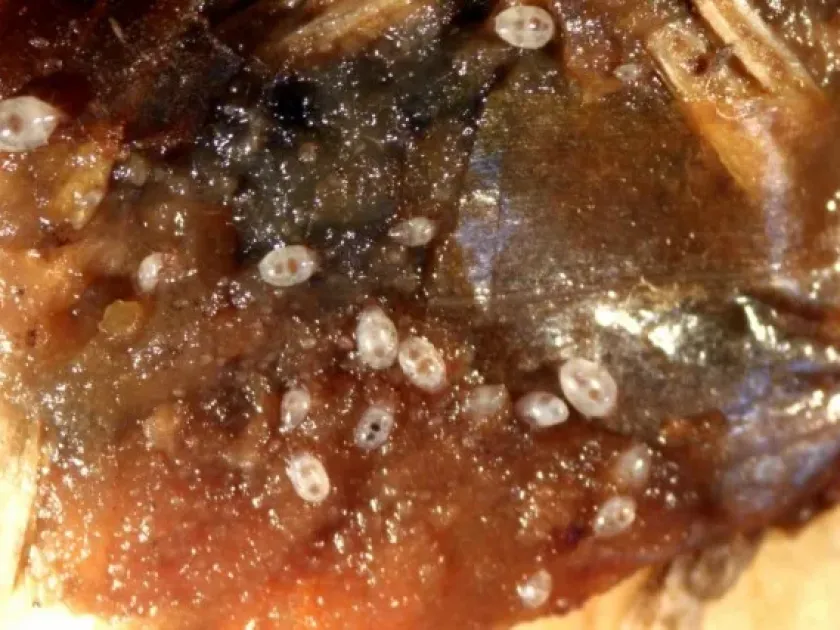
The bulb mite (Rhizoglyphus callae) belongs to the Acaridae family within the Acariformes order. It is a microscopic pest that is difficult to detect without the use of a magnifying glass due to its tiny, translucent appearance.
The adult mite has a smooth, oval-shaped body that is usually yellowish-white in color. It is equipped with robust mouthparts specifically adapted for burrowing into the dense tissues of bulbs, corms, and rhizomes.
A crucial biological feature of this mite is its ability to enter the hypopus stage. This is a highly resistant dormant phase that allows the pest to survive harsh environmental conditions and attach itself to insects or tools for dispersal.
The life cycle of the bulb mite is extremely rapid in warm (above 20°C) and humid conditions. Under optimal circumstances, the pest can produce several generations within a single growing season.
Females typically deposit their eggs near the basal plate of the bulb, where the plant tissue is softer and more accessible, ensuring the offspring have immediate access to food upon hatching.
What it damages
This pest primarily attacks various bulbous plants, including calla lilies, tulips, hyacinths, narcissi, and gladioli. It is a significant concern for both commercial flower growers and home gardeners.
Mites penetrate the bulb through the basal plate or mechanical wounds. Once inside, they feed on the internal tissues, causing the bulb to disintegrate from the inside out.
As the mites feed, they facilitate the entry of various pathogenic bacteria and fungi. This secondary infection often leads to rapid decay, turning the healthy bulb into a foul-smelling, mushy mass.
Affected plants often display stunted growth, yellowing foliage, and deformed stems. If the infestation is severe, the flower buds may wither or fail to bloom entirely, resulting in total crop failure.
The economic impact is particularly high during storage, where the pest can spread from a single infested bulb to contaminate an entire batch, causing widespread rot and losses.
Signs of infestation
One of the most common signs is uneven or delayed emergence of sprouts. Upon close inspection, the roots may be absent or severely damaged, and the basal plate often appears brown and decayed.
If you examine an infested bulb with a magnifying lens, you will likely observe a fine, white, powdery substance consisting of adult mites and their excrement, particularly around the root zone.
The leaves of infected plants often show chlorosis (yellowing), wilting, or scorching at the tips, reflecting the internal damage occurring at the roots and the bulb base.
- Stunted plant development.
- Rotting and foul odor at the base of the bulb.
- Weak, easily detached root system.
- Deformed or drying flower buds.
In advanced cases, the internal tissue of the bulb is completely destroyed, leaving behind nothing but the dry, outer scales that provide no support for the growing plant.
Control measures
Strict selection of planting material is the most effective preventative measure. Any bulbs showing signs of softening, discoloration, or damage must be discarded and destroyed immediately.
Pre-planting treatment of bulbs with appropriate acaricides or systemic insecticides is highly recommended to eliminate existing populations and protect the crop during the initial growth phase.
Proper storage conditions are vital. Maintaining a dry, well-ventilated environment at recommended temperatures significantly inhibits the ability of the mites to breed and spread during dormancy.
Implementing good agricultural practices, such as crop rotation and the prompt removal of plant debris, helps to break the pest's life cycle and reduce its presence in the soil.
If an infestation is detected in a growing crop, targeted application of systemic acaricides can be effective, as these chemicals are absorbed into the plant tissues where the mites reside.
Taxonomy
- Latin name
- Rhizoglyphus callae
- Order
- Mites
- Family
- Acaridae
- EPPO code
- RHIGCA
Discussion
No discussions yet — be the first.