
Recilia trifasciata
Recilia trifasciata
Description
How to identify
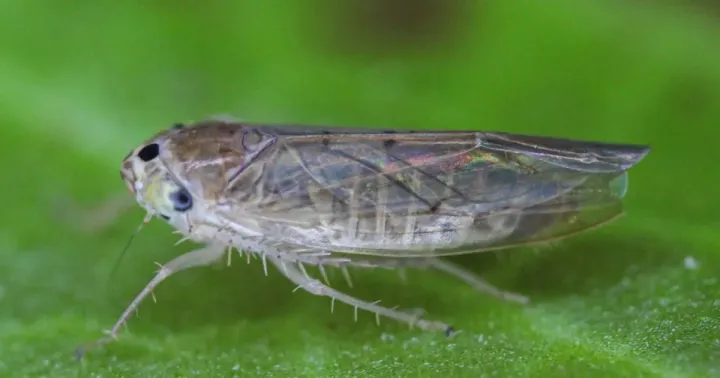
Recilia trifasciata is a species of leafhopper belonging to the family Cicadellidae. It is a small insect, typically measuring between 3 and 4 millimeters in length.
The adult insect has a brownish-yellow to grayish coloration, which provides excellent camouflage among grasses. The species is named for the three distinct dark transverse bands visible on its pronotum and forewings.
Nymphs resemble smaller versions of the adults but lack functional wings. Despite their small size, they are highly mobile and demonstrate significant jumping abilities when disturbed.
Like other cicadellids, they possess piercing-sucking mouthparts. This anatomical feature allows them to penetrate plant tissues efficiently to extract sap, which serves as their primary nutritional source.
These insects thrive in environments with moderate humidity and sunshine. High fecundity rates allow populations to increase rapidly under favorable environmental conditions during the growing season.
What it damages
Recilia trifasciata primarily targets members of the Poaceae family. Cereal crops such as wheat, barley, rye, and oats are among the most frequently infested plants.
Wild grasses also serve as crucial hosts for this pest. These non-crop habitats act as reservoirs that support the population throughout the year, facilitating migration into cultivated fields.
The greatest damage occurs during the early growth stages of cereals. Feeding activity stunts plant development and causes significant physiological stress to young crops.
Crucially, this species acts as a vector for various plant viruses and mycoplasma-like organisms. The transmission of these pathogens often causes more economic damage than the direct loss of sap.
In cases of severe infestation, yield losses can be substantial. Weakened plants are less capable of producing high-quality grains, which directly impacts the profitability of the harvest.
When it appears
The insect overwinters as either a nymph or an adult, hiding within plant debris, leaf litter, or the dense root systems of perennial grasses.
Emergence begins in the spring when soil temperatures reach approximately 10–12 degrees Celsius. Initially, they feed on emerging weeds before migrating to winter cereal fields.
Throughout the growing season, multiple generations can occur depending on the regional climate. Peak flight activity usually coincides with the tillering phase of cereal crops.
During warm summer months with temperatures between 20 and 25 degrees Celsius, development is accelerated, leading to rapid surges in the local population density.
As autumn approaches and temperatures drop, adults seek shelter for hibernation. This shift marks the end of the active feeding season in open fields.
Signs of infestation
The first visual signs of infestation are small white or yellowish spots on leaves, indicating areas where the insect has pierced the epidermis to feed.
As feeding continues, leaves may curl, yellow, and display signs of necrosis. Affected plants often look stunted compared to their healthier counterparts in the same field.
Field patches with reduced growth density are a common indicator of pest presence. Upon inspection, one can typically find the insects jumping among the stems.
Symptoms of viral infection, such as mosaic patterns, streaking, or chlorosis, are common evidence of Recilia trifasciata feeding, as they transmit pathogens during the process.
In cases of extreme infestation, the total density of the crop decreases as young seedlings fail to recover and die, leaving bare spots in the field.
Control measures
Integrated pest management strategies involve a combination of cultural practices. Rotating crops and maintaining clear field edges free from weeds are essential preventative measures.
Autumn plowing is highly effective for reducing the overwintering population. By burying crop residues, the larvae and adults lose their protected habitat, which significantly decreases survival rates.
Effective weed management both within and around the field perimeter is critical to limiting the available host range for the leafhoppers.
If economic thresholds are exceeded, targeted application of systemic insecticides may be necessary. It is important to apply these treatments during peak nymph activity for maximum effect.
- Utilize seed treatments with systemic insecticides.
- Monitor field edges frequently using sticky traps.
- Encourage natural predators to maintain population balance.
- Select resistant cereal cultivars if available in the region.
Taxonomy
- Latin name
- Recilia trifasciata
- Order
- Hemiptera (bugs, aphids, leafhoppers)
- Family
- Cicadellidae
- EPPO code
- RECITR
Discussion
No discussions yet — be the first.