
Recilia hospes
Recilia hospes
Description
How to identify
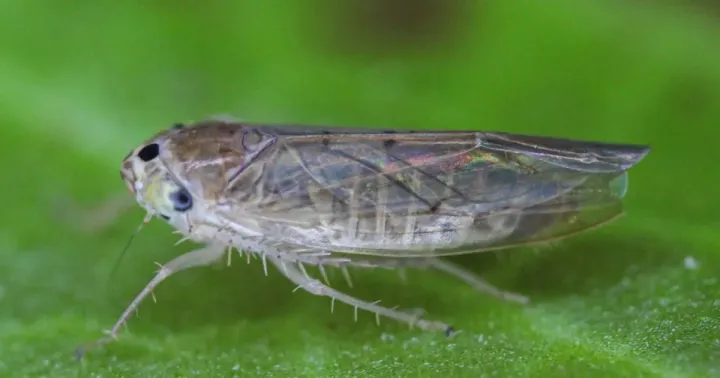
Recilia hospes is a small insect belonging to the order Hemiptera and the family Cicadellidae (leafhoppers). Adults typically measure between 3 and 4 millimeters in length, possessing a grayish-brown or yellowish coloration that serves as effective camouflage against the stems and leaves of host plants.
The body of the leafhopper is elongated, evolved for quick movement within dense vegetation. They have well-developed hind legs adapted for jumping, allowing them to escape rapidly when disturbed. The wings are transparent with distinct venation and fold closely against the body when at rest.
Nymphs resemble adults in appearance but are smaller and lack fully developed wings. Their coloration is usually lighter, making them difficult to spot on the succulent green tissues of host plants. The life cycle comprises the egg stage, five nymphal instars, and the adult stage.
In the wild, Recilia hospes favors humid environments, which makes rice paddies an ideal habitat. Its high level of adaptability allows it to rapidly colonize new areas, provided the temperature and host availability are suitable for continuous reproduction.
This species is a significant focus for entomological surveillance because, in addition to physical damage, it frequently acts as a vector for various phytoplasmas and viral pathogens, which significantly increases its economic threat to cereal agriculture.
What it damages
The primary food source for this pest is cereal crops, with rice (Oryza sativa) being the most susceptible. Besides rice, the leafhopper can inhabit various species of wild grasses, which serve as reservoirs for the population between planting seasons.
Both adults and nymphs feed by piercing the plant tissues and extracting sap from the leaves and stems. This process removes essential nutrients, leading to the depletion of the plant's resources and inhibiting its overall growth and vigor.
Beyond direct feeding damage, Recilia hospes is a known vector for diseases such as rice yellow dwarf virus. The pathogen is transmitted into the plant's vascular system during feeding, causing systemic infections that result in stunted growth and chlorosis.
In fields with high pest density, widespread suppression of the crop is observed, potentially leading to yield losses of 20–30% or more, depending on the severity of secondary pathogen infections. The plants become brittle, lose turgor, and fail to reach maturity.
Under intensive cultivation, the presence of these leafhoppers is considered critical, as the dynamic movement of the insects between rice plants facilitates the rapid spread of viral infections, which can devastate an entire field if not managed early.
When it appears
The activity of Recilia hospes is closely linked to temperature and the phenology of the rice plant. The emergence of overwintered individuals begins as the weather warms and rice seedlings are either transplanted or begin to germinate in the field.
Several generations are typically produced throughout the growing season. The peak population density usually occurs in mid-summer, when climatic conditions are optimal for the insect's reproduction and rapid feeding cycles.
The development cycle accelerates under high temperatures and high humidity, which are characteristic of major rice-producing regions. These conditions allow for shorter intervals between generations, potentially leading to population outbreaks during the peak growing season.
As the season progresses toward harvest and the crop begins to mature, the activity levels of the leafhoppers generally decline. Adults move toward surrounding areas with wild grasses and weeds, where they prepare for the winter dormancy period.
Monitoring the seasonal dynamics of Recilia hospes is crucial for agronomists to determine the optimal timing for protective interventions, ensuring that insecticide applications occur before the pest population peaks during the tillering and elongation phases.
Signs of infestation
Initial signs of infestation include the appearance of chlorotic spots, yellow stripes, or general yellowing of the leaf surface, which occurs due to the disruption of photosynthesis caused by continuous sap extraction.
Affected plants show significant growth retardation and weakened stems. A characteristic sign of the viral infections transmitted by this pest is "dwarfing," where the plant produces an excessive number of secondary tillers, resulting in a bushy, stunted appearance.
The presence of leafhoppers can be confirmed by disturbing the rice plants, which causes the adults to jump and scatter. Nymphs are frequently found hiding in leaf sheaths or near the base of the plant where humidity levels remain higher.
Secondary signs often include the presence of honeydew—the sticky excrement produced by leafhoppers—which can attract sooty mold. The growth of this black fungus on leaf surfaces further reduces the plant's ability to photosynthesize and thrive.
For precise diagnosis, yellow sticky traps are highly recommended. They effectively capture adult leafhoppers, allowing for an accurate quantitative assessment of the population density in the field before the infestation reaches economic injury levels.
Control measures
Integrated Pest Management (IPM) for Recilia hospes relies on cultural practices such as crop rotation, thorough weeding of field margins to remove alternative hosts, and optimized planting dates to decouple crop development from peak pest activity.
The use of resistant or tolerant rice varieties remains the most environmentally sustainable method for mitigating the risk of viral epidemics transmitted by leafhoppers. Genetic resistance significantly decreases the vulnerability of the crop to secondary infections.
Chemical control is applied when the pest population exceeds established economic thresholds. Insecticides from the neonicotinoid, pyrethroid, or organophosphate groups are used to effectively reduce population numbers and protect the crop during critical growth stages.
Biological control methods emphasize the preservation of natural predators and parasitoids, including certain bugs, spiders, and parasitic wasps. Maintaining ecological balance within the agroecosystem can help regulate leafhopper numbers naturally.
Water management is also a critical control factor. Proper irrigation levels help maintain optimal plant health and can create conditions that are less conducive to the mass reproduction of the leafhopper, thereby supporting the plant's inherent resilience.
Taxonomy
- Latin name
- Recilia hospes
- Order
- Hemiptera (bugs, aphids, leafhoppers)
- Family
- Cicadellidae
- EPPO code
- RECIHO
Discussion
No discussions yet — be the first.