
Pyrellia rapax
Pyrellia rapax
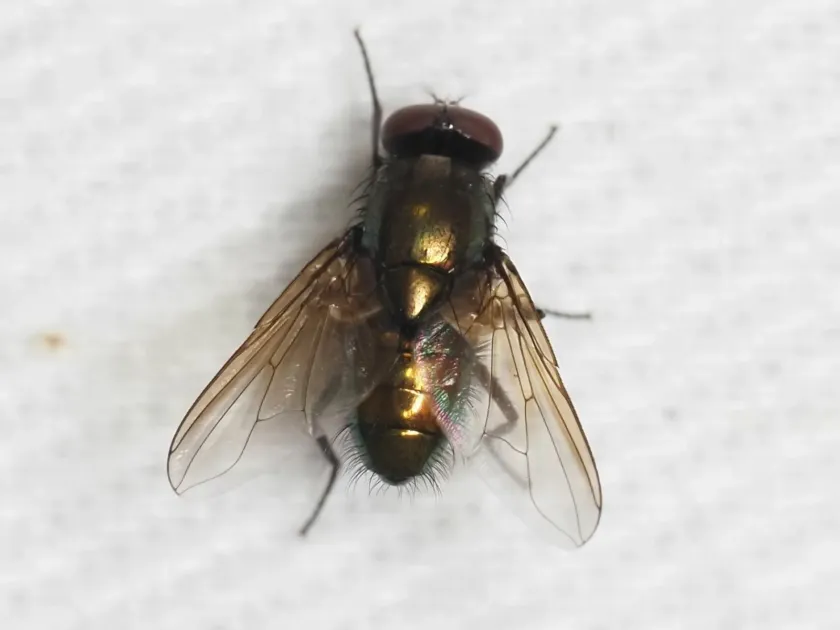
Description
How to identify
Pyrellia rapax is a fly species belonging to the family Muscidae, in the order Diptera. These flies are often recognized by their metallic blue or greenish coloration, which is characteristic of several related species in the family.
The adults possess a licking-type mouthpart, adapted for feeding on liquid organic substances. Their body is covered with sparse hairs, and their eyes are typically structured in a way that allows for easy identification by entomologists.
The larvae progress through several developmental stages while living in organic-rich environments or within plant tissues. After the larval phase, the insect enters the pupal stage, usually occurring in the soil or protected debris.
The life cycle is highly dependent on environmental temperature and humidity. Under optimal conditions, the species can complete multiple generations in a single growing season, leading to rapid population growth.
Adult flies are highly mobile, enabling them to disperse across fields and colonize new areas, which makes managing outbreaks a complex task for agricultural professionals.
What it damages
The primary damage is caused by the larvae, which can infest living plant tissues. They feed by boring into stems or root collars, disrupting the plant's vascular system and vital sap flow.
As a result of this feeding activity, plants exhibit wilting, stunted growth, and in severe cases, death of the infested shoot or the entire plant. This mechanical injury significantly impacts the plant's overall health.
Infested tissues often serve as entry points for secondary infections. Pathogenic fungi and bacteria frequently colonize these wounds, leading to rot and decay that exacerbate the damage caused by the fly larvae.
Significant economic losses can occur in vegetable and grain fields when population densities are high, leading to gaps in crop stands and reduced yields.
The combination of direct larval feeding and secondary infection often makes the damage harder to reverse, even with corrective agricultural interventions.
When it appears
Adults emerge in early spring, triggered by rising temperatures and the warming of the soil. This emergence marks the beginning of the seasonal activity cycle.
Throughout the summer, fly activity remains high, particularly in warm and humid weather conditions which favor the rapid development of eggs and larvae.
As temperatures begin to drop in the autumn, the flies seek protected habitats to undergo diapause or prepare for overwintering in the soil or crop residue.
Continuous monitoring throughout the growing season is essential because the overlapping generations can lead to a sustained presence of the pest in the field.
Understanding the peak flight periods allows farmers to time their protection strategies effectively, targeting the most vulnerable stages of the fly's life cycle.
Signs of infestation
Key indicators of an infestation include the yellowing of shoot tips and unexpected wilting, which often happens despite adequate soil moisture levels.
Close inspection of the plant base might reveal small entry holes or tissue deformations. These are clear signs that larvae have bored into the plant interior.
Darkened or necrotic spots on the stems are strong indicators of larvae presence and subsequent secondary decay, which is often accompanied by an unpleasant odor of rotting plant material.
During the day, adult flies can be spotted resting on foliage or patrolling the ground near host plants while searching for egg-laying sites.
- Wilting and yellowing of plant parts.
- Entry holes at the base of stems.
- Secondary rot and necrosis.
- Presence of larvae upon stem dissection.
Control measures
Implementing a proper crop rotation strategy is the primary defense, as it helps break the fly's life cycle and prevents the buildup of larval populations in the soil.
Deep autumn plowing is a highly recommended practice. It exposes overwintering pupae and larvae to the elements, significantly reducing their survival rate.
Sanitation of the field, specifically the removal and destruction of crop residues after harvest, effectively eliminates the food source and overwintering sites for the flies.
Chemical control via insecticides should be reserved for periods when the economic threshold is exceeded. Systemic insecticides are generally the most effective choice.
The use of monitoring traps helps in tracking population dynamics, allowing for precise and timely applications of control measures that minimize environmental impact.
Taxonomy
- Latin name
- Pyrellia rapax
- Order
- Diptera (flies)
- Family
- Muscidae
- EPPO code
- PYLLRA
Discussion
No discussions yet — be the first.