
Pyrellia
Pyrellia
Description
How to identify
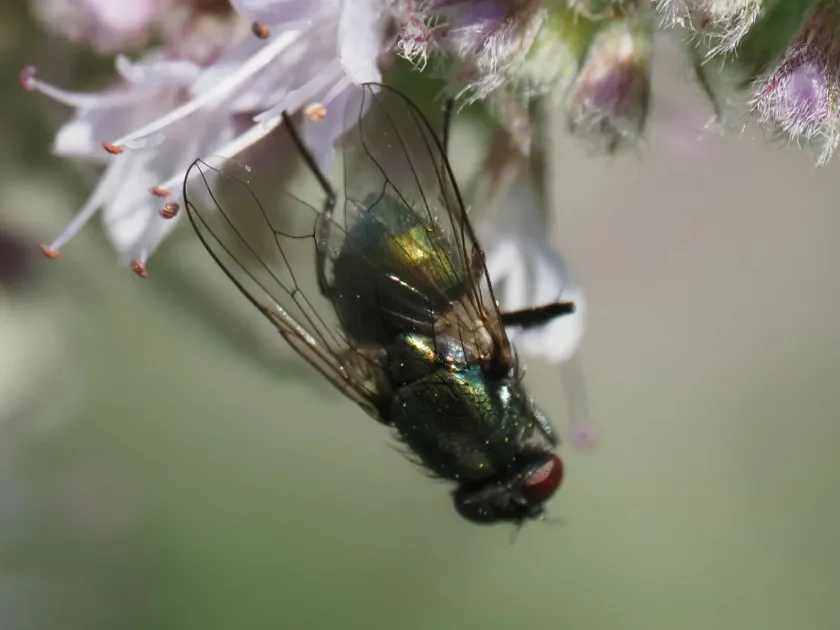
Pyrellia is a genus of flies belonging to the family Muscidae and the order Diptera. These insects are typically small, often characterized by a metallic body sheen that ranges from green to deep blue.
Adult flies possess a sponging mouthpart, which is typical for many muscid species. Their wings are transparent with well-defined venation, allowing them to be distinguished from other common synanthropic fly species.
The larvae are worm-like, typical of many flies, lacking limbs and a distinct head, but equipped with oral hooks for feeding. Their appearance changes significantly depending on the developmental stage and the substrate they inhabit.
Accurate species identification within the genus requires microscopic examination of morphological traits, such as thoracic bristles and the structure of male genitalia.
Ecologically, these flies are strongly associated with organic matter, manure, and decaying vegetation, which makes them frequent visitors to farms and rural gardens.
What it damages
Adult Pyrellia flies are not primary pests of healthy plant tissues, but they cause indirect damage by acting as vectors for various plant pathogens. They visit flowers, often damaging pollen and nectar-producing organs.
The larvae primarily develop in decaying plant matter, promoting secondary infection of stressed crops by fungi and bacteria. Under high humidity, they may penetrate underground plant structures.
Significant damage occurs in vegetable crops, root vegetables, and bulbous plants when agricultural practices are neglected. In areas of injury, flies leave excrement, which attracts other secondary pests.
While plants rarely die directly from larval feeding, the quality of the harvested product decreases significantly. Affected tissues often become necrotic and rot, making them unsuitable for storage.
In cases of mass reproduction, these flies can also become a nuisance in livestock facilities where larvae thrive in manure piles.
When it appears
Adult Pyrellia activity begins with the onset of consistent spring warmth. The peak population density is typically observed during the summer months.
Multiple generations occur throughout the summer. The life cycle is heavily dependent on ambient temperature and moisture levels; higher temperatures accelerate the metamorphosis process.
As autumn approaches, activity gradually declines. The flies seek overwintering sites, often choosing crevices in buildings, tree bark, or the top layers of soil.
The most favorable conditions for development are periods of prolonged rain and high humidity, which facilitate the decay of organic matter — the primary larval habitat.
Short-lived spring frosts do not eliminate the population but serve to slow down egg-laying rates and larval development speed.
Signs of infestation
The primary sign of Pyrellia presence is a high concentration of adult flies around compost piles or manure storage areas. This serves as a key indicator of potential risk to the garden.
On the plants themselves, one may notice patches of softened tissue emitting an unpleasant odor. Damage is often localized near the stem base or the root collar zone.
Upon inspection of root vegetables, characteristic tunnels bored by larvae can be found. Inside these galleries, one can often spot the larvae themselves or their dark-colored frass.
Gradual wilting of leaves without an obvious cause during the day often suggests root damage caused by fly larval activity and subsequent secondary rotting.
The premature deterioration of stored vegetables is frequently linked to infestation by Pyrellia during the active growing season.
Control measures
The foundation of Pyrellia control is maintaining strict sanitary standards on the site. It is essential to dispose of plant debris promptly to prevent decay near cultivated crops.
Regular soil cultivation and hoeing of rows are recommended, as these practices disturb larval habitats and expose them to natural predators and sunlight.
- Using attractant traps to monitor and reduce the population of adults.
- Prompt removal of manure and proper composting techniques.
- Application of biological products based on entomopathogenic fungi.
- Adherence to crop rotation to reduce the long-term buildup of the pest population.
In cases of high infestation, the use of insecticides labeled for home garden use is possible, though it should be considered a last resort and performed strictly according to instructions.
Taxonomy
- Latin name
- Pyrellia
- Order
- Diptera (flies)
- Family
- Muscidae
- EPPO code
- PYLLSP
Discussion
No discussions yet — be the first.