
Grain mite
Pyemotes zwoelferi
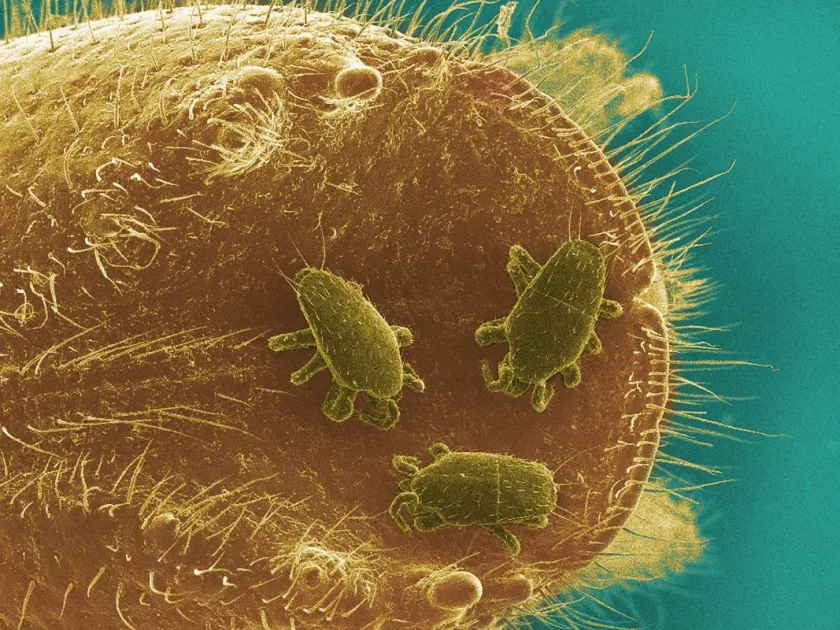
Description
How to identify
The grain mite (Pyemotes zwoelferi) belongs to the family Pyemotidae, order Trombidiformes. These mites are microscopic organisms that primarily thrive in storage environments where temperature and humidity are conducive to their growth.
Adult females exhibit a distinctive physiological change known as physogastry, where their abdomen becomes significantly swollen after feeding. This trait allows entomologists to identify the species under a microscope, as they are otherwise nearly invisible.
They are frequently associated with other stored product pests, as they often act as external parasites on larvae of beetles and moths. Their presence in a warehouse is a strong indicator of an existing secondary infestation.
The life cycle is characterized by rapid development and high reproductive capacity. Under optimal conditions, populations can surge in a matter of weeks, leading to widespread infestation throughout a grain silo.
These mites are highly adaptable and can survive in the interstitial spaces of storage facilities, making them difficult to eradicate completely through basic sanitation methods alone.
What it damages
The primary damage caused by these mites includes the destruction of grain embryos, which renders the seed useless for planting. This is particularly problematic for high-quality seed lots and valuable agricultural stocks.
Beyond physical consumption, the mites contribute to the degradation of grain quality by introducing fungi and bacteria. This can trigger "hot spots" within the grain mass, leading to massive spoilage and energy loss.
Infested grain becomes contaminated with mite carcasses and metabolic waste, often resulting in an unpalatable odor. Such products are rejected by milling and food processing industries due to safety standards.
Workers handling heavily infested grain are at risk of "grain itch," a severe dermatitis caused by the bites of these mites. This creates a significant health hazard in workplaces that lack proper safety equipment.
Economic losses are cumulative, starting from the loss of individual kernels to the eventual condemnation of entire silos. Prevention of initial infestation is essential to maintaining the integrity of the storage chain.
Control measures
Effective control strategies begin with moisture management. Keeping grain moisture content below 12–14% is the most effective biological barrier against the rapid proliferation of grain mites.
Regular sanitation of storage facilities, including the removal of old debris and dust, is vital. Mites thrive in the "hidden" corners of a warehouse, so deep cleaning between cycles is a necessary procedure.
Fumigation remains the standard practice for treating active infestations. Specialized phosphine-based treatments are utilized to penetrate the grain mass and reach the mites hidden in internal crevices.
Active aeration and temperature control systems help keep the grain mass in a stable state. By maintaining low temperatures, managers can slow down the mite's metabolic rate and significantly reduce population growth.
Continuous monitoring programs involve systematic sampling of stored products. By detecting the presence of Pyemotes zwoelferi early, operators can apply targeted interventions before the infestation spreads across the entire facility.
Taxonomy
- Latin name
- Pyemotes zwoelferi
- Order
- Mites
- Family
- Pyemotidae
- EPPO code
- PYEMZW
Discussion
No discussions yet — be the first.