
Pyemotes scolyti
Pyemotes scolyti
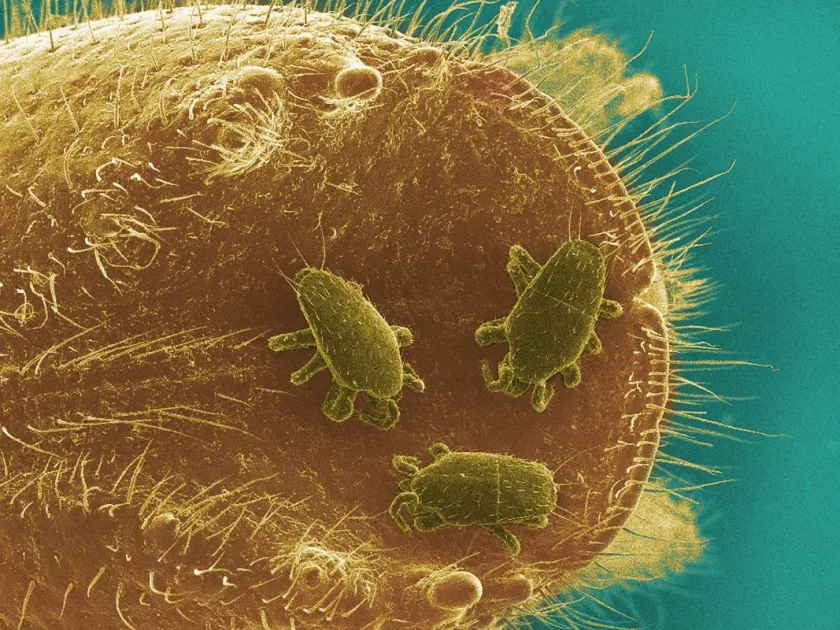
Description
How to identify
Pyemotes scolyti is a microscopic mite belonging to the Pyemotidae family (order Trombidiformes), known for its parasitic lifestyle.
Adult females exhibit extreme physogastry, where their abdomen swells significantly while carrying offspring, making them visible under microscopic examination.
The mite has a complex life cycle, alternating between a free-living phase and a parasitic phase where it targets specific insect hosts.
These mites use specialized mouthparts to pierce the cuticle of beetle larvae and inject a potent paralytic toxin to subdue their prey.
Measuring roughly 0.2–0.3 mm in length, the mite is invisible to the naked eye, necessitating laboratory tools for accurate identification.
What it damages
The primary hosts for Pyemotes scolyti are various bark beetle species (Scolytinae) that colonize the phloem of conifers and broadleaf trees.
While the mite does not consume wood, it acts as a natural control agent by preying on beetle larvae and pupae within their galleries.
In forestry, this mite is considered beneficial when it suppresses bark beetle outbreaks, although it can occasionally affect other beneficial insects.
It poses a significant health risk to humans handling infested wood, as its bites can trigger severe contact dermatitis and allergic skin reactions.
The overall impact on trees is positive in terms of pest management, as it terminates the beetle's development cycle before adult emergence.
When it appears
The mite's life cycle is synchronized with its beetle hosts, with activity beginning in early spring as beetles colonize weakened trees.
Population density peaks during the summer months when host larvae and pupae are most abundant within the tree bark galleries.
As temperatures drop in autumn, the mites enter a dormant state or remain as fertilized females to overwinter in the bark's protective crevices.
Developmental speed is heavily dependent on the ambient temperature and humidity levels maintained under the bark of the host tree.
In indoor wood storage facilities, the lifecycle can continue year-round, leading to persistent infestations regardless of the external climate.
Signs of infestation
The main indicator of infestation is high mortality among beetle larvae within their tunnels, without evidence of fungal or other pathogen-related decay.
Microscopic analysis of the beetle galleries will reveal bloated female mites attached to the bodies of paralyzed or dead larvae.
A noticeable decrease in the emergence of new adult beetles despite extensive tunnel systems indicates successful parasitism by the mites.
Skin irritation, itching, or rashes experienced by workers handling raw wood are strong indicators of a significant mite population in the material.
The presence of empty galleries without live immature beetle stages often points toward the effective action of these predatory mites.
Control measures
Sanitary forest management, including the prompt removal of infested or weakened trees, is the most effective way to manage bark beetle populations.
Chemical control using acaricides is generally not feasible in wild forest settings due to the mite's cryptic lifestyle and ecological safety concerns.
For personnel working with wood, the use of protective clothing and dust masks is essential to prevent mite bites and secondary skin reactions.
Biological balance should be maintained by protecting natural forest habitats, which supports indigenous beneficial entomophagous populations.
In cases of commercial storage infestations, fumigation or specific acaricidal treatments may be applied to timber to ensure it is safe for handling.
Taxonomy
- Latin name
- Pyemotes scolyti
- Order
- Mites
- Family
- Pyemotidae
- EPPO code
- PYEMSC
Discussion
No discussions yet — be the first.