
Straw itch mite
Pyemotes
Description
How to identify
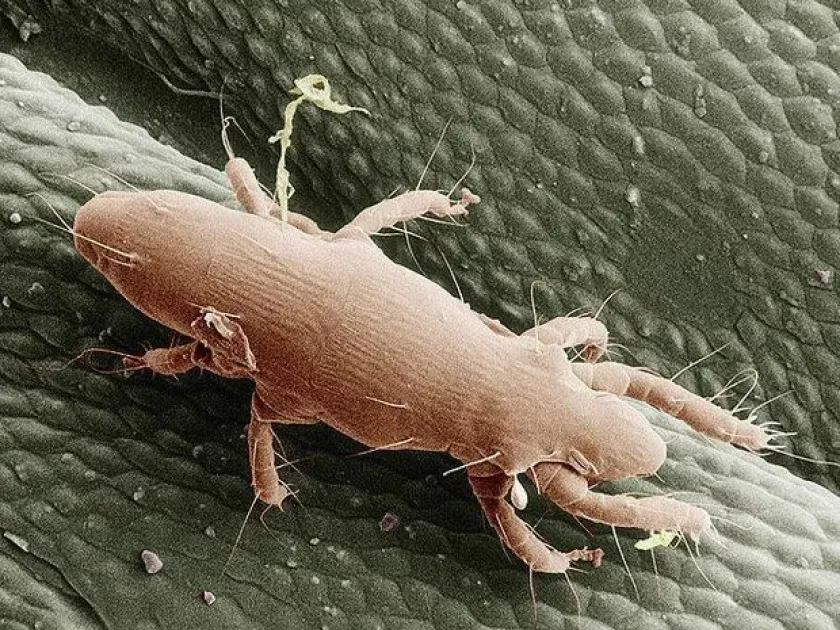
The straw itch mite (Pyemotes species) is a microscopic mite belonging to the family Pyemotidae. These organisms are known for their extremely small size and their complex life strategies involving both predation and parasitism on various insect hosts.
They are classified under the order Trombidiformes. A unique biological trait of the females is physogastry, where the abdomen swells significantly during the development of their offspring, transforming the mite into a spherical, immobile sac.
The lifecycle of Pyemotes is remarkably rapid, characterized by ovoviviparity, where eggs hatch inside the mother's body. This adaptation allows populations to reach immense numbers within a very short timeframe under favorable conditions.
These mites use sophisticated chemical sensors to locate their hosts. They are highly resilient and can enter a state of dormancy if environmental conditions become unfavorable, ensuring the survival of the species across seasons.
Distinguishing between beneficial predatory mites and those that pose a threat to human health or stored agricultural products is essential for effective integrated pest management strategies.
What it damages
The damage caused by Pyemotes is primarily ecological, as they often parasitize insects that are already pests themselves. By attacking these insects, they can disrupt the balance of natural biological control agents in the field.
In storage environments, they frequently infest grain-feeding beetles and moth larvae. While this may reduce the pest population, the mites themselves cause severe skin irritation, rashes, and dermatitis in humans who handle the grain.
For crops, the indirect damage is significant because Pyemotes can decimate populations of beneficial predatory insects. This loss of natural enemies leads to subsequent outbreaks of primary agricultural pests that would otherwise be controlled.
Economic losses arise not only from the damage to the crops but also from the health risks posed to agricultural workers. Handling infested material often requires specific protective gear and decontamination procedures.
Thus, the mite is considered both a secondary pest and a significant occupational hazard, necessitating strict management to ensure the safety of both agricultural produce and the personnel involved in its handling.
When it appears
Pyemotes activity is highly dependent on climate, with peak development occurring during hot and dry summer conditions. Warm temperatures significantly accelerate their metabolic rates and reproductive cycles.
In climate-controlled storage facilities, Pyemotes can remain active throughout the year. As long as there is an available host population and consistent environmental conditions, their life cycle continues unabated.
Seasonal transitions often prompt the mites to seek shelter in plant debris, cracks in storage structures, or soil. During these periods, they remain in a state of lowered activity, waiting for the return of suitable conditions.
The population peaks are generally synchronized with the emergence of their insect hosts. Agronomists should focus monitoring efforts during periods when the host insects are most active in the field.
Understanding these seasonal dynamics is crucial for timing preventive measures and minimizing the risk of a population explosion, especially prior to harvesting or during long-term storage.
Signs of infestation
The primary sign of infestation is the discovery of parasitic mites attached to the bodies of insect larvae. These larvae may appear sluggish, paralyzed, or dead due to the toxins injected by the mites.
For workers, the most common indicator is the development of intense itching and skin rashes after being in contact with stored grain or straw. This symptom is a clear signal of high mite density.
In field diagnostics, agronomists look for a sudden decline in the populations of primary pests. However, this must be confirmed through laboratory examination of crop samples to verify the presence of Pyemotes.
- Swollen, spherical females attached to the surface of host larvae.
- Significant decrease in the movement of insect pest populations.
- Widespread dermatitis among personnel handling harvested crops.
- Dusty, powdery residue observed near grain or insect colonies.
- Microscopic identification of mites from collected samples.
Routine inspections of storage areas, focusing on dust accumulation and the health of insect larvae, are essential for early detection and mitigation of potential outbreaks.
Control measures
Sanitation is the cornerstone of control. Regular cleaning of storage facilities, grain silos, and processing equipment is vital to remove the debris and dust that harbor these mites.
Proper grain management, including drying and aeration, is highly effective. Maintaining moisture levels below the threshold required for mite reproduction is the best way to keep populations in check.
When infestation levels pose a health risk, the use of approved acaricides may be necessary. All treatments must follow strict application regulations to prevent contamination of the harvested product.
Cultural practices, such as the deep incorporation of crop residues into the soil, help break the life cycle by reducing the available sites for both the mites and their insect hosts.
Effective management requires a combination of monitoring, sanitation, and environmental control to create conditions that are unsuitable for the survival and proliferation of Pyemotes.
Taxonomy
- Latin name
- Pyemotes
- Order
- Mites
- Family
- Pyemotidae
- EPPO code
- PYEMSP
Discussion
No discussions yet — be the first.