
Red-vented bulbul
Pycnonotus cafer
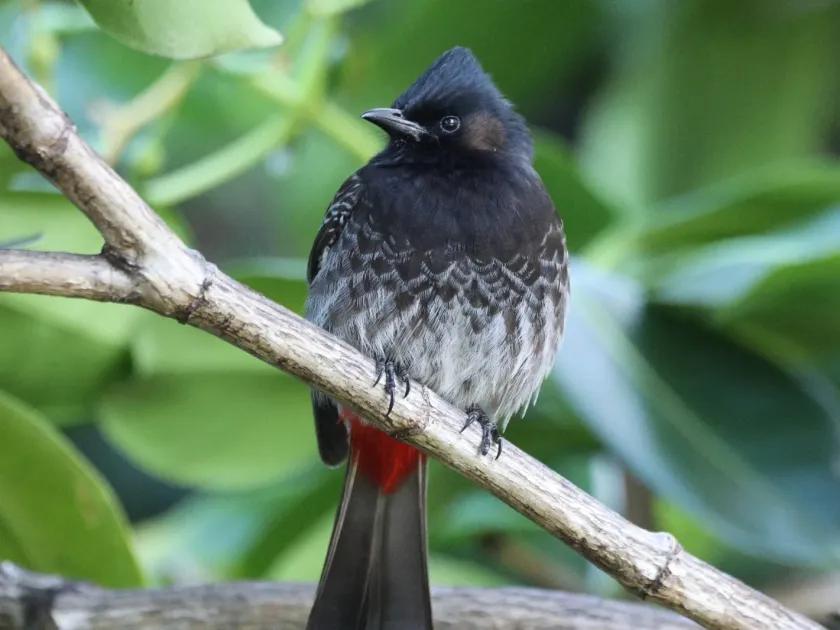
Description
How to identify
The red-vented bulbul (Pycnonotus cafer) is a passerine bird belonging to the Pycnonotidae family, known for its significant impact on horticultural crops.
Adults typically measure about 20 centimeters in length and feature a brownish-gray body, which provides excellent camouflage within dense canopy foliage.
The bird is easily identified by its distinctive dark, peaked crest on its head and a conspicuous crimson-red patch in the ear area, from which it derives its common name.
The undertail coverts are a bright red color, which is a key diagnostic feature observed during flight or when the bird is perched in clear view.
The tail is relatively long and often tipped with white, aiding in identification. These birds are highly gregarious and are frequently found in noisy groups in agricultural zones.
What it damages
The red-vented bulbul is considered a destructive agricultural pest because it feeds extensively on a wide variety of cultivated fruits and berries.
Commonly targeted crops include papayas, guavas, mangoes, grapes, tomatoes, and various citrus fruits, causing significant yield loss in orchards.
Damage occurs when the birds peck at the skin of ripening fruit, exposing the flesh to air and secondary infections such as molds and bacteria, rendering the crop unmarketable.
In high-density populations, the cumulative damage can lead to the loss of a substantial percentage of the total harvest, impacting the economic viability of the farm.
In addition to direct fruit consumption, their feeding habits can facilitate the spread of invasive weed seeds across cultivated fields through their droppings.
When it appears
Feeding activity increases dramatically during the fruit maturation period, as the birds seek out high-sugar resources for their nutritional and hydration needs.
In tropical and subtropical climates, their presence in agricultural areas can be year-round, tracking the seasonal availability of different ripening fruit crops.
The most intense damage occurs during the breeding season when the need for supplemental food for nestlings drives the birds to exploit available orchards more aggressively.
Daily peaks of damage typically occur during the early morning and late afternoon hours, coinciding with the birds' most active foraging periods.
During prolonged dry spells, the reliance of these birds on cultivated fruit increases significantly as these sources provide essential water, exacerbating potential losses.
Signs of infestation
The primary sign of infestation is the presence of partially consumed fruit hanging on branches, characterized by jagged, uneven peck marks across the surface.
Orchards often exhibit numerous fallen, damaged fruits beneath the trees, which is a clear indicator of heavy feeding by a visiting flock.
White, sticky droppings on leaves and branches serve as a biological indicator of the presence of the birds and their recent activity within the specific area.
The sounds of loud, chattering calls and the visible movement of birds among the canopy are diagnostic signs that an orchard is being actively targeted by the species.
Premature fruit drop and the development of localized rot on otherwise healthy-looking fruits are frequent late-stage signs of bulbul feeding activity.
Control measures
Exclusion is the most reliable control method, involving the use of fine-mesh netting to cover individual trees or entire rows of berry bushes before harvest.
Acoustic deterrents that broadcast predator calls or distress signals can be used, though they require frequent variation to prevent the birds from becoming habituated.
Visual deterrents, such as reflective tapes or predator decoys, can be effective if moved frequently throughout the season to maintain the perception of threat.
Integrated pest management strategies should include the removal of nearby brush or scrub that provides shelter and nesting habitat for the bulbul populations.
- Installation of bird-proof netting;
- Use of acoustic frightening devices;
- Deployment of reflective deterrents;
- Strict harvest scheduling to minimize crop exposure.
Taxonomy
- Latin name
- Pycnonotus cafer
- Family
- Pycnonotidae
- EPPO code
- PYKNCA
Discussion
No discussions yet — be the first.