
Brown-eared bulbul
Microscelis amaurotis
Description
How to identify
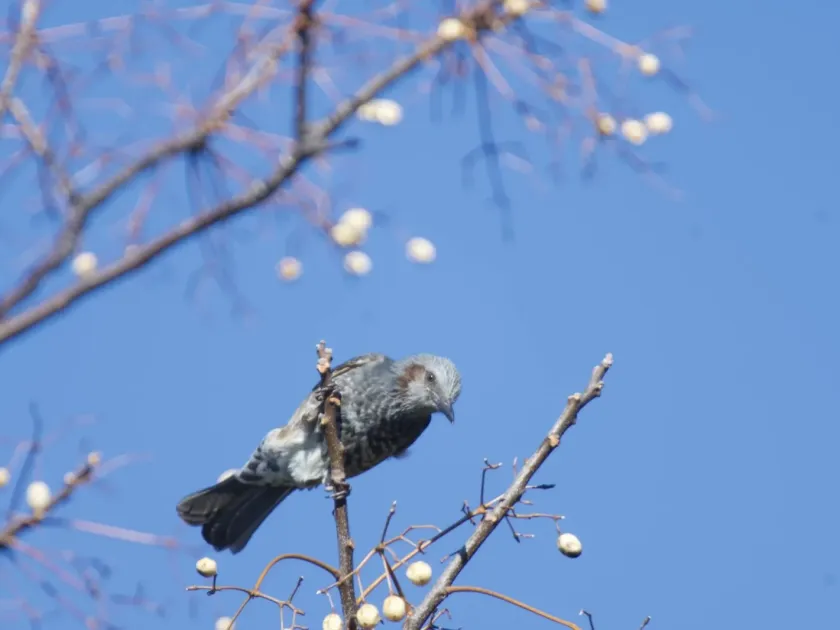
The Brown-eared bulbul (Microscelis amaurotis) is a passerine bird belonging to the Pycnonotidae family, known in East Asia as a significant agricultural nuisance.
These birds typically measure 25–28 cm in length, featuring a plumage composed of brown and grey tones, which provides excellent camouflage within dense tree foliage.
Their short, slightly curved beak is a versatile tool, enabling them to switch efficiently between an insectivorous diet and a frugivorous one, making them highly successful in orchards.
They are gregarious birds that often forage in flocks, a behavior that allows them to overwhelm fruit production areas by consuming large quantities of produce rapidly.
Being highly intelligent and adaptable, they possess the ability to recognize human-made deterrents, which makes long-term population management quite challenging for growers.
What it damages
The primary agricultural impact of the Brown-eared bulbul is the extensive destruction of soft fruits, berries, and ripening crops in private and commercial orchards.
Vineyards, persimmon groves, fig trees, and cherry orchards are particularly susceptible to intense foraging activity during the fruit-maturing season.
They cause damage not only by consuming fruit flesh but also by pecking into multiple fruits, which creates entry points for moisture, bacteria, and secondary fungal infections.
For commercial producers, this results in significant financial losses due to crop spoilage, reduced fruit quality, and increased susceptibility to post-harvest decay.
In addition to fruits, these birds can cause damage to nursery stocks by stripping buds and young shoots, which hinders the healthy development of young saplings.
When it appears
The period of highest concern begins in early spring, as birds may target newly forming buds, impacting the plant's productive potential for the entire year.
Summer marks the beginning of their most destructive phase, as the abundance of ripening fruits draws large flocks into agricultural environments seeking high-sugar food sources.
During late summer and autumn, the influx of migratory populations significantly increases the pressure on late-harvest grape varieties and orchard crops.
The duration of the damage season is heavily influenced by regional weather patterns and the diversity of fruit crops planted, which can provide a continuous food supply.
Farmers must remain vigilant throughout the entire growing cycle, as the bulbul's presence is linked to the availability of the food they prefer.
Signs of infestation
Key indicators of bulbul activity include distinct, deep beak marks on the skin of fruits and berries, often leaving irregular, jagged wounds.
A high volume of partially eaten, damaged fruit discarded on the ground is a classic sign of a foraging flock’s presence in your trees.
The observation of birds congregating in the upper canopy and their loud, distinct calls are clear signs that they have successfully established a feeding site.
Visible bird droppings on trellises, wires, or branches provide evidence of high bird activity and frequent use of the area for resting and nesting.
The rapid disappearance of fruit from certain areas of the orchard, especially the most mature sections, typically confirms a sustained attack by a flock.
Control measures
Physical exclusion remains the most reliable method of control; bird-proof netting is highly effective at keeping bulbuls away from fruit crops.
Acoustic deterrents that broadcast distress calls or natural predator sounds can be effective if rotated frequently to prevent the birds from habituating to the noise.
Visual deterrents, such as holographic streamers or reflective tape, may provide short-term relief when used in conjunction with other methods.
- Installing protective bird netting;
- Deploying bioacoustic deterrent devices;
- Using reflective visual repelling ribbons;
- Ensuring prompt harvesting to limit exposure time;
- Planting sacrificial crops away from main orchard areas.
Cultural practices, including proper canopy management and regular thinning of foliage, reduce the available cover and perching spots for the birds, making the site less inviting.
Taxonomy
- Latin name
- Microscelis amaurotis
- Family
- Pycnonotidae
- EPPO code
- MKSCAM
Discussion
No discussions yet — be the first.